
The articlegameplay, story, development, reception
Gameplay
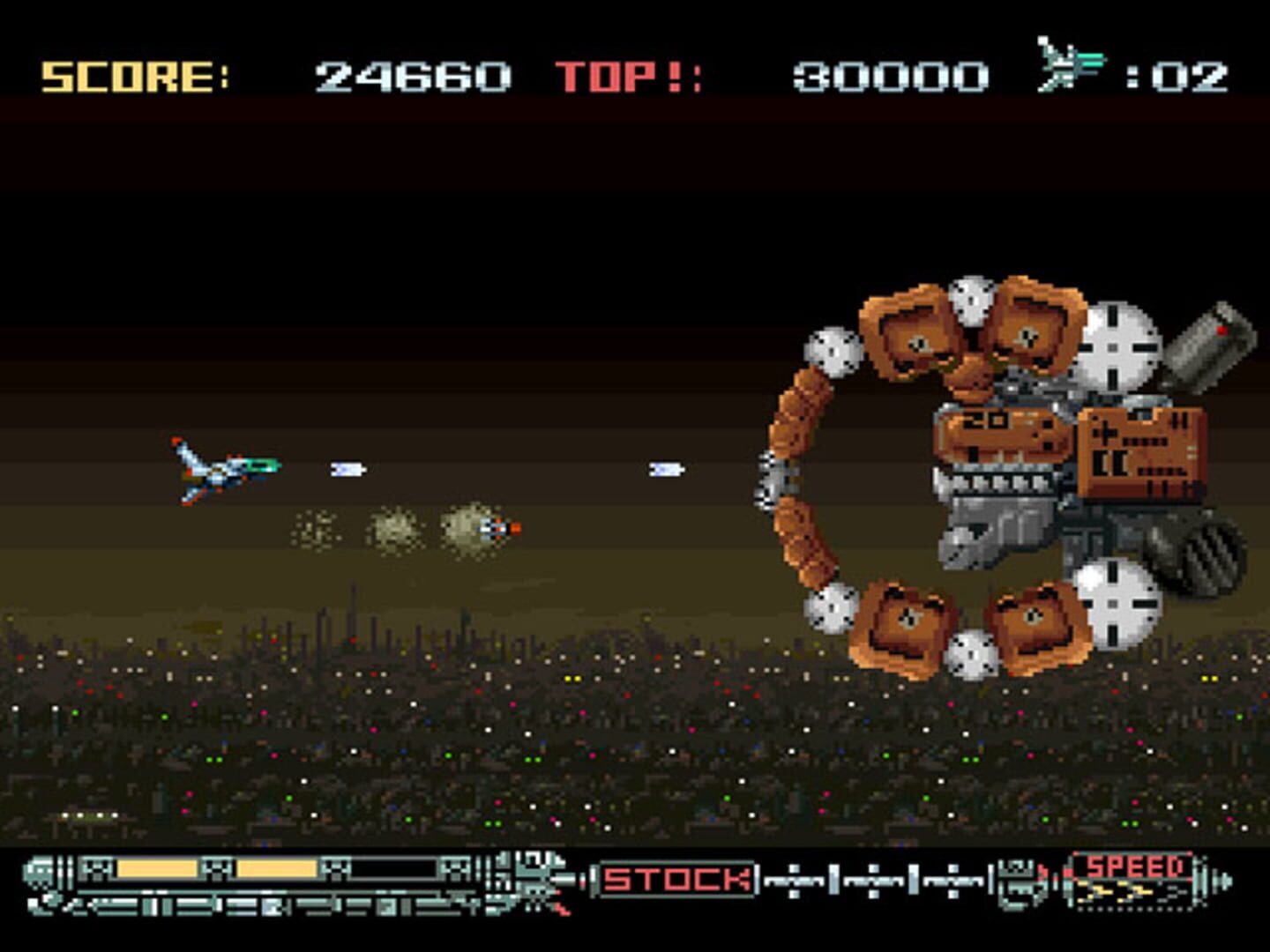
The player's ship can switch to three different speed levels at any time, allowing the player to move fast to avoid enemies and obstacles entirely, or slow down to weave between enemy bullets. An unusual addition for a shooter at the time is the ability for the player's ship to take multiple hits before losing a life: the Phalanx had three hit points which could be restored by a certain power-up, which is important as health is persistent between levels. A variety of weapons can be picked up from items that certain enemies leave behind, and up to three can be stored at a time; further weapons replace the currently equipped weapon when acquired. The player can switch between these weapons freely, and sacrifice a weapon to produce a "smart bomb" effect, freeing up the slot to grab another weapon without waste.
The Extent was set at every 300,000 points. Difficulty can be adjusted between three levels in the options menu (unavailable during play), and primarily affects the number of bullets fired by enemies; a hidden "Funny" difficulty is available through the use of cheat codes, and escalates the game's difficulty dramatically.
Story
Taking place in the year 2279, a planetary research project is sent into the depths of space. One particular group of researchers lands on and partly colonizes the alien planet Delia. Sometime after their stay, an emergency transmission is sent from Delia to their security force orbiting the planet. The only clue they are given is a message regarding a hazardous leak.
The planet's space fighters had become possessed by an unknown space squadron of alien bioships that appear out of nowhere and soon make themselves a hostile threat among the possessed fighters. The player assumes the role of Wink Baufield (named Rick in the Game Boy Advance version), an ace pilot assigned to investigate the disaster and possibly discover what is invading Delia in the assignment Operation Climax in the experimental space fighter the A/144 Phalanx.
Reception
The Japanese publication Micom BASIC Magazine ranked Phalanx fourth in popularity in its August 1991 issue. Zenji Nishkawa of Oh!X praised the game for its overall audiovisual department. Technopolis also highlighted the game's graphics and sound but noted that it was difficult. Hardcore Gaming 101's Chris Rasa wrote that it was "a very solid horizontal shooter that doesn't do anything new, but also does everything well".
Phalanx received a 21.45/30 score in a 1993 readers' poll conducted by Super Famicom Magazine, ranking among Super Famicom titles at the number 106 spot. The Super NES version was met with average reviews. SNES Force commended the game's sharp graphics, but were critical to its "frustrating" gameplay.


