The articlegameplay, story, development, reception
Development
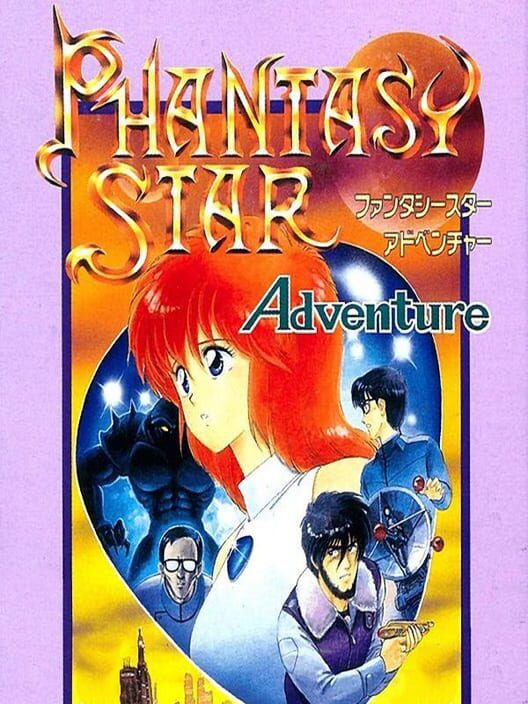
The original Phantasy Star was released for the Master System in Japan on December 20, 1987. It was one of the earliest cartridges to include battery backed RAM for saving game positions. The game featured 3D maze-like dungeons, which players traversed in a first-person mode. Phantasy Star, along with Dragon Quest, and Final Fantasy, distinguished itself as a pioneer of what came to be defined as console role-playing.
The first four games take place in the same universe, as opposed to many RPG series such as Final Fantasy, wherein successive game settings are unrelated, or, at most, superficially related. Each major Phantasy Star game adds onto the series' overall story, culminating in Phantasy Star IV which ties all of the series' plot elements together.
Both Phantasy Star Online and Phantasy Star Universe are their own series based on the original Phantasy Star games. They continue the theme of a persistent game universe, but are set in different planetary systems than the original games.
There is a small misconception that Phantasy Star was created to rival Final Fantasy, due to their similar titles. This is highly unlikely, as the first entries of both series were released within two days of each other.
Games in the Phantasy Star franchise have overall been well received by critics. The original four games in the series are typically regarded as classics for the RPG genre. Upon its initial release, the series was praised for its unique futuristic setting, something that had not been done yet in the genre. In 1996, the series was ranked as the 72nd top game of all time by Next Generation, even as "there really isn't anything especially innovative here - the titles just have good, solid gameplay."
Phantasy Star is recognized as featuring one of the first female lead characters, Alis Landale, alongside Samus Aran of Metroid. It was also one of the first RPGs to feature animated monster encounters, and to allow inter-planetary travel between three planets. The game was inducted into the GameSpy Hall of Fame in 2000. James Fudge of GameSpy said of the game that "everything about Phantasy Star was uncommon, fun, and strange."
Phantasy Star II was considered one of the best role-playing games of its time, and is regarded as "a game of many firsts" according to Nintendo Power. It is regarded by many as the forerunner for certain aspects of role-playing video games, such as an epic, dramatic, character-driven storyline dealing with serious themes and subject matter, and a strategy-based battle system. The game's strong characterization, and use of self-discovery as a motivating factor for the characters and the player, was a major departure from previous RPGs and had a major influence on subsequent RPGs such as the Final Fantasy series.
Phantasy Star III: Generations of Doom featured an innovative and original branching storyline, which spans three generations of characters and can be altered depending on which character the protagonist of each generation marries, leading to four possible endings. Phantasy Star IV: The End of the Millennium introduced the use of pre-programmable combat manoeuvers called 'macros', a means of setting up the player's party AI to deliver custom attack combos.
Nintendo Power's staff has praised the original games, saying that Phantasy Star "was the first RPG to break out of the Dragon Quest / Dungeons & Dragons mold of generic Arthurian fantasy by introducing sci-fi elements. Among its many other accomplishments were the inclusion of characters with actual personalities, the introduction of event scenes, and the presentation of pseudo-3-D dungeons that were a technical marvel at the time." IGN writer Jeremy Conrad stated that "anyone who played video games through the 8 and 16-bit eras would know that name [Phantasy Star]" and called the first four main series games "epic".
Many of the series' games, including Online Episodes I & II and Phantasy Star Zero, have generally favorable scores on Metacritic. Phantasy Star Online in particular is recognized as one of the most "revolutionary new games" of the past decade, for its impact in taking "consoles online" and defining "small-scale multiplayer RPGs," paving the way for larger-scale MMORPG efforts such as Final Fantasy XI, setting the template for small-scale online RPGs such as Capcom's Monster Hunter series and some of the later Dragon Quest and Final Fantasy games, and giving rise to "an entire pantheon of multiplayer dungeon crawlers that continue to dominate the Japanese sales charts." More generally, Phantasy Star Online made "both online gaming and the concept of fee-based services a reality for consoles," paving the way for the online gaming services later provided by all three of the seventh-generation consoles. Phantasy Star Online 2 became a commercial success for Sega as it has made over 900 million dollars since its release in 2012.