
The articlegameplay, story, development, reception
Gameplay
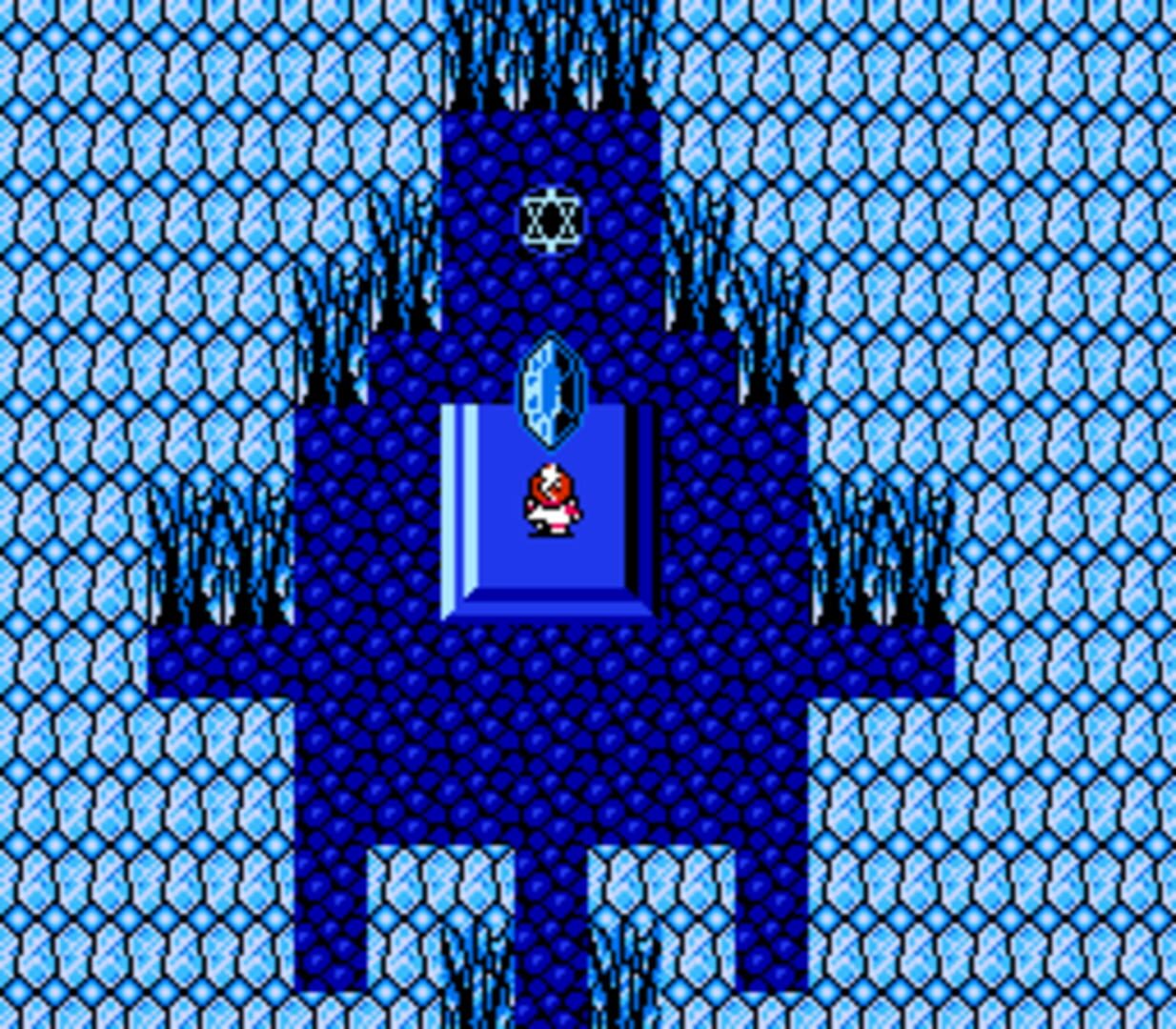
Final Fantasy III is a role-playing video game in which the player takes on the role of four unnamed warriors embarking on a mission to save their world from darkness. The party explores the world on foot, using a chocobo, by boat, and eventually by airship. Towns are visited to progress the main quest through interactions with characters, resting at inns to recover health, and buy weapons, items and equipment from dedicated shops using gil, the in-game currency. The overworld map opens up based on the player's progress through the story.
While exploring the overworld and dungeon environments, the player is pulled into random encounters with enemies; the display is split between the players on one side of the battle field and enemies on the other. The combat system uses a turn-based design carried over from earlier games; the party members can attack, defend, perform a special action, or use an item which can heal or remove negative status effects. Once all characters' actions have been selected, combat plays out between them and the enemy. If the same enemy is targeted with two attacks and the first kills it, the next attack defaults to the next living enemy.
Story
Final Fantasy III is set in an unnamed fantasy world protected by four elemental crystals. A millennium in the world's past, an ancient civilization based on a network of floating continents overused the power of light and triggered a disaster by upsetting the balance between light and darkness. This imbalance summoned the Cloud of Darkness, an entity which would return the world to nothingness. This threat was ended by two groups; the Warriors of Light and Warriors of Darkness.
Balance was restored to the world, and the ancient civilization was destroyed. In the present, darkness is overtaking the world and spawning monsters, disrupting the balance again. The story opens in a region dubbed the Floating Continent, a land hovering above the rest of the planet.
Development
Final Fantasy III was developed and published by series creator Square. Returning staff included series creator Hironobu Sakaguchi as director, and designers Hiromichi Tanaka and Kazuhiko Aoki. The producer was Masafumi Miyamoto, founder and former president of Square. It was the last Final Fantasy produced for Nintendo's Family Computer (Famicom) console, and was reportedly one of the largest games released for the platform as it required a 512 KB cartridge, the console's second-highest capacity.
Tanaka described the game's development as "a struggle" due to how to properly use the game's limited data. The project was also the last original Final Fantasy to be programmed by Iranian-American programmer Nasir Gebelli, who had worked on the series since the first game. Midway through the development of the game, Gebelli was forced to return to Sacramento, California from Japan due to an expired work visa. The rest of the development staff followed him to Sacramento with necessary materials and equipment and finished production of the game there.
Reception
Within its first week on sale, Final Fantasy III reportedly sold 500,000 copies. As of March 2003, the original Famicom game had shipped 1.4 million copies in Japan, outselling the domestic releases of the previous two Final Fantasy games.
The four reviewers of Famicom Tsūshin (now Famitsu) were generally positive, giving praise to the job system and combat design, with one reviewer feeling that it surpassed the design of Dragon Quest IV (1990) in some parts. One of the reviewers mentioned the story moved too quickly for comfort, leaving them confused about events, while two others criticized the lack of save points in dungeons. Family Computer Magazine enjoyed the return to the first game's traditional combat system while noting its new additions, and found the job system entertaining to experiment with. In 2006, readers of the Japanese gaming magazine Famitsu voted the original Final Fantasy III the eighth best video game of all-time, above Dragon Quest IV.
Legacy
A manga adaptation of the game titled Legend of the Eternal Wind, from Final Fantasy III was written by Terada and illustrated by Yu Kinutani. Originally serialized in Kadokawa Shoten's Maru Katsu Famicom magazine between 1990 and 1992, it was collected into three tankōbon under Kadokawa Shoten's Dragon Comics imprint. A novelization written by Takashi Umemura, which novelised the events of the first three Final Fantasy games, was published in Japan by Square Enix in 2019 and by Yen Press worldwide in 2020.
The Onion Knight and Cloud of Darkness were the respective hero and villainess representing Final Fantasy III in the fighting game spin-off Dissidia Final Fantasy (2009) and its sequels. Several aspects of Final Fantasy III, including characters such as the Cloud of Darkness and locations like the Crystal Tower, were incorporated into the world and lore of Final Fantasy XIV (2013).


