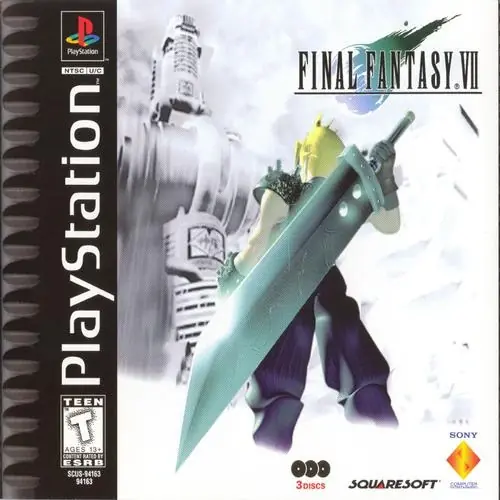
The articlegameplay, story, development, reception
Gameplay
The gameplay of Final Fantasy VII is similar to earlier Final Fantasy titles and Japanese role-playing games. The game features three modes of play: the world map, the field, and the battle screen. At its grandest scale, players explore the world of Final Fantasy VII on a 3D world map. The world map contains representations of areas for the player to enter, including towns, environments, and ruins.
Natural barriers—such as mountains, deserts, and bodies of water—block access by foot to some areas; as the story progresses, the player receives vehicles that help traverse these obstacles, thus opening more of the game world for exploration. Chocobos can be found in certain spots on the map and, if caught, can be ridden to areas inaccessible on foot or by vehicle. In field mode, the player navigates fully scaled versions of the areas represented on the world map. VII marks the first time in the series that the mode is represented in a three-dimensional space.
In this mode, the player can explore the environment, talk with characters, advance the story, and initiate event games. Event games are short minigames that use special control functions and are often tied to the story. While in field mode, the player can also make use of shops and inns. Shops allow the player to buy and sell items that can aid Cloud and his party, such as weapons, armor, and accessories.
Inns restore the hit points and mana points of characters who rest at them and cure abnormalities contracted during battles.
At random intervals on the world map and in field mode, and at specific moments in the story, the game will enter the battle screen, which places the player characters on one side and the enemies on the other. It employs an Active Time Battle (ATB) system, in which the characters exchange moves until one side is defeated. The damage or healing dealt by either side is quantified on screen. Characters have several statistics that determine their effectiveness in battle; for example, hit points determine how much damage they can take, and magic determines how much damage they can inflict with spells.
Each character on the screen has a time gauge; when a character's gauge is full, the player can input a command for them to perform. , the player has added to their equipment. Commands include attacking with a weapon, casting magic, using items, summoning monsters, and other actions that either damage the enemy or aid the player characters. Final Fantasy VII also features powerful, character-specific commands called Limit Breaks, which can be used only after a special gauge is charged by taking enemy attacks.
After being attacked, characters can be afflicted by one or more abnormal "statuses", such as poison or paralysis. These statuses and their adverse effects can be removed by special items or abilities or by resting at an inn. Once all enemies are defeated, the battle ends, and the player is rewarded with money, items, and experience points. If the player is defeated, it is game over and the game must be loaded from the last save point.
When not in battle, the player can use the menu screen, where they can review each character's status and statistics, use items and abilities, change equipment, save the game when on the world map or at a save point, and manage orbs called Materia. Materia are the main method of customizing characters in Final Fantasy VII, and can be added to equipment to provide characters with new magic spells, monsters to summon, commands, statistical upgrades, and other benefits. Materia level up through their own experience point system and can be combined to create different effects.
Story
Final Fantasy VII takes place on a world referred to in-game as the "Planet" and retroactively named "Gaia". The planet's lifeforce, called the Lifestream, is a flow of spiritual energy that gives life to everything on the Planet; its processed form is known as "Mako". On a societal and technological level, the game has been defined as an industrial or post-industrial science fiction setting. During Final Fantasy VII, the Shinra Electric Power Company, a world-dominating megacorporation headquartered in the city of Midgar, is draining the Planet's Lifestream for energy, weakening the Planet and threatening its existence and all life. Significant factions within the game include AVALANCHE, an eco-terrorist group seeking Shinra's downfall so the Planet can recover; the Turks, a covert branch of Shinra's security forces; SOLDIER, an elite Shinra fighting force created by enhancing humans with Mako; and the Cetra (also known as the Ancients), a near-extinct human tribe which maintains a strong connection to the Planet and the Lifestream.
The main protagonist is Cloud Strife, an aloof mercenary who claims to be a former 1st Class SOLDIER. Early on, he works with two members of AVALANCHE: Barret Wallace, its brazen but fatherly leader; and Tifa Lockhart, a shy yet nurturing martial artist and his childhood friend. During their journey, they meet Aerith Gainsborough, a carefree flower merchant and one of the last surviving Cetra; Red XIII, an intelligent feline from a tribe that protects the planet; Cait Sith, a fortune-telling robotic cat controlled by repentant Shinra staff member Reeve Tuesti; and Cid Highwind, a pilot whose dream of being the first human in outer space was unrealized. The group can also recruit Yuffie Kisaragi, a young ninja and skilled Materia thief; and Vincent Valentine, a former Turk and victim of Shinra's experiments.
The game's main antagonists are Rufus Shinra, the son of President Shinra and the later leader of the Shinra Corporation; Sephiroth, a former SOLDIER who reappears several years after being presumed dead; and Jenova, a hostile extraterrestrial life-form who the Cetra imprisoned 2,000 years ago and who Sephiroth was created from. A key character in Cloud's backstory is Zack Fair, a member of SOLDIER and Aerith's first love.
AVALANCHE destroys a Shinra Mako reactor in Midgar, but an attack on another reactor goes wrong and Cloud falls into the city's slums. There, he meets Aerith and protects her from Shinra. Meanwhile, Shinra finds AVALANCHE's base of operations and intentionally collapses part of the upper city level in retaliation for the Mako reactor being destroyed, killing many AVALANCHE members and innocent bystanders as collateral damage. Aerith is also captured since Shinra believes that as a Cetra, she can potentially reveal the "Promised Land", which they believe is overflowing with Lifestream energy they can exploit.
Cloud, Barret, and Tifa rescue Aerith, and during their escape from Midgar, discover that Sephiroth murdered President Shinra despite being presumed dead five years earlier. The party pursues Sephiroth across the Planet, with now-President Rufus on their trail; they are soon joined by the rest of the playable characters.
At a Cetra temple, Sephiroth reveals he intends to use a powerful magical artifact known as "Black Materia" to cast the spell "Meteor", which would have a devastating impact on the Planet. Sephiroth claims he will absorb the Lifestream as it attempts to heal the wound caused by Meteor, and become a god-like being in the process. The party retrieves the Black Materia, but Sephiroth manipulates Cloud into surrendering it. Aerith departs alone to stop Sephiroth and follows him to an abandoned Cetra city.
While Aerith prays to the Planet for help, Sephiroth attempts to force Cloud to kill her; after this fails, he kills her himself before fleeing, leaving the White Materia behind. The party then learns of Jenova, a hostile alien lifeform who landed on the Planet two thousand years prior to the game's events. Upon arrival on the Planet, Jenova began infecting the Cetra with a virus, and they were nearly wiped out. However, a small group managed to seal away Jenova in a tomb, which Shinra later unearthed.
At Nibelheim, Jenova's cells were used in experiments which led to the creation of Sephiroth. Five years before the game's events, Sephiroth and Cloud visited Nibelheim, where Sephiroth learned of his origins and was driven insane as a result. He murdered the townspeople, and then vanished after Cloud confronted him.
At the Northern Crater, the party learns that the "Sephiroths" they have encountered are Jenova clones who the insane Shinra scientist Hojo created. Cloud confronts the real Sephiroth as he is killing his clones to reunite Jenova's cells, but is again manipulated into giving him the Black Materia. Sephiroth then taunts Cloud by showing another SOLDIER in his place in his memories of Nibelheim, suggesting that Cloud is a failed clone of Sephiroth. Sephiroth summons Meteor and seals the Crater as Cloud falls into the Lifestream and Rufus captures the party.
After escaping Shinra, the party discovers Cloud at an island hospital in a catatonic state from Mako poisoning, and Tifa decides to stay as his caretaker. When a planetary defense force called Weapon attacks the island, the two fall into the Lifestream, where Tifa helps Cloud reconstruct his memories. Cloud was a mere infantryman who was never accepted into SOLDIER; the SOLDIER in his memories was his friend Zack. At Nibelheim, Cloud ambushed and wounded Sephiroth after the latter's mental breakdown, but Jenova preserved Sephiroth's life.
Hojo experimented on Cloud and Zack for four years, injecting them with Jenova's cells and Mako. They managed to escape, but Zack was killed in the process. The trauma of these events triggered an identity crisis in Cloud, and he constructed a false persona based around Zack's stories and his own fantasies. Cloud accepts
Development
Initial concept talks for Final Fantasy VII began in 1994 at Square studio, following the completion of Final Fantasy VI (1994). As with the previous installment, series creator Hironobu Sakaguchi reduced his role to producer and granted others a more active role in development: these included Yoshinori Kitase, one of the directors of FFVI. The next installment was planned as a 2D game for Nintendo's Super Nintendo Entertainment System (Super NES). After creating an early 2D prototype of it, the team postponed development to help finish Chrono Trigger (1995). Once Chrono Trigger was completed, the team resumed discussions for Final Fantasy VII in 1995.
The team discussed continuing the 2D strategy, which would have been the safe and immediate path just prior to the imminent industry shift toward 3D gaming; such a change would require radical new development models. The team decided to take the riskier option and make a 3D game on new generation hardware but had yet to choose between the cartridge-based Nintendo 64 or the CD-ROM–based PlayStation from Sony Computer Entertainment. The team also considered the Sega Saturn console and Microsoft Windows. Their decision was influenced by two factors: a highly successful tech demo based on Final Fantasy VI using the new Softimage 3D software, and the escalating price of cartridge-based games, which was limiting Square's audience.
Tests were made for a Nintendo 64 version, which would use the planned 64DD peripheral despite the lack of 64DD development kits and the prototype device's changing hardware specifications. This version was discarded during early testing, as the 2000 polygons needed to render the Behemoth monster placed excessive strain on the Nintendo 64 hardware, causing a low frame rate. It would have required an estimated thirty 64DD discs to run Final Fantasy VII properly with the data compression methods of the day. Faced with both technical and economic issues on Nintendo's current hardware, and impressed by the increased storage capacity of CD-ROM when compared to the Nintendo 64 cartridge, Square shifted development of Final Fantasy VII, and all other planned projects, onto the PlayStation.
The Final Fantasy VII staff at one point were planning to use a first person camera for world map exploration with enemies visible on the world map terrain and also wanted up to 10 characters to be in your party at once in the battle scenes. In the final version, the overall gameplay system remained mostly unchanged from Final Fantasy V (1992) and VI, but with an emphasis on player control. The initial decision was for battles to feature shifting camera angles. Battle arenas had a lower polygon count than field areas, which made creating distinctive features more difficult.
The summon sequences benefited strongly from the switch to the cinematic style, as the team had struggled to portray their scale using 2D graphics. In his role as producer, Sakaguchi placed much of his effort into developing the battle system. He proposed the Materia system as a way to provide more character customization than previous Final Fantasy games: battles no longer revolved around characters with innate skills and roles in battle, as Materia could be reconfigured between battles. Artist Tetsuya Nomura also contributed to the gameplay; he designed the Limit Break system as an evolution of the Desperation Attacks used in Final Fantasy VI.
The Limit Breaks served a purpose in gameplay while also evoking each character's personality in battle.
Square retained the passion-based game development approach from their earlier projects, but now had the resources and ambition to create the game they wanted. This was because they had extensive capital from their earlier commercial successes, which meant they could focus on quality and scale rather than obsessing over and working around their budget. Final Fantasy VII was at the time one of the most expensive video game projects ever, costing an estimated US$40 million, which adjusted for inflation came to $61 million in 2017. Development of the final version took a staff of between 100 and 150 people just over a year to complete.
As video game development teams were usually only 20 people, the game had what was described as the largest development team of any game up to that point. The development team was split between both Square's Japanese offices and its new American office in Los Angeles; the American team worked primarily on city backgrounds.
The game's art director was Yusuke Naora, who had previously worked as a designer for Final Fantasy VI. With the switch into 3D, Naora realized that he needed to relearn drawing, as 3D visuals require a very different approach than 2D. With the massive scale and scope of the project, Naora was granted a team devoted entirely to the game's visual design. The department's duties included illustration, modeling of 3D characters, texturing, the creation of environments, visual effects, and animation.
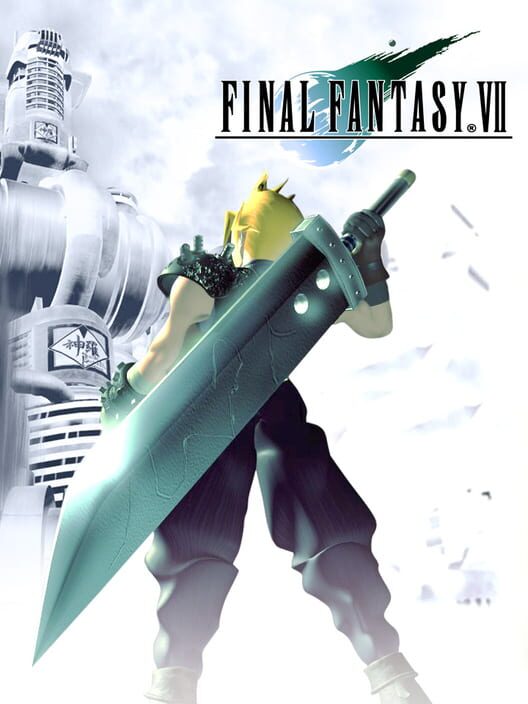
The Shinra logo, which incorporated a kanji symbol, was drawn by Naora personally. Promotional artwork, in addition to the logo artwork, was created by Yoshitaka Amano, an artist whose association with the series went back to its inception. While he had taken a prominent role in earlier entries, Amano was unable to do so for Final Fantasy VII, due to commitments at overseas exhibitions. His logo artwork was based on Meteor: when he saw images of Meteor, he was not sure how to turn it into suitable artwork.
In the end, he created multiple variations of the image and asked staff to choose which they preferred. The green coloring represents the predominant lighting in Midgar and the color of the Lifestream, while the blue reflected the ecological themes present in the story. Its coloring directly influenced the general coloring of the game's environments.
Another prominent artist was Nomura. Having impressed Sakaguchi with his proposed ideas, which were handwritten and illustrated rather t
Reception
Within three days of its release in Japan, Final Fantasy VII sold over two million copies. This popularity inspired thousands of retailers in North America to break street dates in September to meet public demand for the title. In the game's debut weekend in North America, it sold 330,000 copies, and had reached sales of 500,000 copies in less than three weeks. The momentum established in the game's opening weeks continued for several months; Sony announced the game had sold one million copies in North America by early December, prompting business analyst Edward Williams from Monness, Crespi, Hardt & Co.
to comment that "Sony redefined the role-playing game (RPG) category and expanded the conventional audience with the launch of Final Fantasy VII". 27 million units in Japan by the end of 1997.
8 million copies including 4 million sales in Japan, making it the highest-selling game in the Final Fantasy series. By the end of 2006, The Best, the bargain reissue of the game, had sold over 158,000 copies in Japan. By May 2010, it had sold over 10 million copies worldwide, making it the most popular title in the series in terms of units sold. The original PC version surpassed Eidos' expectations: while initially forecast to sell 100,000 units, it quickly exceeded sales of one million units, garnering royalties of over $2 million for Square.
By August 2015, the PlayStation and PC versions had sold over 11 million units worldwide. 14 million players on the platform as of July 2018. 3 million units worldwide. 3 million units worldwide.
Final Fantasy VII received universal acclaim from critics upon release, receiving perfect scores from 1Up.com, AllGame, Computer and Video Games, GameFan, GamePro, Next Generation, and official PlayStation magazines for Australia and the United States.
It was referred to by GameFan as "quite possibly the greatest game ever made", a quote selected for the back cover of the game's jewel case. GameSpot commented that "never before have technology, playability, and narrative combined as well as in Final Fantasy VII", expressing particular favor toward the game's graphics, audio, and story. 5 out of 10 and their "Game of the Month" award, lauding its rendered backgrounds, use of FMV, battles, and especially the story line, though they expressed disappointment that the ending did not resolve all of the loose ends. They also considered the North American localization a dramatic improvement over the original Japanese version.
GamePro called the storytelling "dramatic, sentimental, and touching in a way that draws you into the characters", who "come alive thanks to sweetly subtle body movements". S. PlayStation Magazine (OPM) said the ATB system gives battles a tension and urgency not usually seen in RPGs, and OPM called the summon animations "absolutely awe-inspiring". IGN's Jay Boor insisted the game's graphics were "light years beyond anything ever seen on the PlayStation", and regarded its battle system as its strongest point.
Computer and Video Games's Alex C praised the dramatic story and well-developed characters. In addition to calling the graphics "bar none the best the PlayStation has ever seen", Next Generation said of the story that "while FFVII may take a bit to get going, as in every entry in the series, moments of high melodrama are blended with scenes of sheer poetry and vision". Edge noted that Final Fantasy VII had come close to being an interactive movie in playable form, praising its combination of a complex story that went against Western graphic adventures trends and "excellently orchestrated chip music". RPGamer praised the game's soundtrack, both in variety and sheer volume, stating that "Uematsu has done his work exceptionally well" and saying that it was potentially his best work.
Final Fantasy VII has received some negative criticism. OPM and GameSpot questioned the game's linear progression. OPM considered the game's translation "a bit muddy". Similarly, RPGamer cited its translation as "packed with typos and other errors which further obscure what is already a very confusing plot". GamePro also considered the Japanese-to-English translation a significant weakness in the game, and IGN regarded the inability to use more than three characters at a time as "the game's only shortcoming".
Reviewers gave similar praise to the PC version but criticized its various technical faults. Computer Games Magazine said that no other recent game had the same "tendency to fail to work in any capacity on multiple [computers]". Computer Gaming World complained that the music quality suffered on PC sound cards, and Next Generation found the game's pre-rendered backgrounds significantly less impressive than those of the PlayStation version. However, the latter magazine found the higher-resolution battle visuals "absolutely stunning", and Computer Games Magazine said that they showed off the potential graphical power of PCs. All three magazines concluded by praising the game despite its technical flaws, and PC Gamer summarized that, while "Square apparently did only what was required to get its PlayStation game running under Windows", Final Fantasy VII is "still a winner on the PC".
Final Fantasy VII was given numerous Game of the Year awards in 1997. At the second CESA Awards, it won the Grand Prize, Scenario Award, and Sound Award. During the Academy of Interactive Arts & Sciences' inaugural Interactive Achievement Awards, Final Fantasy VII won in the categories of "Console Adventure Game of the Year
Legacy
The game inspired an unofficial version for the NES by Chinese company Shenzhen Nanjing Technology. This port features the Final Fantasy VII game scaled back to 2D, with some of the side quests removed.
The game also inspired a LittleBigPlanet fan remake by Jamie Colliver. Colliver's adaptation reimagines the entire original game as a platformer and was awarded two Guinness World Records in 2014, for the first complete Final Fantasy remake made in another video game and the first role-playing game remade in LittleBigPlanet.
The game's popularity and open-ended nature also led director Kitase and scenario writer Nojima to establish a plot-related connection between Final Fantasy VII and Final Fantasy X-2 (2003). The character Shinra from X-2 proposes the concept of extracting the life energy from within the planet Spira. Nojima has stated that Shinra and his proposal are a deliberate nod to the Shinra Company and that he envisioned the events of Final Fantasy X-2 as a prequel to those in VII. The advances in technology used to create the FMV sequences and computer graphics for Final Fantasy VII allowed Sakaguchi to begin production on the first Final Fantasy film, Final Fantasy: The Spirits Within (2001).
The game introduced a particular aesthetic to the series—fantasy suffused with modern-to-advanced technology—which was explored further in Final Fantasy VIII (1999), The Spirits Within, and XV (2016). Re-releases of Square games in Japan with bonus features would occur frequently after the release of Final Fantasy VII International. Later titles that would be re-released as international versions include Final Fantasy X and other follow-ups from the franchise, as well as the Kingdom Hearts series.
Final Fantasy VII is credited as having the largest impact of the Final Fantasy series, and with allowing console role-playing games to gain mass-market appeal outside of Japan. Aerith's death in the game has often been referred to as one of the most significant moments from any video game. In addition, Final Fantasy VII is also noted for its use of the unreliable narrator literary concept, drawing comparisons to films such as Fight Club (1999), The Sixth Sense (1999), American Psycho (2000), and Memento (2000). Patrick Holleman and Jeremy Parish argue that the game takes the unreliable narrator concept a step further, with its interactivity establishing a connection between the player and the protagonist Cloud, setting Final Fantasy VII apart from films as well as other video games.
According to Holleman, "no RPG has ever deliberately betrayed the connection between protagonist and player like FFVII does". Harry Mackin writing for Paste called the game "a subversion that deconstructs and comments meaningfully on how we think about heroism, masculinity, and identity, in videogame storytelling". Ric Manning of The Courier-Journal noted elements of psychoanalysis in the game. The game is also noted for its cyberpunk themes; GamesRadar+ called it one of the best games of the genre, and Paste compared its cyberpunk city of Midgar to Akira and Blade Runner.
According to Comic Book Resources, the game's climate change theme is more meaningful in 2019 than it was in 1997.
Several characters from Final Fantasy VII have made cameo appearances in other Square Enix titles, most notably the fighting game Ehrgeiz (1998) and the popular Final-Fantasy-to-Disney crossover series Kingdom Hearts. Additionally, fighting video game Dissidia Final Fantasy (2008) includes Final Fantasy VII characters such as Cloud and Sephiroth, and allows players to fight with characters from throughout the Final Fantasy series, and its follow-up, Dissidia 012 (2011), included Tifa as well. Cloud is also a playable character in Final Fantasy Tactics. In December 2015, Cloud was released as a downloadable content character for the Nintendo crossover fighting game Super Smash Bros.
for Nintendo 3DS and Wii U (2014), along with a stage based on Midgar. He returned in the 2018 sequel, Super Smash Bros. Ultimate, with Sephiroth being added as downloadable content in December 2020.
The world of Final Fantasy VII is explored further in the Compilation of Final Fantasy VII, a series of games, animated features, and short stories. The first title in the Compilation is the mobile game Before Crisis, a prequel focusing on the Turks' activities six years before the original game. The CGI film sequel Advent Children, set two years after the game, was the first title announced but the second to be released. Special DVD editions of the film included Last Order, an original video animation that recounts the destruction of Nibelheim.
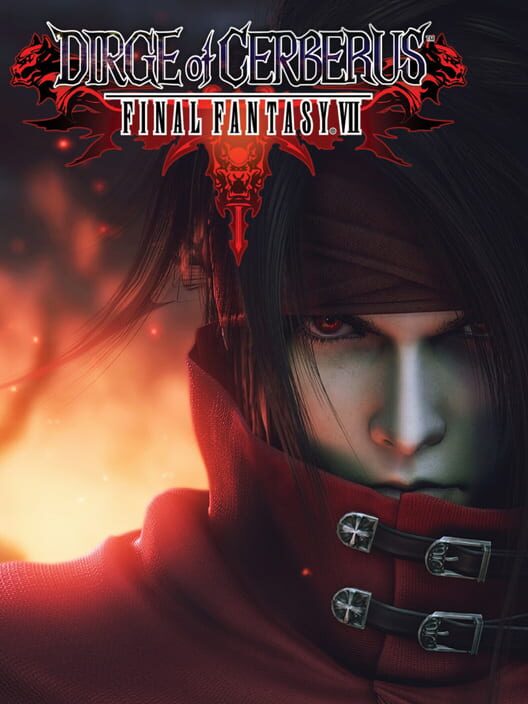
Dirge of Cerberus and its mobile phone counterpart, Dirge of Cerberus Lost Episode: Final Fantasy VII, are third-person shooters set one year after Advent Children. Dirge focuses on the backstory of Vincent Valentine, whose history was left mostly untold in Final Fantasy VII. The most recent title is the PlayStation Portable game Crisis Core, an action role-playing game that centers on Zack's past.
Releases not under the Compilation label include Maiden Who Travels the Planet, which follows Aerith's journey in the Lifestream after her death, taking place concurrently with the second half of the original game. In 1998, the Official Final Fantasy VII Strategy Guide was licensed by SquareSoft and published by Brady Games. Final Fantasy VII Snowboarding is a mobile port of the snowboard minigame featured in the original game, featuring different courses for the player to tackle. The game is downloadable on V Cast-compatible mobile phones and was first made available on March 15, 2005 in North America and in Japan on November 10, 2008.
Final Fantasy VII G-Bike is a mobile game released for iOS and Android in December 2014, based on the motorbike minigame featured in the original game. In September 2007, Square Enix published Final Fantasy VII 10th Anniversary Ultimania. This book is an in-depth compilation of FFVII story-