The articlegameplay, story, development, reception
Gameplay
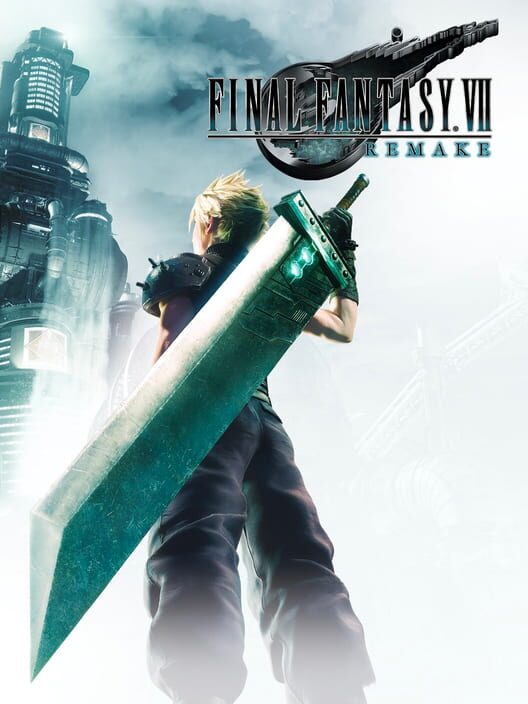
Final Fantasy VII Remake is the first in a planned series of games remaking the 1997 PlayStation game Final Fantasy VII. It covers the first section of the original game, set in the metropolis Midgar.
Players control Cloud Strife, a former Shinra soldier turned mercenary who joins the eco-terrorist group AVALANCHE to fight the Shinra Corporation, who have been draining the planet's life energy. Every element has been remade, using real-time polygonal graphics as opposed to the pre-rendered environments of the original. The story includes major expansions to character development and some notable plot additions.
Exploration and battle mechanics both take place in real-time, like Final Fantasy XV. The game features an altered Active Time Battle (ATB) system from the original, which gradually fills up slowly, or can fill faster with attacks. Once it is filled, the player can halt the action and use special abilities such as magic, items, and special moves. The player can assign these special abilities to shortcut buttons, allowing them to play in real-time without pausing.
Each special ability uses up a segment of the ATB bar. The player can switch between party members at any time during battle. Each party member has their own individual skills, such as Cloud's close-quarters melee attacks and Barret's long-range distance attacks. Players are able to use magic and summons of large creatures, and a Limit Break gauge allows characters to perform more powerful attacks once charged.
While the game has more real-time elements, strategic elements still remain, such as selecting weapons and magic for each character to wield.
Story
Cloud Strife (Cody Christian / Takahiro Sakurai) is a former member of SOLDIER, the elite warriors of the megacorporation Shinra Electric Power Company, which rules over the Planet. Shinra uses Mako, a refined form of the Planet's spiritual energy harvested by massive reactors, to power the metropolis of Midgar and develop cutting-edge technology. Disillusioned with Shinra, and at the request of his childhood friend Tifa Lockhart (Britt Baron / Ayumi Ito), Cloud takes a mercenary job for a splinter cell of AVALANCHE, an ecological resistance organization, led by Barret Wallace (John Eric Bentley / Masahiro Kobayashi). Barret believes excessive Mako harvesting harms the Planet, and leads a bombing attack on Mako Reactor 1.
Cloud is continuously haunted by memories of Sephiroth (Tyler Hoechlin / Toshiyuki Morikawa), an enigmatic former SOLDIER, and meets florist Aerith Gainsborough (Briana White / Maaya Sakamoto) in the aftermath of the bombing. Strange ghost-like entities, who alternately help and hinder Cloud, lead him to be recruited for another attack on Mako Reactor 5. After being separated from the rest of the group during the attack, Cloud meets Aerith again and protects her from Shinra forces. After reuniting with Tifa, the trio learns that Shinra plans to collapse a piece of Midgar's "plate" onto the Sector 7 slums in a false flag attack in a bid to destroy AVALANCHE.
AVALANCHE fails to stop Shinra's plan, and the plate falls, destroying much of Sector 7. Aerith helps much of the Sector's population, including Barret's daughter Marlene, evacuate in time, but she is captured by Shinra.
Cloud, Tifa, and Barret infiltrate Shinra headquarters and rescue Aerith from being used as an experiment by Shinra lead scientist Hojo (James Sie / Shigeru Chiba). Aerith reveals that she is the last descendant of the Cetra, a near-extinct precursor race who resided in a "Promised Land," which Shinra covets for its boundless Mako reserves. The group meets a talking canine-like creature called Red XIII (Max Mittelman / Kappei Yamaguchi), who explains that the ghostly entities are called Whispers. They exist to ensure that the course of destiny is not altered by correcting any deviations from this course. Meanwhile, Sephiroth infiltrates Shinra and steals a mysterious entity known as "Jenova," connected to the extinction of the Cetra.
In a confrontation at the top of Shinra headquarters, Sephiroth kills the president of Shinra. Shinra's son Rufus (Josh Bowman / Tōru Ōkawa) arrives to assume control of the company and fights Cloud, but is defeated. Cloud and his allies flee the scene via the Midgar Expressway, but find Sephiroth waiting for them at the end. After defeating Whisper Harbinger, an entity formed by an amalgam of Whispers, Cloud's group battles Sephiroth.
Sephiroth separates Cloud from the group, asking him to join him and defy fate. Cloud refuses and fights Sephiroth, but is defeated, although Sephiroth spares him and departs. Meanwhile, as Cloud's group leaves Midgar to pursue Sephiroth, SOLDIER Zack Fair (Caleb Pierce / Kenichi Suzumura) defeats an army of Shinra forces elsewhere, and is shown approaching Midgar carrying a wounded Cloud.
Shortly after the bombing of Mako Reactor 5, Yuffie Kisaragi (Suzie Yeung / Yumi Kakazu), a ninja working for Wutai, arrives in Midgar and meets up with her partner Sonon Kusakabe (Aleks Le / Yoshimasa Hosoya) in order to steal Shinra's "Ultimate Materia." With the help of a local AVALANCHE cell, Yuffie and Sonon infiltrate the lab under Shinra headquarters and fight through Shinra's forces, before discovering that the Ultimate Materia is not yet complete. As they try to escape, they are confronted by a Shinra supersoldier named Nero (Sean Chiplock / Ryōtarō Okiayu). Outmatched, Sonon sacrifices himself to ensure Yuffie can escape, leaving her distraught.
Yuffie escapes Shinra headquarters just in time to see the Sector 7 plate fall. Sometime later, Yuffie has left Midgar and muses that to achieve her desire to see Shinra's downfall, she will need a team to help her.
In a post-credits scenes, Cloud and his group arrive at the town of Kalm after hitching a ride with Chocobo Bill, while Zack enters the Sector 5 church in Midgar to reunite with Aerith, only to find a group of locals in mourning.
Development
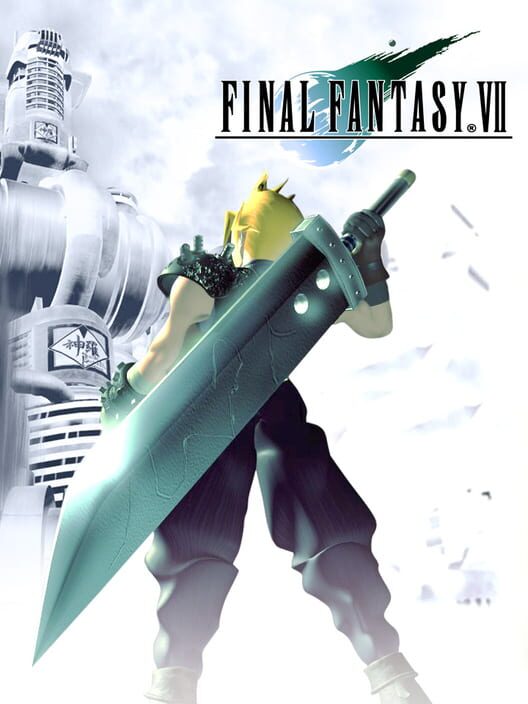
Final Fantasy VII was developed by Square for the PlayStation console and released in 1997. Its staff included producer, co-writer and series creator Hironobu Sakaguchi, director and co-writer Yoshinori Kitase, artist Yusuke Naora, character designer and co-writer Tetsuya Nomura, and writer Kazushige Nojima. It was a critical and commercial success, and established the Final Fantasy series as a major franchise. It was expanded through the multimedia project Compilation of Final Fantasy VII, comprising additional games, films, and other media.
In the early 2000s, Square announced a remake for PlayStation 2 alongside Final Fantasy VIII and IX, but nothing further was heard of the project. It was abandoned because of the increased challenge of developing on new hardware and would have necessitated cutting content. The staff were preoccupied with developing Final Fantasy XIII and its sequels, and Remake would have been an equally large or larger project hard to undertake at the same time. Once the XIII series ended, the team was free to pursue other projects.
Kitase claims that since XIII, he had been asked multiple times about developing this game. Co-director Naoki Hamaguchi was originally just a fan, and said he was glad to be included.
Demand for a remake grew following a PlayStation 3 tech demo at the 2005 Electronic Entertainment Expo, showcasing the opening of Final Fantasy VII with Square's new Crystal Tools engine, which was at the time known under its codename, "White Engine". Further demand came during the game's impending tenth anniversary in 2007. On both occasions, Square denied that any remake was in development, for reasons including their focus on new games, the necessity to cut elements to make a remake manageable, the difficulty of developing for modern hardware, and the amount of development time it would require.
The Remake project began when Final Fantasy producer Shinji Hashimoto broached the subject to Kitase, Nojima, and Nomura. All three were reaching a stage of life that they defined as "that age": all felt that if they waited much longer, they might not be alive to or would be too old to develop a remake, and passing the project on to a new generation did not feel right. Another reason for developing the remake was that Square Enix was creating a library of PlayStation 4 games, and the team hoped to increase the console's popularity. Nomura was appointed as director when the remake was initially greenlit, but he was busy with the development of Kingdom Hearts III at the time.
Final Fantasy VII Remake entered full production by late 2015, led by Business Division 1, an internal production team within Square Enix. While Nomura was involved with the project from the start, he only discovered he was the director after seeing himself credited in an internal company presentation video; he was surprised by this, as he had expected Kitase to fill the role. Nomura filled the role of director for both Final Fantasy VII Remake and Kingdom Hearts III concurrently. Another project leader was Naoki Hamaguchi, who had previously served as a programmer for Lightning Returns: Final Fantasy XIII, and as project lead for Mobius Final Fantasy. Square Enix approached developing Remake at the same level as a main numbered entry in the Final Fantasy series.
While the team had the option of simply remastering Final Fantasy VII with better graphics as many fans had requested, they noted that its graphics and many of its mechanics had become dated by modern standards. With this in mind, they decided to do a full remake, rebuilding the systems to suit contemporary tastes and using current gaming technology to recreate the world. An overarching goal of the project was to make the game feel both "new and nostalgic" for players of the original, while exemplifying the idea of Final Fantasy VII for new players. This decision led to the creation of Remake's action-based battle system, which draws from the action-based style of Dissidia Final Fantasy.
Teruki Endo, who had previously worked on Monster Hunter World, served as battle director. The team aimed to retain all of the gameplay mechanics popular, including Active Time Battle, and merge them with the action-based system.
Rather than using the character models and graphical style of Advent Children, which by that point had been developed using ten-year-old technology, the team decided to create new designs and models for characters: Nomura wished to balance the realism of Advent Children with cartoon stylization. Nomura was in charge of the revamped main character designs, while designer Roberto Ferrari was in charge of designs for secondary characters. Character modeling was supervised by Visual Works, Square Enix's CGI development branch. Cloud Strife's initial redesign for Final Fantasy VII Remake departed more dramatically from the original's, but was later altered to more closely resemble Nomura's original concept. Tifa Lockhart's original appearance was changed to make her look more realistic, as the developers realized her design would not fit fight scenes.
Instead of creating a new engine, Square Enix licensed Epic Games' Unreal Engine 4, with Square Enix and Epic Games Japan working together to optimize the engine for Remake. The team received technical assistance from the developers of Kingdom Hearts III, as it had been developed using the same engine. The lighting is augmented with the lighting engine Enlighten. To help with the action gameplay and video quality, Square Enix originally partnered with video game developer CyberConnect2, with the two companies keeping in close contact due to different development styles.
In 2017, the development focus shifted from being developed with external partners to being a primarily internal project. When the company first started the Remake project, the team had to decide the entire scope of the project. There were two directions presented initially: they could expand upon the original with
Reception
Final Fantasy VII Remake received "generally favorable" reviews, according to review aggregator website Metacritic, with critics praising its faithfulness to the original game. Tamoor Hussain of GameSpot states that, while Remake is only the initial entry in a full reimagining of the original game, it is rich in details that were previously unexplored, realizes new storytelling ambitions with confidence, and presents fresh perspectives that feel both meaningful and essential in his review. To summarize, he says that it tells a smaller, more personal Final Fantasy VII tale and marries it with a smart mashup of action and RPG gameplay in order to deliver a must-play experience. Tom Marks of IGN called Remake a "complete reinvention", praising the combat system.
Nahila Bonfiglio of The Daily Dot regarded it as one of the best games of 2020 based on multiple aspects that would appeal to the audience. EGM said it was captivating like the original. Eurogamer also highly regarded the remake, to the point of finding it superior to the original title.
The narrative was praised for the characters and their arcs. IGN called its "story fleshed out with real emotional arcs", praising its nostalgic feel, while criticizing the "filler" and sometimes convoluted new plot points and side missions, but concluding that the remake brings a new life into a classic while standing as a great RPG on its own. Shacknews wrote that the story in the remake is one of the strongest ever achieved by the company. In general the voiceactors were well received, with Cody Christian's performance as Cloud standing out as he enhances his character arc.
His interactions with the cast and the expansion of the minor characters in AVALANCHE was also well received by writers with his confrontations with Sephiroth Destructoid agreed about the cast, most notably Aerith, noting her fun characterization. The handling of the city of Midgar and expansion of minor characters were praised by the media too.
Critical response to the new combat has been positive, partly due to the strategy needed and the distinctive fighting style of each playable character, such as Cloud wielding a sword, in contrast to Barret's shooting from afar. GamesRadar also praised the combat for the strategy required, due to each enemy having a weakness, and the variety among the characters thanks to their unique traits. RPGamer praised both the return of Materia used to provide magic attacks and the addition of upgradeable weapons in order to let players decide which equipment they want to use. RPGamer felt that Remake relied on "padding" to expand on the areas, which they considered linear for the genre.
GamesRadar criticized some of the side-quests as lackluster though the interactions were better received. EGM claimed that some quests had too much padding, citing an example where the player has to constantly change the playable character to open multiple doors in the Shinra headquarters. Easy Allies said that despite the linear gameplay, the reviewers finished the game in 38 hours, and still had plenty of quests left to complete.
In regards to Intergrade, Siliconera praised the focus on Yuffie's story even if she comes across as annoying due to her younger personality but felt her relationship with Sonon improved it. Besides the new minigame, Siliconera praised the improved graphics from Intergrade. Enjoying the option of playing directly with the sidestory, Destructoid found Yuffie instead likable to the point of coming across as realistic and enjoyed her own style of gameplay. GameSpot gave it a perfect score, also finding the graphics superior, most notably due to its framerate, fitting for a PlayStation 5 game which is more notable when Cloud becomes involved in fights. PC Invasion also praised the framerate, making the PC version highly recommendable to play rather than the other ones.
Final Fantasy VII Remake sold over 3.5 million units worldwide within three days. This made it one of the biggest launches for a PlayStation 4 game and the fastest-selling PS4 exclusive, surpassing the launch sales of Marvel's Spider-Man (3.3 million; 2018) and God of War (3.1 million; 2018). By August 2020, that figure had increased to over 5 million on PS4. By September 2023, Remake had sold over 7 million copies worldwide. As of March 2025 it had sold 8.7 million copies In Japan, Final Fantasy VII Remake sold over a million copies during its first week, selling out in many stores.
In North America, Remake was the top-selling game of April 2020 and the third best-selling game of 2020, behind Call of Duty: Modern Warfare (2019) and Animal Crossing: New Horizons (2020). It became the fastest-selling Final Fantasy game, surpassing the record previously set by Final Fantasy XV (2016), and was the most downloaded PlayStation 4 game of April 2020 in the United States.
In the United Kingdom, Remake debuted at the top of the weekly sales chart, selling an estimated 60,000 physical units in its first weekend. German trade association GAME reported that it took Final Fantasy VII Remake only a few days to sell more than 100,000 units within Germany, for which it won a Gold Sales Award. It was the fourth most downloaded PlayStation 4 game of April 2020 in Europe.
Final Fantasy VII Remake was awarded the Editors' Choice from PlayStation. It was also named IGN Japan's Game of the Year in 2020. Anime News Network and Siliconera and RPG Site listed it as one of the best games of the year.