The articlegameplay, story, development, reception
Gameplay
Sakura Wars is a cross-genre video game in which the player controls Ichiro Ogami and the all-female Flower Division of the Imperial Combat Revue, who must save Tokyo from the Hive of Darkness. Dubbed a "dramatic adventure" game and taking place across 10 episodes, the gameplay segments incorporate tactical role-playing, dating sim, and visual novel elements. It has two gameplay modes: an adventure mode and a battle mode. The adventure mode is divided between periods where Ogami navigates the Grand Imperial Theater and interacts with various characters, while the battle mode is governed by a turn-based battle system on a tilted grid-based battlefield. Progress is saved at the end of each episode, and the player may also save the game during intermissions.
In the adventure mode, Ogami navigates the theater during limited time sequences between battles. This game introduces the Live & Interactive Picture System (LIPS). When Ogami is faced with critical choices during conversations with both members of the Flower Division and supporting characters within the combat revue, dialogue trees are displayed with a time limit for the player to input. Depending on the type of response, the character may respond positively or negatively, impacting their relationship with Ogami and future interactions.
Other actions within LIPS include holding the cursor over parts of a character's portrait to trigger internal monologues and varying responses from the characters. Each main heroine has different personality quirks that must be taken into consideration while talking with them, with correct responses raising their "Trust".
In the battle mode, the Flower Division fights demons using machines called Kobus. Each unit has its own turn, with each turn allowing two actions. These actions include "Attack", "Defend", "Move", "Deathblow" (a critical strike that can kill a normal enemy in one hit), Charge (store energy for a more powerful action during the next turn), and Heal (which restores health points (HP) to a chosen unit). Different units specialize in different skills such as support actions, melee attacks, or ranged attacks.
Units have varying movement abilities based on available space and unit statistics, as well as a separate attack range based on their weapon type. Actions taken during LIPS sequences with members of the Flower Division directly impact battles; raised trust during LIPS segments grant statistic increases and subsequently improve combat ability. The game ends when certain conditions, such as winning a battle, are not met or if the HP on Ogami's Kobu reaches zero, although the player can continue by selecting "Rematch". The game also contains animated cutscenes and musical numbers.
Story
In 1923, Imperial Japanese Navy Ensign Ichiro Ogami is transferred to the Imperial Combat Revue, a secret combat unit based in Tokyo. Meanwhile, swordswoman Sakura Shinguji arrives from Sendai as the Assault Force's latest recruit and meets Ogami at Ueno Park. Traveling to the Grand Imperial Theater together, Ogami meets the team's main actresses: Sumire Kanzaki, Maria Tachibana, Iris Chateaubriand, Kanna Kirishima, and Kohran Ri. The theater's manager Ikki Yoneda tells Ogami he has been assigned as an usher.
Initially bemused and hurt by his assignment, it turns out to be a bluff to decide his worth. The Imperial Combat Revue also functions as a theater troupe called the Imperial Revue. Central to the unit is the Flower Division, the Imperial Revue's main actresses, who use their spirit powers to defend Tokyo against demon attacks using steam-powered armor called Kobu.
The current wave of attacks is being controlled by the Hive of Darkness, a group of black magicians led by Tenkai and his powerful subordinates the Lords of Death. Tenkai's goal is to restore the shogunate and banish the growing Western influences from Japan, with the Hive of Darkness destroying magical seals around Tokyo that keep a powerful demonic horde at bay. As the Flower Division battles the Hive of Darkness, each member must confront their personal problems to function as an effective combat unit. Ogami also becomes involved in the running of the theater and is witness to on-stage incidents including Sakura bringing down the stage during one performance through her clumsiness, and Kanna and Sumire clashing on stage during another.
The Flower Division are unsuccessful in preventing the Hive of Darkness from destroying the seals, allowing Tenkai to summon a magical fortress from which he intends to conquer Japan. The Flower Division storm the fortress and destroy Tenkai and the fortress. During these events, Ogami becomes close to each member and can pursue a romantic relationship. The city recovers as the group relaxes, but a surviving Hive of Darkness member Kuroki Satan launches a fresh attack, renaming himself "Aoi Satan".
He is actually Shinnosuke Yamazaki, a former comrade of Yoneda who was presumed killed with Sakura's father Kazuma when creating the original seals. Yamazaki survived and was possessed by the true Satan, being responsible for controlling the demons and resurrecting Tenkai.
Yoneda's deputy, Ayame Fujieda, is turned into a demon using her suppressed feelings for Ogami. Satan summons a great fortress called the Seima Castle from the sea near Tokyo, intent on releasing the population of Hell to overrun humanity. Using the airship Mikasa, the Imperial Combat Revue launch a concentrated attack on the castle. They successfully unite their spiritual power to banish Satan back to Hell.
Ayame's demon form is destroyed at the cost of her life, and after bidding farewell she ascends to Heaven as an angel named Michael. After Aoi Satan's defeat, the final scene varies depending on whether Ogami romanced a member of the Flower Division and which member he chose.
Development
Oji Hiroi created the concept for what would become Sakura Wars in 1990. He saw a Japanese stage production of the play Shanghai Rhapsody and was impressed by the spectacle of the acting troop he saw on stage. In 1993, Hiroi and anime composer Kohei Tanaka worked together on an original video animation (OVA) adaptation of the video game Tengai Makyou: Ziria. Hiroi was highly impressed by Tanaka's music, to the point where he wanted him to create a musical set to it.
This concept evolved into his wish for Tanaka to score a video game focused on the theater. Later in 1993, a small team in the Planning Department of Red Company (now Red Entertainment) led by Hiroi began promoting his concept and planning the game's basic concepts. At this stage, the project was titled "Sakura" (桜) to connect it with Japan. It was described as an "example plan" rather than a practical project.
While distinct from the final Sakura Wars the proposal shared an alternate historical setting with steampunk technology, a female lead and mecha combat. In addition to Hiroi, the team included Ryoma Kaneko and Naoki Morita, who would later work on Sakura Wars proper. While developing the "Sakura" proposal, Hiroi and his team created two tabletop role-playing games dubbed "Sakura 1" and "Sakura 2". This resulted in the strategy elements almost overriding the game's other aspects.
Inspired by the combination of tactical combat and the story used in the Fire Emblem series, Hiroi steered the project more in that direction. Influences from contemporary anime were also added to bring depth to the story and characters. With the basic elements defined, the team continued refining the project for between half a year and a year. Convinced of the project's potential to become a video game, Hiroi presented "Sakura" to multiple game companies, but none of them had confidence in the project.
Despite his determination to see the project realized, Hiroi put the project aside with no expectation that it would be produced.
In 1994, following Hiroi's decision to put Sakura aside, Shoichiro Irimajiri—then vice president of Sega—contacted him about the possibility of developing a game with a popular mascot character for Sega's in-development Sega Saturn home console. Irimajiri wanted a unique video game property for the system and had heard positive feedback about Hiroi's work. Hiroi was initially reluctant but eventually accepted Irimajiri's offer, inviting him and other potential contributors to spend a fortnight's holiday in Saipan. Hiroi later said the decision to work on a game for the Saturn was a hard one, as he had previously worked on games for rival unspecified home console systems.
It was Sega's favorable response to his pitch that persuaded him to develop Sakura Wars on the Saturn. Hiroi pitched his old concept for Sakura to Irimajiri during their stay on Saipan. While Hiroi harbored doubts as to whether such an ambitious and unusual project would be accepted, Irimajiri was convinced. On their return to Japan, Sega and Red Company began development on Hiroi's project.
That October, it was given the title Sakura Wars. Due to problems trademarking the kanji version of Sakura because it is the native name for cherry blossom, the word "Sakura" was written in katakana instead.
The inclusion of adventure segments alongside the strategic simulation elements was contentious early on, with some fearing Sakura Wars would turn into a bishōjo game. The strategic segments were designed to feel like interactive anime battles, with everyone getting a chance to attack as in many anime fight sequences of the time. The wish for an anime style also came through in the adventure segments with LIPS, turning conversations into a kind of confrontation to be won. LIPS was born out of staff frustration with the adventure game tradition of time freezing while the player decided which response to select in a tense situation.
By implementing a time limit, the team made Sakura Wars more interactive and removed this frustration. The "LIPS" name was chosen for its distinct sound rather than any special meaning. Full development of LIPS began after running a test using a scene where Ogami could choose whether to look inside a shower cubicle. The battle sequences were inspired by similar scenes found in the Kamen Rider and Ultraman television shows.
The two shows' combat elements were actively referenced during the last battle with the combined final attack of the entire Flower Division. Each battle sequence was hand-crafted by one member of staff to simplify production. The game's "Trust" system was a means of incorporating simulation elements without utilizing role-playing elements such as experience points. The decision to remove experience points entirely proved controversial within the team.
According to director Tomoyuki Ito, the process of creating "Trust" and associated systems was based on trial and error, mainly around how best to express it.
Development of Sakura Wars lasted for approximately three years—double the original estimate. Hiroi acted as the general producer, while Ito acted as a director. Buildup Entertainment and Neverland developed the computer-generated imagery (CGI) segments, and the anime cinematics were directed by Shunji Oga and produced by Sega-owned studio Kyokuichi Tokyo Movie (later TMS Entertainment). Sega initially outsourced programming to an unnamed external company.
By 1995 it had already developed one or two chapters of the game's combat-based content before Hiroi objected to the direction the game was taking. It was becoming a generic simulation game that deviated from his vision. Red Company refused to continue development of the prototype, and it was removed from development. Sega's CS Research & Development No.
2 (CS2 R&D) division desired the game's completion, so they co-developed it with Red Company. The conflicting gameplay elements needed to be divided between different teams within CS2 R&D, only bringing the tw
Reception
Due to its Japanese exclusivity, most of the English-language reviews for Sakura Wars were published years after the initial release. One contemporary English-language review was in 1996 by GameFan, which covered import games; a 2000 review rated the Dreamcast port of the game highly. Famitsu and Sega Saturn Magazine gave the original version of Sakura Wars high praise. The Dreamcast Magazine rated the Dreamcast port highly, though slightly lower than the Saturn release.
Critics have also rated the game highly in retrospective reviews, most of which were published after the release of the 2000 Dreamcast port. Jake Alley of RPGamer was positive about the story and art design and its replay value but found the gameplay and aspects of its menu design lacking. RPGFan's Nicole Kirk was highly positive about all aspects of the title, citing the artwork and voice acting as the main draw for players. GameSpot's Peter Bartholow, reviewing the Dreamcast port, also praised the game's visuals and story, while noting a lack of real gameplay and the low degree of difficulty.
Famitsu praised In Hot Blood, with reviewers noting that it was more like an entirely new game than a standard remake. Chris Winkler of RPGFan praised the visual upgrade from earlier versions and the continued quality of the music and voice acting. He also positively noted the theme of the clash between Japan's Edo-era cultural isolation and the cosmopolitan attitude after the Meiji Restoration. He concluded the game "can only be wholeheartedly recommended" for both series veterans and newcomers.
At the first CESA Awards in 1996, Sakura Wars won Grand Award, as well as awards in the Best Director, Best Main Character and Best Supporting Character categories.
Several staff members were highly sceptical the game would be a commercial success, but Hiroi promised Sega that the game would sell at least 200,000 units. Sakura Wars sold out in many stores within hours of its release. According to Famitsu sales data, Sakura Wars sold an estimated 205,270 units in its first week, reaching the top of the sales charts and selling through just over 57% of its stocks. It was recorded as having the most sales of a Sega original title to that point.
It is considered a killer app for the Sega Saturn. As of 2007, Sakura Wars for the Saturn has sold 359,485 units, becoming the 13th best-selling console title in Japan. Sakura Wars ranked sixth in popularity polls published by both South Korean gaming magazines Game Magazine and Game Champ in January 1997, despite not receiving an official release in South Korea. The Dreamcast port debuted with 71,123 units, selling through nearly 65% of its shipment.
It eventually reached total sales of 109,686 units, becoming the 33rd best-selling game for the platform. Sakura Wars: In Hot Blood debuted with sales of 142,351 units, reaching third place on Japanese gaming charts. Despite high anticipation, the remake was outsold by Star Ocean: Till the End of Time from Enix (second) and Dynasty Warriors 4 from Koei (first). During 2003, the remake sold 235,622 units, becoming the 54th best-selling title of the year.
The Chinese PC version was apparently an unexpected success, with the first print selling out quickly.
Legacy
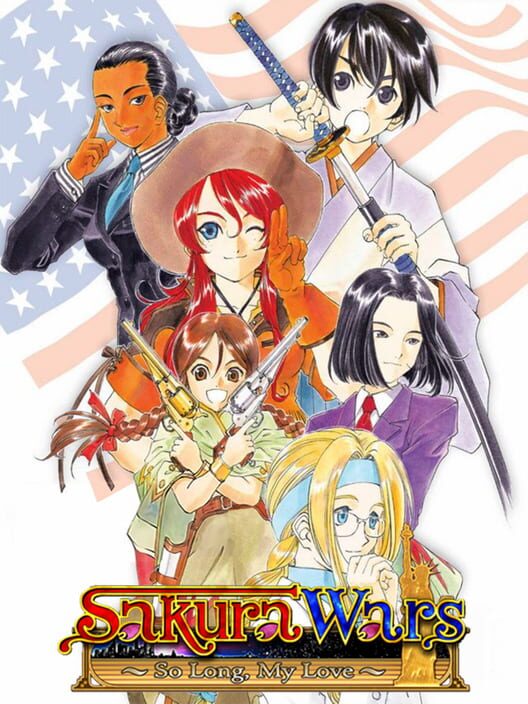
Sakura Wars was an unexpected success for both Red Company and Sega, prompting the companies to develop further entries in the series. It spawned three direct sequels; Sakura Wars 2: Thou Shalt Not Die for the Saturn, and Sakura Wars 3: Is Paris Burning? and Sakura Wars 4: Fall in Love, Maidens for the Dreamcast. A fourth sequel was developed for the PlayStation 2; known as Sakura Wars V: Farewell My Lovely in Japan, it was published overseas as Sakura Wars: So Long, My Love, becoming the first entry to release outside Japan.
Numerous spin-off titles covering multiple genres related to each entry have also been developed for multiple platforms. The success of Sakura Wars led to a wave of games that combine role-playing and visual novel elements, including Thousand Arms, Riviera: The Promised Land, and Luminous Arc.
Sakura Wars has remained popular in Japan since its release. It was rated as the 13th best game of all time in a 2006 Famitsu poll, with all the main entries then released also appearing in the list. Sakura herself was rated in 2009 by Famitsu as the 17th best Japanese video game character. In a poll published by Famitsu, Sakura Wars and its first sequel were both ranked among the ten most memorable games for the Saturn, while the Dreamcast port of Sakura Wars was also ranked among the most memorable for that platform. Characters from Sakura Wars, Sakura Wars 3 and Sakura Wars: So Long, My Love were included as playable characters in the 2012 Nintendo 3DS crossover title Project X Zone and its 2015 sequel.
An OVA series dubbed Sakura Wars: The Gorgeous Blooming Cherry Blossoms was produced and released between 1997 and 1998. Created by Animate and Radix Ace Entertainment, it told a series of stories around events mentioned in Sakura Wars as well as origin stories for the Flower Division members. An anime series of the same name was broadcast in 2000 over a six-month period. Co-produced by Red Company, Madhouse and Studio Matrix, Ryutaro Nakamura directed the anime series.
While following the basic plot of Sakura Wars and preserving Hiroi's original vision, several elements such as depictions of the main antagonist's past, Sakura's childhood memories and scenes within the Flower Division before Ogami's arrival were added. A major issue was being faithful to both the video game and OVAs while keeping within the restrictions of a television format.
A manga adaptation written by Hiroi and illustrated by Ikku Masa, with cover illustrations by Fujishima, began serialization in 2002. The first series ended in December 2008, but its popularity led to a second ongoing series the following year. The first manga was originally serialized in Monthly Magazine Z until it closed down in 2008, shifting to other publications. The manga has been released in tankōbon volumes since 2003 by the magazines' parent company Kodansha.