Ludography
74/100
Players22 ratings
70/100
Critics1 review
More scores
GameFAQsTough
3.92/5
Player reviews
77% positive180 reviews
Steam Deck
Playable
Runs on
Windows
Price
US$9.99

Where to get it

The Last Blade cover

1997 · SNK · Arcade · Fighting

The Last Blade

Timed SNK exclusive

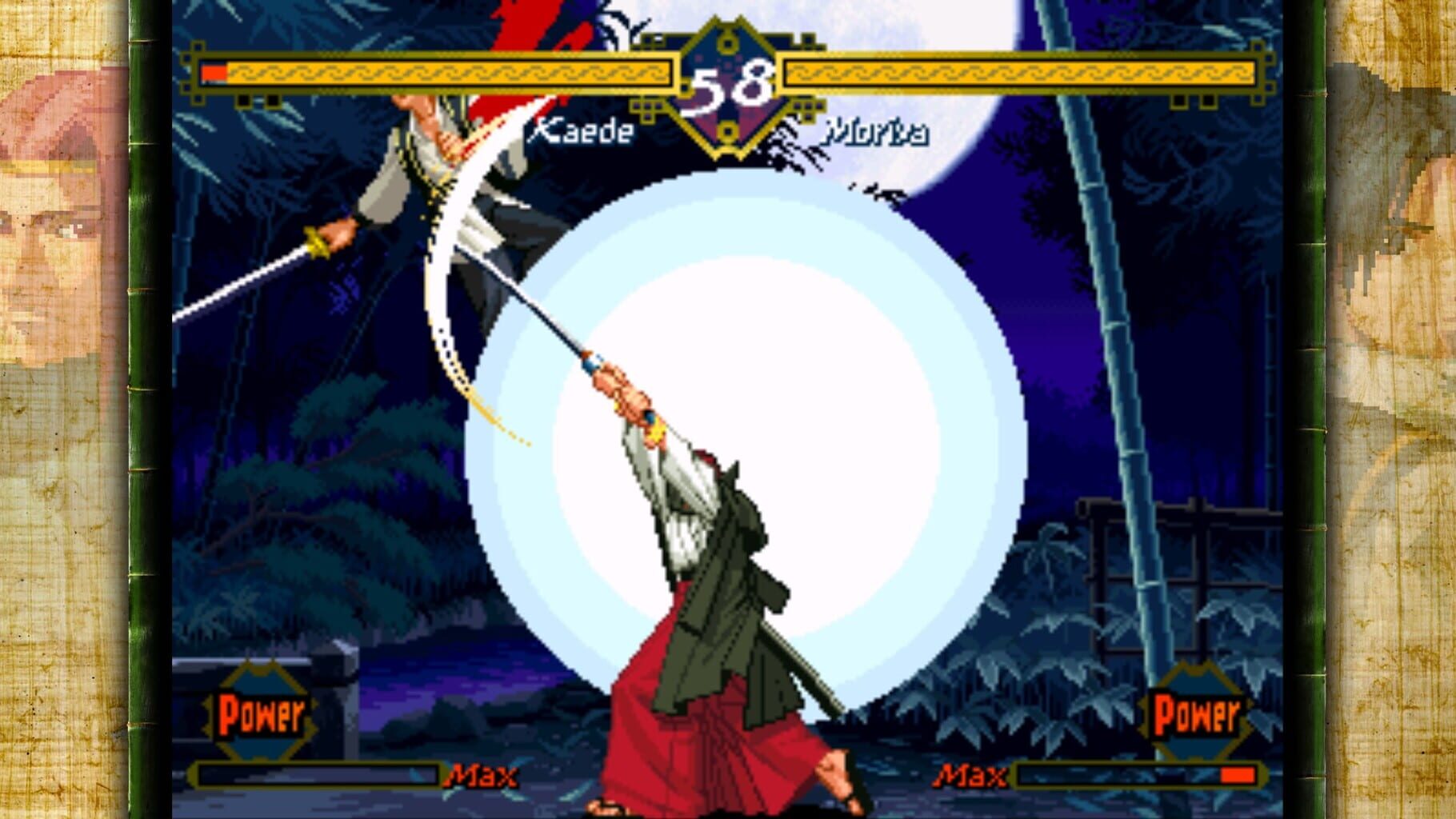
The Last Blade is a fighting game developed and published by SNK and released in arcades in 1997. It is set in a fictional version of late 19th-century Japan and features a roster of sword-wielding characters. The game uses a weapon-based combat system with selectable fighting styles that emphasize speed or power. Its presentation draws heavily on historical themes and traditional Japanese aesthetics.

Also known as
Gekka no Kenshi · Bakumatsu Roman: Gekka no Kenshi · Bakumatsu Romance: Gekka no Kenshi · Last Blade · Bakumatsu Rouman: Gekka no Kenshi · Bakumatsu Romance: Moon Flower Swordsman · The Last Soldier · Curtain Closing Romance: Swordsman of the Moon Luster · ばくまつろまん げっかのけんし · LastBlade.exe · 幕末浪漫 月華の剣士
Released
5 December 1997
Platforms
ArcadeNeo GeoNeo Geo CDPlayStationPlayStation 3PlayStation PortableWiiLinuxmacOSWindowsBrowserNintendo SwitchSteamVRXbox One
Genres
ArcadeFightingNinja
Developers
SNK
Publishers
SNK
Series
The Last Blade
Modes
MultiplayerSingle-player
Perspective
Side view
Themes
ActionHistorical
Country
Japan
Age ratings
ESRB TPEGI 16CERO C
Languages
Chinese (Simplified)EnglishFrenchItalianJapaneseKoreanRussianSpanish (Spain)
Time to beat
1hmain story5hcompletionist

About

The Last Blade is a 1997 fighting game developed and published by SNK for the Neo Geo arcade and home platforms. It was also ported to several home systems. A sequel, The Last Blade 2, was released in 1998. A second sequel, The Last Blade: Beyond the Destiny, was released in 2000.

The game takes place during the Bakumatsu era in Japan, and incorporates various elements of Japanese mythology (with a heavy emphasis on the symbology of the Four Symbols). As such, the background music generally incorporates synthesized instruments simulating a sound appropriate to the 19th century setting, in a Western classical, pseudo-Romantic style (unusual for a fighting game).

›Story

"Two worlds once existed since ancient times... The world of the living, Ushyo, and the land of the dead, Tokoyo. A legendary boundary to forever separate them, The Hell's Gate, has existed since the birth of myths to keep an universal balance. There is said to be four gods that defend it: Seiryu of the East, Byakko of the West, Genbu of the North, and Suzaku of the South. They eternally perform their duty from the shadows of legend and were eventually forgotten by people as time passed.

Now, it is the 'Bakumatsu'.

The Tokugawa shogunate, after 200 years of reign, began to have samurai who long dulled their battle skills during the outskirts of the Heian period. People, who have long since grown used to peace, are met with fascinating foreigners and wonder about the confines of their isolation. To add to the confusion, a sudden disturbance occurs.

A natural disaster unprecedented in Japan's history began. It was rumored to be the Majin Revival, a time when gods were to walk the land once more and deliver divine punishment. In a land where no chaos was said to exist, the people could do nothing but watch and despair.

However, it was said that there are individuals who did not. People who haven't lost their fighting spirit and stood to face the chaos. Those who wanted to find the real cause behind the disturbance and stop it. Moreover, people who were unexpectedly born at the center of chaos.

Those who had the ambitions to control the threat and those who are said to be the cause of the Majin Revival. Without speculation of their cause, they are brought together by a heavy fate as their battle begins."

The passage to the land of the dead, Hell's Gate, which was previously guarded by Four Sacred Beasts appears to be opened. However, chaos sweeps the land once the gods are encased in human flesh, otherwise known as the Majin Revival. The story of the series continues to focus on how certain individuals choose to confront such conflict, and depicts how each of them are drawn on the same string of fate.

Players say

Media

The articlegameplay, story, development, reception

Gameplay

The Last Blade series is seen as a spiritual offshoot to SNK's popular Samurai Shodown series, due to it being a similar 2D weapons-based fighting game. It also took over several elements from cancelled Technōs/Face's Dragon's Heaven (which tentatively was named DarkSeed). The gameplay is characterised by two selectable fighting styles, and a unique combo system along with a "deflect" system which involves pressing the D button at an opponent's attack. Upon deflecting, the opponent is left open to attack.

The two styles are Speed mode and Power mode. Speed mode allows players to chain several normal attacks into a special or desperation/super move, as well as execute a Speed Combo. Power mode on the other hand, grants the player increased damage potential exponentially and gives access to Super Desperation Moves, which inflict an exorbitant amount of damage (performing them however, requires the player's life bar to flash and have a full power bar). Power mode also allows the player to perform Super Cancels; canceling a special move into a desperation/super move (but not a desperation move, with the sole exception of Awakened Kaede in the first game).

Reception

In Japan, Game Machine listed The Last Blade on their January 1, 1998 issue as being the most popular arcade game at the time. According to Famitsu, the Neo Geo CD version sold over 22,735 copies in its first week on the market. Rafael Fernández Barbero of Spanish magazine Loading gave the PlayStation port a positive outlook.

Releases by platformdates and regions as published

Releases by platform
PlatformReleasedRegions
Arcade5 December 1997Japan · North America 5 December 1997
Neo Geo29 January 1998Japan · North America 29 January 1998
Neo Geo CD26 March 1998Europe · North America 26 March 1998 · Japan 26 March 1998
PlayStation24 February 2000Japan
PlayStation PortableDigital Compatibility Release26 April 2007Japan
PlayStation 3Digital Compatibility Release26 April 2007Japan
Wii13 March 2012Japan · North America 7 June 2012 · Europe 2 August 2012
Linux31 August 2016Worldwide
macOS31 August 2016Worldwide
Windows31 August 2016Worldwide

Title IDsone per regional release, with its latest update

Title ids and disc serials by release
PlatformTitle IDRegionLatest update
PlayStationNPJJ00037Japan—
SLPM-86118Japan—
SLPM-86436Japan—
PlayStation 3NPJJ00037Japan—

Decompilations and portscommunity projects that rebuild or port the game

Editions and related releases

Included in
Neo Geo MiniSuper Pocket: NeoGeo EditionBakumatsu Roman: Gekka no Kenshi 1+2
Ported as
ACA Neo Geo: The Last Blade

In the same series

Games like this

Collections9 collections

Publishers

Genres

Description adapted from its source, CC BY-SA 4.0.