The articlegameplay, story, development, reception
Gameplay
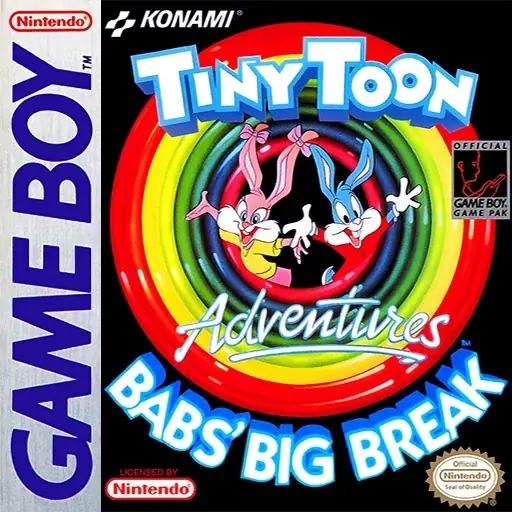
Babs' Big Break is a platformer game. It contains four levels: Sure Weird Forest, Acme Looniversity, Pipsqueak Pipe Maze, and Groovy Train.
Controlling either Buster, Plucky or Hamton, players can defeat enemies by either jumping on them or throwing vegetables at them. Characters can be changed via a selection screen. Each character throw different fruits and vegetables with different gameplay mechanics: Buster throws carrots in an arc, Plucky tosses pineapples that bounce off the ground, and Hamton rolls watermelons at enemies.
Power-ups can be found by jumping on small "bonus blocks" that can earn the player items that enhance weaponry, grant invincibility, or hearts which offer health restoration.
The game includes mini-games that are located within levels such as a race against other Tiny Toon characters and a whack-a-mole-styled game. Characters beaten in these mini-games allow the player to progress through the levels.
Development
Bill Kunkel wrote in Electronic Games that by 1993 cartoon and comic book characters had become "red hot license properties" with developers taken advantage of 16-bit graphics and multimedia technology which led to various companies signing up to license their characters into video games from Disney, Hanna-Barbera and Warner Brothers along with then newer programs such as The Simpsons, Ren & Stimpy and Batman: The Animated Series.
An anonymous writer in Nintendo Power commented in 1997 that Konami had "went all out" with its license on Warner Bros. animated series Tiny Toon Adventures. These included video games across several consoles, such as such as Tiny Toon Adventures 2: Trouble in Wackyland (1992), Tiny Toon Adventures: Buster Busts Loose! (1992) and Tiny Toon Adventures: Buster's Hidden Treasure (1993). The surge of these video games based on cartoon and comic characters also extended in the handheld video game market with Konami making two Tiny Toons games for the Game Boy: Tiny Toon Adventures: Babs' Big Break (1992) and Tiny Toon Adventures 2: Montana's Movie Madness (1993).
The game was developed and published by Konami. The Japanese version of the game features small differences such having the characters have three energy hearts instead of two and adds a password system.