
The articlegameplay, story, development, reception
Gameplay
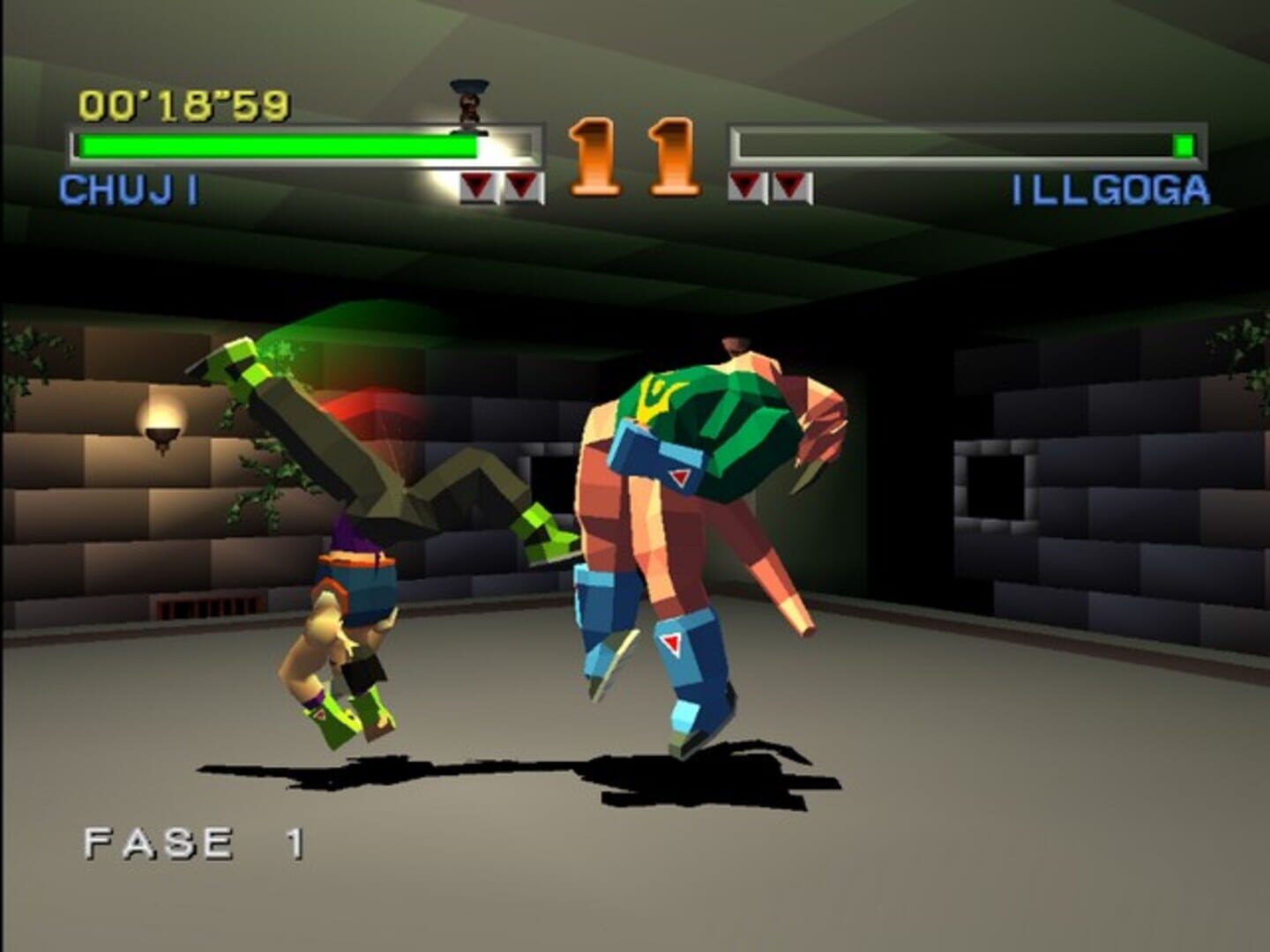
Tobal No. 1 has a tournament mode, two player versus mode, practice mode, and the unique quest mode, all of which utilize the same fighting system. The game runs at up to a smooth 60 frames per second due to its lack of textured polygons and reduced details which gave the game a distinctive look in comparison to other fighting games at the time. The game's controls allow full freedom of movement in the ring as long as the player faces the opponent.
The player has the ability to dash and jump, and certain buttons execute high, medium, and low attacks for each character. Tobal No. 1 also has a grappling and blocking system, offering the player a variety of throws and counter moves.
Story
Tobal No. 1 takes place in the year 2048 on a fictional planet called Tobal, which has large deposits of Molmoran, an ore that can be used as an energy source. The planet's 98th tournament is held to determine who has the rights to the ore. A number of humans and aliens compete for the title.
The game's plot and character backstories are only explored in the instruction manual. All of the initial eight playable characters receive the same ending.
Development
Tobal No. 1 was developed by Japanese studio DreamFactory, which was established as a subsidiary of publisher Square to create that company's first fighting game and its first release for the PlayStation. DreamFactory was founded in November 1995 and consisted of 17 members, all of whom had worked on other 3D polygonal fighting games. The company's chairman and the director of Tobal No.
1, Seiichi Ishii, had himself helped pioneer 3D arcade fighting games as a designer on Virtua Fighter for Sega and the first two Tekken titles for Namco. Toru Ikebuchi was the lead programmer on Tobal No. 1, a role he previously served on Virtua Fighter. Square executive Hironobu Sakaguchi signed on as a supervisor.
Reception
Upon release in Japan, Tobal No. 1 topped the Japanese sales charts. Tobal No. 1 became the ninth best-selling home video game of 1996 in Japan, where it sold 752,000 copies that year.
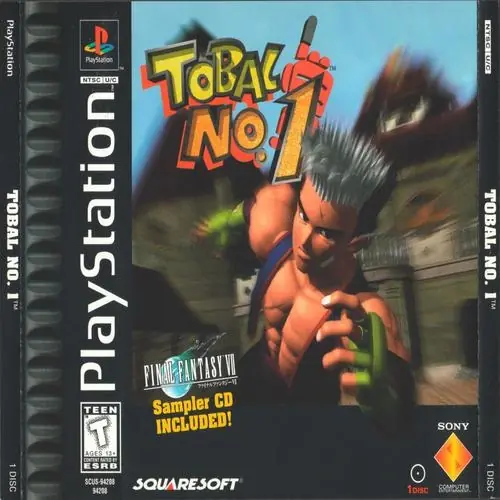
The strong sales have been attributed to the inclusion of the Final Fantasy VII demo disc, a highly anticipated title at the time. The game is cited as a cult hit in North America, where it did not sell as well. It sold 99,183 copies in the United States, bringing total sales to 851,183 copies in Japan and the United States.