The articlegameplay, story, development, reception
Gameplay
Tokyo Mirage Sessions ♯FE is a role-playing video game (RPG), and a crossover between the Shin Megami Tensei and Fire Emblem series. Set in modern-day Tokyo, the game follows the members of a talent agency during their conflicts with hostile beings from another world called Mirages. To help them, the main cast are allied with friendly Mirages inspired by characters from multiple Fire Emblem games. The game's story is split up into several chapters, with the player also able to participate inside stories for various playable and supporting characters, as well as take quests from non-playable characters (NPCs) in Tokyo. The game alternates between real-world Tokyo and the Idolaspheres—alternate dimensions where enemy Mirages roam.
Players control the main protagonist Itsuki as he explores both worlds, interacting with various characters. Players can spend money earned from battles to purchase restorative items that replenish health points (HP) and energy points (EP). Players can also purchase protective accessories, with shops offering lottery tickets allowing players to win additional items. Players can also find various items in the Idolospheres, either by finding hidden treasure chests or defeating enemies in battle. The Wii U GamePad displays an in-game social app known as Topic where players can receive messages from other characters, keep updated on available Unity fusions, and view a map of each area.
By utilizing a place called the Bloom Palace, players can perform two kinds of Unity ritual to strengthen their party: Carnage Unity and Radiant Unity. Carnage Unity uses Performa, which are obtained in battle by defeating monsters and performing crowd-pleasing techniques, to create new weapons for each character. Each weapon carries four skills which a party member can inherit by earning experience in battle. These include Command Skills, which allow the party member to perform various attacks and spells, Passive Skills, which offer passive stat boosts and effects, and Session Skills, which are used to chain together Session Attacks.
Each character can only hold six skills of each type, but if they inherit a skill they already have, it is stacked on top and becomes more effective. Radiant Unity uses Performa that is born from within each party member, either through plot progression and clearing side stories, or by increasing a character's Star Ranking in a battle to grant them Radiant Skills. These are permanent skills separate from those inherited from weapons, and include passive effects such as increased health or extended Session Attacks as well as skills that can be performed in battle.
The party's activities alternate between events in the real world and exploration through dungeons in the Idolaspheres, each designed around a specific theme. Unlocked by progressing through the story, the party navigates through multiple floors, activating switches and devices to solve puzzles and advance while avoiding traps and encountering or avoiding enemies represented by sprites on the field. The dungeon map is displayed on the GamePad. Once cleared, dungeons can be replayed at any time.
Friendly NPC mirages also act as merchants within dungeons. Battles are triggered when an enemy touches the party touched. The player can attack a Mirage on the field to stun it, allowing them to perform a pre-emptive attack or avoid battle.
The game features a turn-based combat system in which party members and enemy Mirages take turns to perform actions such as attacking, casting spells, and using items. The player's party consists of three main characters which, except main character Itsuki, can be swapped out both inside and outside of battle. Similar to both Fire Emblem and Shin Megami Tensei's battle systems, party members and enemies each have strengths and weaknesses against certain types of physical attacks, such as swords and arrows, and elemental attacks, such as fire and ice. The affinities of each party member change depending on the weapon they have equipped.
Session Attacks are combination attacks that can be triggered by targeting an enemy's weakness. If another party member possesses a Session Skill linking to the type of attack used, they will automatically perform a pursuit attack, which may then trigger another attack and so on. For example, if one party member attacks with an ice attack, another party member with an Ice-Elec skill will follow up with an electrical attack. Session Attacks may also be carried out by the enemy if they target a party member's weakness.
By building up a special meter through attacks, players can earn SP which can be used to trigger Performance attacks, which can be earned through Unity and by completing side-stories. These are called Duo Attacks which are performed by a partner's Mirage. Dual Attacks, on the other hand, can be triggered during a Session Attack to extend the combo at random times. Additionally, party members can learn Ad-lib Performances which may randomly activate while performing certain skills.
Along with items and money earned from battles, winning battles earn experience points which increase each party member's level and allows them to learn skills from their weapons. Performing well in battles, such as achieving quick victories or successful Session Attacks, increases party members' Stage Level, which unlock Performa for Radiant Skills and opens up new side stories. The game ends, sending the player back to the title screen, if all party members are knocked unconscious by running out of HP.
Story
Tokyo Mirage Sessions ♯FE is set in modern-day Tokyo. The story moves between multiple well-known city districts, such as Shibuya and Harajuku. In the universe of Tokyo Mirage Sessions ♯FE, everyone holds energy called Performa that enables them to pursue their dreams. Performa attracts beings called Mirages, who hail from an alternate dimension called the Idolasphere: while some Mirages harvest Performa for malicious motives, others form alliances with humans to protect the real world.
Those who form alliances with friendly Mirages are referred to as Mirage Masters. The main casts are employees and associates of Fortuna Entertainment, a talent agency that secretly acts as a hub and recruiting organization for Mirage Masters.
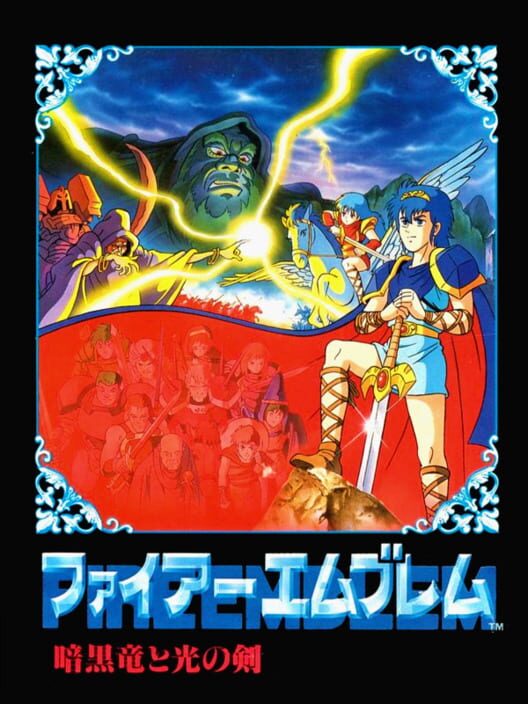
The main protagonist is Itsuki Aoi, a high schooler who by chance becomes involved with Fortuna Entertainment, and is initially uninterested in the business. The other human main characters are Tsubasa Oribe, an optimistic and hard-working classmate of Itsuki who seeks to become a pop idol; Touma Akagi, an impulsive friend of Itsuki and Tsubasa working to become an actor in a tokusatsu show; Kiria Kurono, a famous idol and veteran Mirage Master; Eleonora Yumizuru, a successful half-Scandinavian actress; Mamori Minamoto, a cooking show host with a taste for Shōwa period clothing and music; and Yashiro Tsurugi, a superstar male idol who is initially hostile towards the party and their ambitions. The group is aided by Maiko Shimazaki, a former model who is the head of Fortuna Entertainment; and Barry Goodman, a strict instructor from overseas with a love of otaku culture. The Mirages who ally with the cast are Chrom, Virion and Tharja from Fire Emblem Awakening, and Caeda, Cain, Draug, and Navarre from Fire Emblem: Shadow Dragon and the Blade of Light. A different Mirage is Tiki, who provides assistance to the Mirage Masters and is portrayed in the real world as a popular "utauloid".
In modern-day Tokyo, Itsuki accompanies Tsubasa to a talent audition. Hostile Mirages attack, and the two end up in the Idolasphere where they are attacked by Chrom and Caeda. Itsuki uses his Performa energy to cleanse the Mirages, prompting Chrom and Caeda to join them. With help from Touma and Kiria, respectively partnered with the Mirages Cain and Tharja, they defeat the Mirage's leader.
Itsuki and Tsubasa are then enrolled in Fortuna Entertainment at Maiko's suggestion. They are aided by Tiki, who suffers from amnesia similar to the other allied Mirages. Further attacks follow at multiple locations throughout Tokyo, each focusing on leading entertainment and media figureheads being possessed by hostile Mirages: these Mirages are revealed to be servants of a greater power. During one mission, the group rescues producer Yatsufusa Hatanaka, who later keeps a close watch on them.
They also gather new allies in the form of Elenora and her partner Virion; and Mamori and her partner Draug, the former partner of and initially possessed Barry. On many missions, Yashiro and his partner Navarre watch and sometimes act as an antagonistic force, before Itsuki persuades Yashiro that he can help him avenge his father, who vanished from an opera performance five years earlier in a Mirage attack that only Tsubasa and Yashiro survived.
Investigating a large Idolasphere portal, Hatanaka reveals himself as a partner to the malevolent Mirage Gharnef, both seeking to revive the Shadow Dragon Medeus through a ceremony dubbed the Opera of Shadows, which will destroy the world's creative energy. Using items called Dragonstones, Tiki recovers her memories, revealing she and the other Mirages failed to prevent the summoning of Medeus into their world. Tiki was banished to the Idolasphere and saved Yashiro and Tsubasa from an attempted performance of the Opera of Shadows five years earlier at the cost of her memory. They further learn that Gharnef and Medeus were defeated in ancient times by the Hero-King Marth using five gems dubbed the Fire Emblem.
The group defeats Hatanaka and Gharnef, but their sacrifice, coupled with the offering of Marth's soul, completes the Opera of Shadows and summons Medeus. Traveling to the final Idolasphere realm, Itsuki is fatally injured by Medeus, but the Fire Emblem frees Marth's soul, which saves Itsuki and allows the group to perform the Divine Dragon Naga's Opera of Light and defeat Medeus. The Mirages, with their memories restored and Medeus gone forever, return with Tiki to their native realm.
Alongside the main narrative are side stories involving various members of Fortuna Entertainment, whom Itsuki can help as he learns from working in various sectors of the agency's business. These quests' storylines include Tsubasa working to create her idol persona; Touma's wish to become an inspirational actor; Kiria's discomfort with her softer side, which clashes with her professional identity; Eleanora's attempts to polish her abilities as an actress in preparation for a hoped-for Hollywood career; Mamori pushing to expand her professional range beyond her cooking host role; Yashiro breaking out of his self-imposed personal and professional isolation, culminating in a battle with his father's spirit; the often-tipsy Maiko's efforts to maintain Fortuna's public and private functions; Barry's antics and his growing insecurity after losing his Mirage Master abilities; and Tiki wanting the chance to experience the real world. If all the side stories are completed, a post-credits scene is unlocked where Maiko returns to modeling, and Itsuki is unanimously chosen as the new manager of Fortuna Entertainment.
Development
Tokyo Mirage Sessions ♯FE was the brainchild of Nintendo producer Kaori Ando, who voiced her wish to make a Fire Emblem crossover to fellow producer Hitoshi Yamagami in 2010. Ando's initial vision was for a collaboration between the Fire Emblem and Pokémon series, but this was rejected as a similar collaboration was being developed in the form of Pokémon Conquest. Ando redrafted her proposal and submitted it a week later as a crossover between Fire Emblem and Shin Megami Tensei. Atlus, the developer of the Shin Megami Tensei series, had previously worked with Nintendo on a game titled Itsumo Purikura ☆ Kuradeko Premium for the Nintendo DSi and 3DS.
When the project was originally pitched to Atlus in 2010, it was assumed that they were not interested after their unenthusiastic response and later said they were too busy to undertake the collaboration. Over a year later, Atlus inquired as to whether the subject was still open for discussion, and it transpired that they had been highly enthusiastic while still being too busy with other projects. Shinjiro Takada, who was also working on Shin Megami Tensei: Devil Survivor 2, was appointed as a producer. While he had viewed Fire Emblem as a rival and quality goal for his work, he was honored to be given the chance to develop a title related to Fire Emblem.
The game's directors were Mitsuru Hirata, who was supporting director on Shin Megami Tensei: Strange Journey, and Eiji Ishida, who worked on both Strange Journey and Shin Megami Tensei IV. Hirata was originally the project's sole director, but seven months after the game's public announcement, Ishida was brought on to co-direct so the amount of work needed for the title could be managed. According to Ishida, it was the company's first original game for eighth-generation consoles. Full development began in 2013.
From conception to release, production on Tokyo Mirage Sessions ♯FE lasted five years.
During its early production, what type of game it would become relied on whether Atlus or Fire Emblem developer Intelligent Systems would develop it. One of the problems that needed to be overcome was the form of the initial proposal, which was for a simulation game similar to Fire Emblem developed by Atlus. Atlus, who was better known for making traditional role-playing games, was unsure which series to emulate. The decision was eventually made to create something along the lines of a traditional RPG, so Atlus took on primary development.
Their first concept turned out to be a grid-based strategy game with strategic positioning elements similar to Fire Emblem, but they were eventually convinced by Yamagami and staff from Intelligent Systems to keep within their skill set rather than attempting anything radically different. The final product was visualized as a game only Atlus could make, incorporating elements from both series while standing as an original title that could be enjoyed by fans of both Shin Megami Tensei and Fire Emblem. The game's platform was chosen based on the recent successful Fire Emblem entries for the 3DS: as Fire Emblem had appeared on the 3DS, Tokyo Mirage Sessions ♯FE was to be a different "expression" designed for the Wii U. During these early stages, proposals were also made for a 3DS version, but this never materialized.
Despite the final product, some of the conceptual ideas were taken from early plans for Fire Emblem Awakening to take place in a modern-day setting. The inclusion of a sharp symbol in the title, which represents a semitone increase in the pitch of a note in musical notation, denoted the game's status as a unique hybrid of the two series. The inclination of the logo was also designed to represent the game's altered perspective on the Fire Emblem series. The game's cutscenes were created by Studio Anima, who handled the animated cutscenes for Fire Emblem Awakening and Fire Emblem Fates, and Studio 4°C.
The scenario was written by Yoh Haduki and Makoto Miyauchi. Haduki was in charge of the main narrative, while Miyauchi handled the side stories for the main cast. During the early scenario development, it was thought that the main characters would be reincarnations of Fire Emblem characters, but this was dismissed as it would link it too strongly to the Fire Emblem series. When going through how to help incorporate Fire Emblem characters within the "Atlus mythos", they decided to use a concept from Japanese Shamanism called the "kami oroshi", which stands for a deity possessing and communicating through a priest or ritual dancer.
A further extension of this was the incorporation of the kagura ritual dance, which in turn led to the inclusion of the entertainment theme. Inspiration was also from traditional Noh theater. The character of Itsuki Aoi, who is not directly associated with any branch of Japanese media and entertainment, was created to introduce the setting and characters from an outsider's point of view. Itsuki was also a rarity among Atlus protagonists in that he took an active role in conversations with other characters rather than being a silent protagonist.
The side stories were created so the player could better understand and empathize with the struggles of entertainers in the industry and their private lives. Part of the team's struggle was balancing the main story and side missions and making both appealing to players. During an earlier stage, there was no divide between these two mission types, which ended up clashing with major story events and prompting players to ignore the side stories. To counter this, "Intermission" periods were created where side story chapters could be accessed.
In the end, the side stories became a large part of the game's thematic base, causing Yamagami to consider them something more. The general infusion of Japanese pop idol culture and the performing arts into the title was Atlus's take on traditions within Japanese Shamanism where the dancing of priestesses brought them closer to the gods they worshiped: in th
Reception
Japanese gaming magazine Famitsu found the story's premise entertaining and interesting, and praised the side stories' focus on the supporting cast. Chris Carter of Destructoid noted that its focus on Japanese culture and similarity to fringe anime such as Revolutionary Girl Utena might put some people off, while Game Informer's Kimberley Wallace called the narrative both amusing and predictable. Cassandra Khaw of Eurogamer praised the character portrayals and the story's inclusion of the entertainment industry's darker elements. GameRevolution's James Kozanitis praised the game's over-the-top display and tone, enjoying the story despite its slow start, feeling that the pace was better suited to players who enjoyed anime.
Alexa Ray Corriea, writing for GameSpot, found the story to be "a bit of a cheesy mess", but positively compared side stories to the Social Link systems from the Persona series. David Roberts, writing for GamesRadar, noted the story's lighthearted tone compared to other Atlus projects despite its dark opening premise, and Meghan Sullivan of IGN found the characters bland and the narrative poor compared to other aspects of the game. Nintendo Life's Conor McMahon noted the story's blatant use of its contemporary setting and entertainment theme, praised the side stories and praised the way the personalities of Fire Emblem characters were preserved. Daan Koopman of Nintendo World Report enjoyed the narrative due to its brisk pace and highlights of the Japanese entertainment industry, while Polygon's Janine Hawkins positively compared the story to magical girl anime, calling it "a co-ed version of Sailor Moon for the Love Live!
age". Multiple reviewers noted a lack of Fire Emblem references, with several expressing disappointment with this imbalance.
Famitsu praised the aesthetics and user interface design, while Cartar enjoyed the art design despite clear technical limitations. Khaw praised the animated cutscenes, and Wallace praised the character and monster designs despite finding the graphics dated and environments lacking detail. McMahon positively referred to the visuals as "undoubtedly one of its greatest strengths, with every aspect of its visual design firmly planted in the vibrant world of idol culture". Koopman also praised the visuals despite criticizing long load times. The music received praise from multiple reviewers, with several praising both environmental tracks and the musical numbers.
Famitsu generally praised the gameplay, comparing it favorably to the Persona series while also commenting upon its unique elements. Carter greatly enjoyed the combat systems, saying they made up for more formulaic aspects such as general progression, Wallace praised the controls and combat, finding satisfying depth in its systems despite a need to grind for experience points. Khaw enjoyed the mechanics and style of the combat system, and praised the game for its relaxed pace. Kozanitis praised the blending of elements from both series, praising the combo mechanics and character growth systems.
Corriea found the overall experience entertaining and engaging, but found boss fights brought down the experience due to becoming endurance tests rather than requiring any strategy. Despite criticizing the limit on skills, Roberts enjoyed the complexity and strategy of combat, praising it for removing the more tedious elements of its parent series. Sullivan praised the combat, calling the Session attacks its best feature and enjoying the overall spectacle and customization systems. McMahon praised the game's unique systems along with its blend of series elements, but found the GamePad difficult to use.
Koopman said the battle system "[hit] the sweet spot" between Persona and Fire Emblem in its use of gameplay elements from both series in combination with its unique features. Hawkins also enjoyed the Session attacks, and praised the combat system and growth systems. Several reviewers found dungeon progression difficult due to backtracking or bland puzzles.
According to Famitsu, the game debuted at #13 with 23,806 units, having a moderate sell-through rate. At release, the game ranked as #8 in Nintendo's weekly download charts. The following week, it dropped to #16, selling another 9,094 units, bringing total sales up to just under 33,000 units. By mid-January, it had dropped to #27, but its sell-through rate had increased.
According to Media Create, the game reached #14 on their charts, with all versions selling 26,340 units. By the following week, it had dropped out of the top twenty. According to Dengeki Online, the game had sold 32,896 units by January 2016. In its first week on sale in North America, the game sold 50,000 units.
Upon its UK debut, the game reached #18 in the all-format charts and #16 in single-format.
The Nintendo Switch version, Tokyo Mirage Sessions ♯FE Encore, debuted at #6 in Japan with 18,797 units sold according to Famitsu, while Media Create reports the game debuted at #5 in Japan. In the UK, the game debuted at #17 in the all-format chart, and launch sales are reported to be 17% stronger than the original Wii U release.
Critics were generally positive. The game scored an 80 out of 100 on aggregate site Metacritic based on 62 critic reviews. It was ranked by the site as the sixth best Wii U game of the year. Tokyo Mirage Sessions ♯FE was awarded the Dengeki Online Award 2015: Dengeki referred to the game as a "masterpiece", calling it one of the best recent role-playing game and applauding the evolved Megami Tensei battle system and lighter-toned story.
Destructoid awarded it as their best Wii U game of 2016, while RPGamer awarded it for Wii U RPG of the year. It was also nominated for and was the runner-up for IGN's "Wii U Game of the Year" in their "Best of 2016" awards. In Nintendo Life's 2016 Game of the Year awards, the game came third in the "Readers Votes Wii U Retail Game of the Year" category behind Paper Mario: Color Splash (#2) and The Legend of