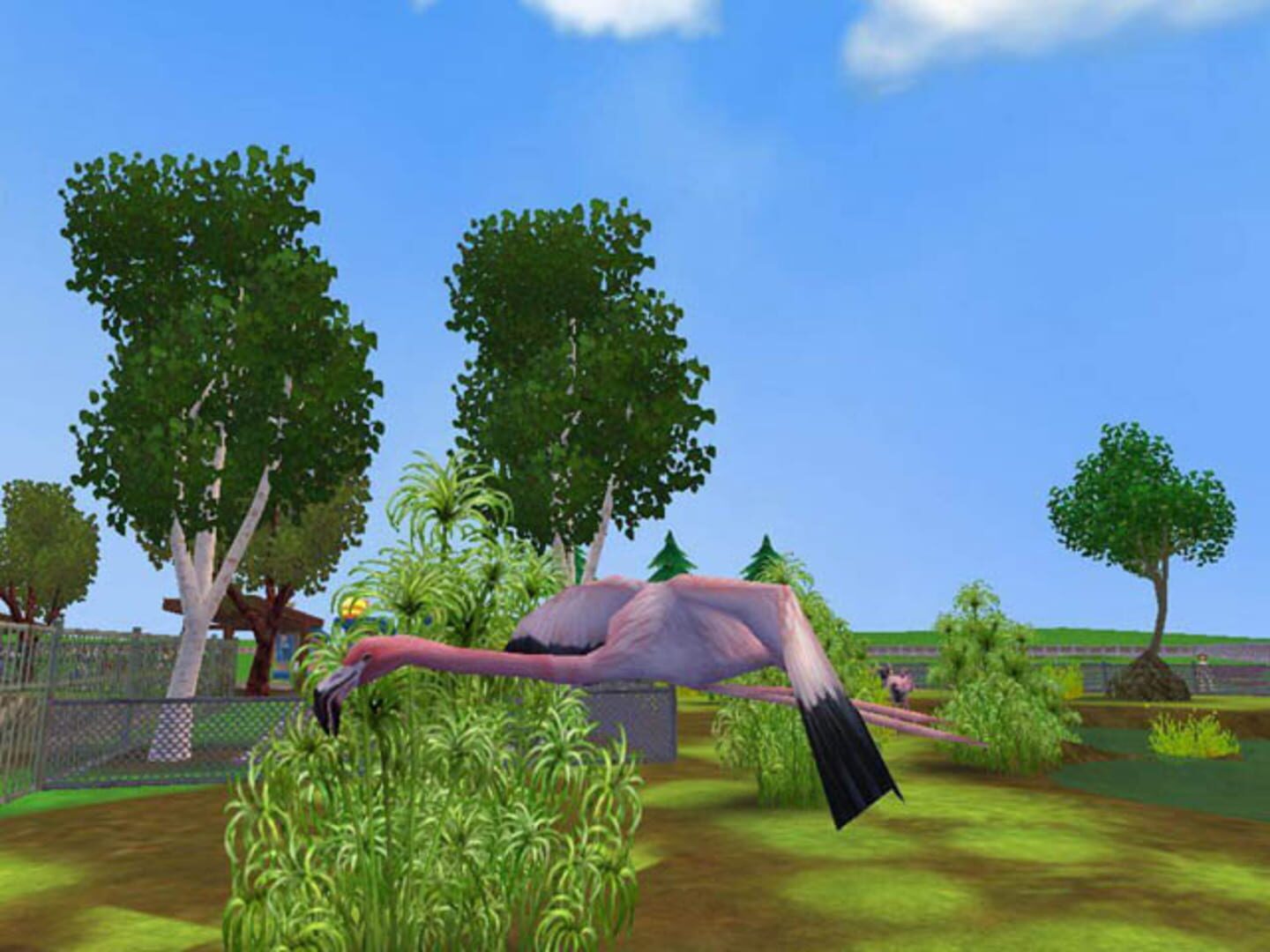

The articlegameplay, story, development, reception
Gameplay
The gameplay revolves around creating suitable exhibits for animals through habitat modifications (ground cover, water, elevation, foliage, and rocks, plus a variety of other items including food, shelters, and toys/enrichment items) which fulfill the animal's needs (habitat, hunger, thirst, stimulation, privacy, sleep, social, and exercise). Guests will visit the zoo to see the animals, and they also have needs that need to be fulfilled through scenery and buildings (hunger, thirst, bathroom, seating, and entertainment). They might stay several months in the zoo if they are satisfied, but quickly leave if they are unhappy.
Zoo Tycoon 2 features three gameplay modes: Campaign, Challenge, and Freeform. In Campaign mode, the player plays through scenarios in existing zoos and is assigned different objectives to complete, such as achieving a certain fame level, caring for rescued animals, or breeding endangered species. In Challenge mode, the player starts a zoo from scratch and is given random challenges which can be accepted or rejected. In both of these modes, players have limited money and start with limited access to animals and items, with more becoming available as zoo fame level increases. The last mode, Freeform, allows the player to create a zoo from scratch with unlimited money and access to all animals and items from the start.
Development
After the success of the original Zoo Tycoon, a sequel was planned. Marketing materials showed an emphasis on 3D visuals as well as first-person perspective and photo modes. The game's first-person Guest Mode was added due to many fan requests to get "closer" to the animals. The Photo Mode and Zookeeper Mode were refined after developers decided that the player should be able to interact with the world while walking around. First-person movement and controls were based on first-person shooters, with developers citing Half-Life as an inspiration.
The game was also designed to be more freeform than Zoo Tycoon was, with developer Shawn Stone citing that habitat building in the first game was a formulaic process that was improved upon in the sequel. Terrain deformation and the Biome Brush were implemented to give the player more specific control over animal habitats by creating unique and individual exhibits, while still keeping them simple enough so as not to alienate players that were not as interested in the details of building an exhibit.
Reception
According to The NPD Group, Zoo Tycoon 2 was the 19th best-selling computer game of 2004. It rose to 13th place on NPD's annual computer game sales chart for 2005, a position it maintained for 2006.
The game received generally positive reviews. IGN gave the game a score of 7.5/10, praising the game's lasting appeal while criticizing it for being too easy, while GameSpy noted the improved 3D graphics.


