
The articlegameplay, story, development, reception
Gameplay
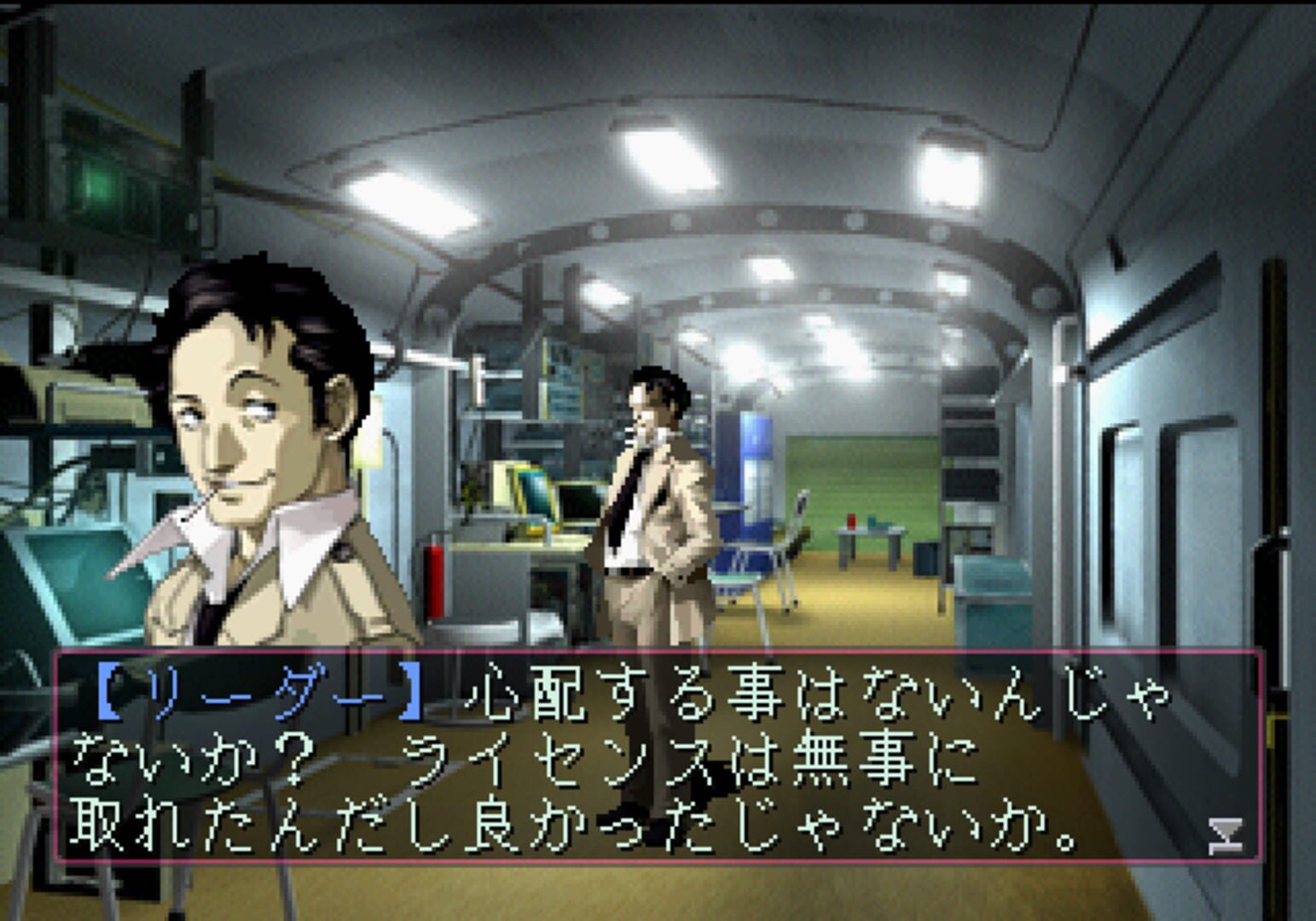
Soul Hackers is a role-playing video game. Players navigate dungeons in a first person view, in which they solve puzzles and fight enemy demons in turn-based battles. The player always has one or two human characters in their party, and also has the ability to summon up to four demons who fight on the player's side. Players get access to demons by choosing to speak to enemy demons, and negotiating with them; negotiations can involve answering questions, intimidating the demons, or giving them items they want. Players are able to fuse several of their allied demons into one single demon; the resulting demon inherits abilities from the demons that were used to produce it.
In battles, players have to manage allied demons differently depending on their personalities, their alignments, and their abilities: for instance, friendly demons prefer to use healing or defensive magic, while sly demons prefer to attack enemies on their own. If players give a demon an order to use an ability it does not want to use, there is a risk that it will refuse and do something else instead, or that it does not do anything at all. Demons with differing alignments can refuse to co-operate with each other. In order to prevent this, players can build up the loyalty of their allied demons; this is done by giving them gifts or letting them choose their actions in battle on their own. By participating in battles, or by trading for it at a special market place, players are able to get magnetite, which is used as fuel for demons; if players run out of magnetite, any currently summoned allied demons start to take damage.
Story
The game takes place in the small fictitious harbour town Amami City in Japan. The company Algon Soft has made Amami its headquarters, which has led to the technology in the city quickly being upgraded; Algon Soft has connected every home and business in the city to its new network in order to demonstrate how a "city of tomorrow" could work. The Japanese government is impressed, and grants Algon Soft permission to expand the network across the rest of Japan in the coming years. It also takes place in the virtual world Paradigm X on Algon Soft's servers, where the citizens of Amami can visit virtual attractions.
The player character is a young man who is a member of the hacking group Spookies, which was founded by a man who calls himself Spooky. The other group members are Six, Lunch, Yu-Ichi, and the player character's friend Hitomi Tono. The group mainly hacks the city's network for fun or to play harmless pranks, but Spooky holds a grudge against Algon Soft. Among other recurring characters are the demon Nemissa, who possesses Hitomi, and Kinap, who teaches the player character to enter the souls of people who have recently died.
Development
Devil Summoner: Soul Hackers is the second entry in the Devil Summoner series, which forms part of the larger Megami Tensei series: as with other entries, its narrative takes the form of a modern-day detective story as opposed to the series' more prevalent post-apocalyptic settings. Soul Hackers began development in 1996 after the commercial and critical success of the original Devil Summoner. Original producer Kouji Okada, and character and demon designer Kazuma Kaneko returned to their respective roles. The initial concept was thought up based on the internet boom fuelled by the recently released Windows 95 operating system: Okada and Kaneko saw the potential dangers of the internet being used as means of control and the crisis that ensued when something went wrong with a widely used system.
The initial world view was created by Kaneko, while writer Shogo Isogai was responsible for the detailed story scenes. A lot of work went into properly balancing the gameplay. Future Persona character designer Shigenori Soejima was responsible for sub-character designs, item graphics, and designing the main character's dialogue portraits. Instead of restricting the narrative to a single perspective as with earlier Megami Tensei games, the team experimented with detailing different protagonists' points of view.
Reception
The 3DS version of Soul Hackers has received "mixed or average reviews" according to the review aggregator website Metacritic. Several critics enjoyed the game's battles. Danielle Riendau at Polygon, Joe Czop at RPGFan and Kimberley Wallace at Game Informer all liked how challenging the battles are: Riendau said that boss battles require careful experimentation and tactical analysis, and that the finishing battles always feels rewarding due to their difficulty; and Wallace said that larger battles give an adrenaline rush and make her think and study her party each turn. Both Riendau and Chris Charter at Destructoid liked the demon negotiation dialogue, and Wallace liked how the negotiations add further depth to the battles.
The dungeons were less appreciated: Riendau said that they consist of "staring at the same bland and blurry wall textures for hours at a time", and that it gets monotonous, especially in the larger late-game dungeons that require backtracking. Wallace said that Soul Hackers made it clear that dungeon design was not at its peak in 1997; she called the dungeons bland, and that most locations the player visits are unexciting, with a few exceptions such as the art museum where the player enters paintings. Unlike Riendau, she did not think it was monotonous to backtrack through dungeons, due to the possibility of talking one's way out of a battles. Famitsu appreciated how the map and difficulty settings made it easy for new players to get into the dungeon exploration.
Legacy
The mobile game Devil Summoner: Soul Hackers – Intruder was released exclusively in Japan on August 30, 2007. The gameplay tactical role-playing with adventure game elements, carrying over elements of Soul Hackers into a mobile format. Another mobile game set in a virtual world, Devil Summoner: Soul Hackers – New Generation, was released on July 22, 2008.
A sequel, Soul Hackers 2, was released for the PlayStation 4, PlayStation 5, Xbox One, Xbox Series X/S, and Windows on August 25, 2022, in Japan, and on August 26 outside of Japan. Set in the near future, it follows agents of the supernatural being Aion gathering a party of summoners to defeat an approaching evil force.


