


1990 · Nintendo Entertainment Analysis & Development · Racing
F-Zero
Nintendo console exclusive
F-Zero is set in the year 2560, when humanity's multiple encounters with alien life forms had resulted in the expansion of Earth's social framework. This led to commercial, technological and cultural interchanges between planets. The multi-billionaires who earned their wealth through intergalactic trade were mainly satisfied with their lifestyles, although most coveted more entertainment in their lives. This resulted in a new entertainment based on the Formula One races to be founded with vehicles that could hover one foot above the track.
- Released
- 21 November 1990
- Platforms
- ArcadeNintendo 3DSSNESSatellaviewWiiWii U
- Genres
- Racing
- Developers
- Nintendo Entertainment Analysis & Development
- Publishers
- St. GIGAGradientePlaytronicHyundaiNintendo
- Modes
- Single-player
- Perspective
- Third person
- Themes
- ActionScience fiction
- Copies sold
- 2.9 million
About
F-Zero is a 1990 racing game developed and published by Nintendo for the Super Nintendo Entertainment System (SNES). It was released in Japan on November 21, 1990, in North America in August 1991, and in Europe in 1992. F-Zero is the first game in the F-Zero series and was a launch game for the SNES. F-Zero has been rereleased for the Virtual Console and Nintendo Classics services on various Nintendo platforms, and as part of the Super NES Classic Edition in 2017.
F-Zero takes place in 2560, when multi-billionaires have created a new entertainment based on Formula One races called "F-Zero". The player can choose between one of four characters, each with their own hovercar. The player can race against computer-controlled characters in 15 tracks divided into three leagues.
Keywords
- vehicular combat
- 16-bit
- superhero
- anti-gravity racing
- vehicle combat
- digital distribution
- motorsports
- nintendo power
- virtual console
- launch titles
- difficulty level
- sideways wii remote gameplay
Media
The articlegameplay, story, development, reception
Gameplay
F-Zero is a futuristic racing game in which players compete in a high-speed racing tournament called "F-Zero". There are four playable characters in F-Zero, who each have their own selectable hovercar with unique performance abilities. The objective is to beat opponents to the finish line while avoiding hazards such as slip zones and magnets that pull the vehicle off-center in an effort to make the player damage their vehicle or fall completely off the track. Each machine has a power meter, which serves as a measurement of the machine's durability; it decreases when the machine collides with land mines, the side of the track or another vehicle. Energy can be replenished by driving over pit areas placed along the home straight or nearby.
A race in F-Zero consists of five laps around the track. The player must complete each lap in a successively higher place to avoid disqualification from the race. For each lap completed, the player is rewarded with an approximate four-second speed boost called the "Super Jet" and a number of points determined by place. An on-screen display will be shaded green to indicate that a boost can be used; however, the player is limited to saving up to three at a time.
Story
F-Zero is set in the year 2560, when humanity's multiple encounters with alien life forms had resulted in the expansion of Earth's social framework. This led to commercial, technological and cultural interchanges between planets. The multi-billionaires who earned their wealth through intergalactic trade were mainly satisfied with their lifestyles, although most coveted more entertainment in their lives. This resulted in a new entertainment based on the Formula One races to be founded with vehicles that could hover one foot above the track.
These Grand Prix races were soon named "F-Zero" after a rise in popularity of the races. The game introduced the first set of F-Zero racers: Captain Falcon, Dr. Stewart, Pico, and Samurai Goroh. IGN claimed Captain Falcon "was thrust into the limelight" in this game since he was the "star character".
Development
F-Zero was produced by Shigeru Miyamoto and directed by Kazunobu Shimizu, who also worked on art. Takaya Imamura, one of the art designers, was surprised to be able to so freely design the characters and courses as he wanted since it was his first game. Yasunari Nishida served as the main programmer. Nine people including three programmers worked in house on F-Zero. It was common practice for personnel to take on multiple roles for SNES game development.
F-Zero uses Mode 7, a form of texture mapping that allows a raster graphical plane to be rotated and scaled freely, simulating the appearance of 3D environments without processing any polygons. The Mode 7 rendering applied in F-Zero consists of a single-layer which is scaled and rotated around the vehicle. This pseudo-3D capability of the SNES was designed to be represented by the game. 1UP.com's Jeremy Parish stated that F-Zero and Pilotwings "existed almost entirely for the sake of showing [the system's pseudo-3D capabilities] off" as they outclassed the competition.
Reception
F-Zero was widely lauded by game critics for its graphical realism, and has been called the fastest and most fluid pseudo-3D racing game of its time for home systems. This has been mostly credited to the development team's pervasive use of the "Mode 7" system. Eurogamer's Tom Bramwell commented "this abundance of Mode 7 was unheard of" for the SNES. This graphics-rendering technique was an innovative technological achievement at the time that made racing games more realistic, the first of which was F-Zero.
Jeremy Parish of Electronic Gaming Monthly wrote that the use of Mode 7 created the "most convincing racetracks that had ever been seen on a home console" that gave "console gamers an experience even more visceral than could be found in the arcades." com editor Ravi Hiranand agreed, arguing F-Zero's combination of fast-paced racing and free-range of motion were superior compared to previous home console games. IGN's Peer Schneider wrote that F-Zero was one of the few 16-bit games to "perfectly combine presentation and functionality to create a completely new gaming experience".
Releases by platformdates and regions as published
Editions and related releases
- Included in
- Super NES Classic EditionNintendo Classic Mini: Super Famicom
- Expanded editions
- BS F-Zero Grand Prix
Games like this
 PlayStation exclusive85
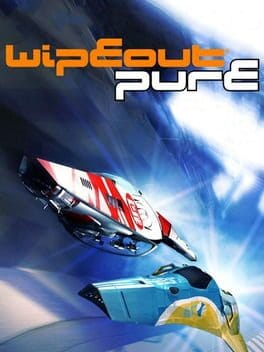
Wipeout Pure
2005 · PlayStation Portable
Racing · Vehicular combat
 Nintendo exclusive61
F-Zero Climax
2004 · Game Boy Advance, Wii U
Racing · Vehicular combat
 PlayStation exclusive82
Wipeout 2048
2012 · PlayStation 4, PlayStation Vita
Racing · Vehicular combat
 Nintendo exclusive85
F-Zero AX
2003 · GameCube
Racing · Vehicular combat
 Nintendo exclusive75
F-Zero: GP Legend
2004 · Expanded · Wii U, Game Boy Advance
Racing · Vehicular combat
- Nintendo exclusive75
F-Zero: GP Legend
2003 · Expanded · Game Boy Advance, Wii U
Racing · Vehicular combat
 Nintendo exclusive61
Mach Rider
1985 · Arcade, NES +3
Racing · Vehicular combat
 Nintendo exclusive80
Contra Advance: The Alien Wars EX
1992 · Arcade, Game Boy +5
Nintendo super system · Technical feature - snes mode 7
Collections14 collections
Platform libraries
- Super Nintendo Entertainment System gamesRetail releases
- Virtual Console games for Wii U (Japan)Titles › Super Famicom
- Virtual Console games for Wii U (North America)Super Nintendo Entertainment System
- Virtual Console games for Wii U (PAL region)Titles › Super Nintendo Entertainment System
- Nintendo ClassicsStandard subscription › Super Nintendo Entertainment System
- Virtual Console games for Nintendo 3DS (North America)Available titles › Super Nintendo Entertainment System
- Virtual Console games for Nintendo 3DS (PAL region)Available titles › Super Nintendo Entertainment System
Years
- Games released in 2019List › July–September
Series and characters
- F-Zero media
- F-Zero mediaVideo games
- F-Zero mediaVideo games
- F-Zero mediaVideo games
- F-Zero mediaVideo games
- F-Zero mediaOther media › Soundtracks
Genres
- Racing gamesList › 1990s
Publishers
- Virtual Console games for WiiTitles › Super Nintendo Entertainment System / Super Famicom
- Best-selling Super Nintendo Entertainment System gamesList
- Nintendo arcade gamesArcade products › Nintendo Super System
- Nintendo home gamesSuper NES/Super Famicom
- Nintendo home gamesSuper NES/Super Famicom › Nintendo Power
Description adapted from its source, CC BY-SA 4.0.