

- 80/100
- Players88 ratings
- 90/100
- Critics1 review

2003 · Amusement Vision · Racing
F-Zero AX
Nintendo exclusive
F-Zero GX is the fourth installment in the F-Zero series and the successor to F-Zero X. The game continues the series' difficult, high-speed racing style, retaining the basic gameplay and control system from the Nintendo 64 title. A heavy emphasis is placed on track memorization and reflexes, which aids in completing the title. GX introduces a "Story Mode" element, where the player walks in the footsteps of Captain Falcon through nine chapters, completing various missions.
- Released
- 25 July 2003
- Platforms
- GameCube
- Genres
- Racing
- Developers
- Amusement Vision
- Publishers
- Nintendo
- Series
- F-Zero
- Modes
- MultiplayerSingle-player
- Perspective
- Third person
- Themes
- ActionScience fiction
- Country
- Japan
- Age ratings
- PEGI 3ESRB T
- Languages
- English
- Composers
- Hidenori Shoji, Daiki Kasho
About
F-Zero GX is a 2003 racing game developed by Amusement Vision, a division of Sega, and published by Nintendo for the GameCube. It was released in Japan on July 25, 2003, North America on August 25, Australia on October 24, and Europe on October 31. Sega also released an arcade version, F-Zero AX, which uses the Triforce arcade system board.
F-Zero GX retains the high-speed gameplay of the previous F-Zero games, with an emphasis on track memorization and reflexes. It introduces a "story mode", in which the player completes missions as Captain Falcon through nine chapters.
›Story
The story starts out with Black Shadow driving down a highway after losing a Grand Prix. Deathborn catches up to him and gives him one more chance to succeed but says it's the only other chance he'll get.
F-Zero GX's story mode continues with Falcon training for the Grand Prix, followed by racing his rival, Samurai Goroh, in a desert canyon and being forced to enter the bet race under the disguise of 'Famicom' (a reference to Nintendo's first home console). After winning said bet race, Falcon notices Black Shadow attacking the Lightning area on the news. Falcon makes his way to stop him, but is delayed by a group of thugs lead by Michael Chain. After dealing with Chain's gang, Falcon enters a facility to save Jody Summer.
His escape is a close one as the core was set to overload and detonate, with said facility going into lock-down procedures. With Jody out of harm's way, he confronts Black Shadow. The evil overlord, with the help of Blood Falcon, binds Falcon and traps him inside his vehicle, strapping a bomb to the Blue Falcon that will detonate if the Blue Falcon goes too slowly. Falcon managed to survive, by driving the vehicle straight off an unfinished road and right under a crane, knocking the bomb off.
Falcon later attended the Grand Prix, where he emerged victorious. After receiving the champion's belt, he witnessed Black Shadow being punished by his master, Deathborn, for his incompetence. Deathborn challenges Falcon to a one-on-one race for ownership of both belts. Before said race occurs, Deathborn reveals his plan to take over the universe, revealing the energies of light and dark are condensed in each belt, and that when combined, provide ultimate power that will turn him into a god-like being, able to lay waste Falcon's galaxy in an instant.
Falcon swears to take him down. Falcon stays true to his word, and Deathborn apparently dies. Both belts unite into one, and Falcon vows to keep winning so he can protect the belt from the forces of evil.
At his garage, Falcon is greeted by the creators. Falcon figures out the creators were behind everything, though they do not elaborate their motives. They challenge Falcon to a race, where, if they win, will rip out Falcon's soul and turn it into their creation, implying that he would replace Deathborn. Falcon defeats even them.
Screaming, the creators disappear, though whether they actually die or decide to let Falcon go, honoring (but no less angered by) his victory is unclear. Falcon then removes his helmet and leaves the room, where the credits and an exclusive theme song begins to play. (The camera pans at a downward angle, so Falcon's face is not clearly visible. Only a portion of his head in the back is partially seen.)
Keywords
- aliens
- vehicular combat
- time limit
- artificial intelligence
- anti-gravity racing
- vehicle combat
- explosion
- split-screen multiplayer
- 60 fps on consoles
- character select screen
- game title announcer
- polygonal 3d
Media
The articlegameplay, story, development, reception
Gameplay
F-Zero GX is a futuristic racing game in which up to thirty competitors race in an intergalactic Grand Prix. It retains the basic gameplay and control of the previous F-Zero game, F-Zero X (1998) on the Nintendo 64. Tracks include enclosed tubes, cylinders, jumps, and rollercoaster-like paths. Some include obstacles such as dirt patches and mines. An emphasis is placed on track memorization and reflexes.
Each machine handles differently, has its own performance abilities affected by its weight, and a grip, boost, and durability score. Before each race, the player can adjust a vehicle's balance between acceleration and top speed. Every machine has an energy meter, a measurement of its health, which is lost through collisions or attacks from opposing racers. Energy is also used to boost, which becomes possible after the first lap.
Development
After Sega transitioned from first to third-party development in 2001, they developed a close relationship with Nintendo, their former competitor in the console wars. Toshihiro Nagoshi, president of Sega subsidiary Amusement Vision, developed Super Monkey Ball for the GameCube, which created the opportunity for a collaboration. On February 18, 2002, Nintendo announced the "Triforce" arcade board, developed by Nintendo, Namco, and Sega. The idea originated after discussions between Sega and Namco about the capabilities and cost effectiveness of the GameCube architecture to make arcade games.
Sega wanted to support it with software that would "stand out and draw attention to Nintendo's platform". Nagoshi agreed to create a driving game and agreed under the stipulation he could come up with something unique—which was working on the next installment in Nintendo's F-Zero series. Nagoshi contemplated declining due to the pressure of impressing Nintendo and creating the next installment of an esteemed franchise, but his curiosity about what he and his team could create overcame his hesitation.
Reception
F-Zero GX has an average score of 89/100 on the aggregate website Metacritic. Some video game journalists consider it one of the best racers of its time and the greatest racer on the GameCube.
F-Zero GX was praised for its visuals, arcade-home connectivity, longevity, sharp controls, tough challenge, and fleshed-out single-player modes. The most common criticism was for its difficulty, especially in the story mode. It earned fourth place in IGN's and GameTrailers' toughest games to beat. GameTrailers said F-Zero GX demanded players to master the "rollercoaster-style tracks [which] required hairline precision" to avoid falling off-course.
Releases by platformdates and regions as published
Editions and related releases
- Ported as
- F-Zero AX
- Built on it
- F-Zero AX
In the same series
 Nintendo exclusive79
BS F-Zero 2 Grand Prix
1990 · Arcade, Nintendo 3DS +4
Nintendo Entertainment Analysis & Development
 Nintendo exclusive
Zero Racers
1996 · Virtual Boy
 Nintendo exclusive79
F-Zero X Expansion Kit
1998 · Nintendo 64, Wii +1
Nintendo Entertainment Analysis & Development
 Nintendo exclusive78
F-Zero: Maximum Velocity
2001 · Game Boy Advance, Nintendo 3DS +1
Nintendo Cube
 Nintendo exclusive75
F-Zero: GP Legend
2003 · Expanded · Game Boy Advance, Wii U
Suzak Inc.
 Nintendo exclusive61
F-Zero Climax
2004 · Game Boy Advance, Wii U
Suzak Inc.
 Nintendo exclusive70
F-Zero 99
2023 · Nintendo Switch
Nintendo Software Technology
Games like this
- Nintendo exclusive79
F-Zero X
1998 · Nintendo 64, Wii +1
Racing · Aliens
 PlayStation exclusive85
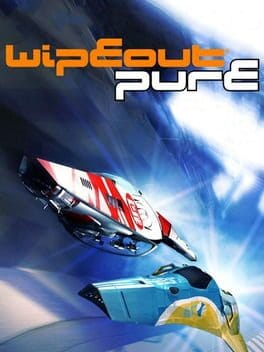
Wipeout Pure
2005 · PlayStation Portable
Racing · Vehicular combat
- Nintendo exclusive75
F-Zero: GP Legend
2004 · Expanded · Wii U, Game Boy Advance
Racing · Vehicular combat
 PlayStation exclusive73
Jak X: Combat Racing
2005 · PlayStation 2, PlayStation 4
Racing · Vehicular combat
 Nintendo exclusive82
Mario Kart 64
1996 · Nintendo 64, Wii +1
Racing · Vehicular combat
- Nintendo exclusive79
F-Zero
1990 · Arcade, Nintendo 3DS +4
Racing · Vehicular combat
 Nintendo exclusive65
Mickey's Speedway USA
2000 · Game Boy Color, Nintendo 64
Racing · Split-screen multiplayer
 PlayStation exclusive84
Crash Team Racing
1999 · PlayStation, PlayStation 3 +2
Racing · Aliens
Collections4 collections
Series and characters
- F-Zero media
- F-Zero mediaVideo games
- F-Zero mediaVideo games
Genres
- Racing gamesList › 2000s
Publishers
- Nintendo arcade gamesOfficially-licensed without direct Nintendo involvement
- Sega arcade gamesArcade video games › GameCube-based
Description adapted from its source, CC BY-SA 4.0.