

Where to get it

1988 · Intelligent Systems · Strategy · Turn-based strategy
Famicom Wars
Nintendo exclusive
Super Famicom Wars is a war simulator produced by Nintendo for the Super Famicom. It was released via the Nintendo Power game service. It is the follow-up to the original Famicom Wars and a precursor to the Advance Wars series.
- Released
- 12 August 1988
- Platforms
- NESNintendo 3DSSNESWiiWii U
- Genres
- StrategyTurn-based strategyTurn-based tactics
- Developers
- Intelligent Systems
- Publishers
- Nintendo
- Series
- Wars
- Modes
- Single-player
- Perspective
- Bird view / Isometric
- Themes
- ActionWarfare
- Country
- Japan
- Age ratings
- CERO A
- Languages
- Japanese
- Entry
- #1 in Wars
- Composers
- Hirokazu Tanaka
About
Famicom Wars is a turn-based strategy video game developed by Nintendo and Intelligent Systems and published by Nintendo for the Family Computer. It was released on August 12, 1988, in Japan. It was later re-released on Virtual Console and for the Nintendo Switch as a part of the Nintendo Classics service. It is the first game in the Wars series.
Keywords
- japan only
- wii virtual console
- nintendo power service
- super famicom nintendo power service
- wii u virtual console
- nintendo power exclusive
Media
The articlegameplay, story, development, reception
Gameplay
Players take control of one of two warring nations, Red Star and Blue Moon, as they seek to establish turn-based dominance over each other. After selecting which stage to start the game and setting which, if either, player will be controlled by a person, the Red Star army is given the first turn. The objective in each stage is to either capture the enemy's headquarters or destroy all remaining enemy units in one turn. During each turn, the player is given a certain amount of funds which can be used to build units in factories, seaports, and airports under their command; additional funds are earned by conquering cities near their headquarters.
Each unit has their own speciality and unique abilities, with ten land units (including two foot soldier units), four air units, and two sea units. Some units have heavier firepower than others, while others provide support to allies. Only foot soldier units are capable of conquering cities, which can then be used to repair or refuel damaged units. There are 15 maps available at the start of the game, with two secret ending maps dependent on which nation the player fights for when playing against the computer.
Development
Development of Famicom Wars began as Intelligent Systems changed its direction from creating hardware to developing simulation games.
Reception
On release, Famicom Tsūshin four reviewers all complimented Famicom Wars. They all found it actively distinguishing itself from other simulation games which they described as dull or difficult to understand with information portrayed as numeric data. Two reviewers complimented the graphics and animation, with one saying the battle animations are realistic which will get the player more into the action. The 1989 "All Soft Catalog" issue of Famicom Tsūshin included Famicom Wars in its list of the best games of all time, giving it the Best Simulation and Best Commercial awards.
The original Famicom Wars was followed by a series of sequels which were released only in Japan as well, which includes Game Boy Wars in 1990 and Super Famicom Wars in 1998, both which were developed by Intelligent Systems and Nintendo, as opposed to a sub-series of sequels to the original Game Boy Wars, which were developed and published by Hudson Soft. The series eventually made its international debut with Advance Wars, released for the Game Boy Advance in 2001. The maps from both Famicom Wars and Super Famicom Wars were later included in Advance Wars and its sequels.
Releases by platformdates and regions as published
Editions and related releases
- Ported as
- Super Famicom Wars BS Ban
- Built on it
- Super Famicom Wars BS Ban
In the same series
 Nintendo exclusive
Game Boy Wars
1991 · Game Boy, Game Boy Color +1
Intelligent Systems
 Nintendo exclusive
Super Famicom Wars
1998 · SNES, Wii +1
Intelligent Systems
 Nintendo exclusive92
Advance Wars
2001 · Game Boy Advance, Wii U
Intelligent Systems
 Nintendo exclusive89
Advance Wars 2: Black Hole Rising
2003 · Game Boy Advance, Wii U
Intelligent Systems
 Nintendo exclusive88
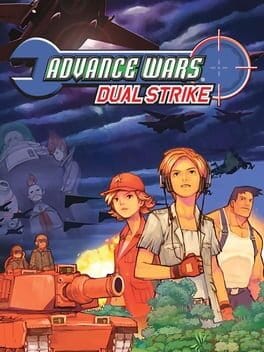
Advance Wars: Dual Strike
2005 · Nintendo DS, Wii U
Intelligent Systems
 Nintendo exclusive75
Battalion Wars
2005 · GameCube
Kuju Ltd.
 Nintendo exclusive73
Battalion Wars 2
2007 · Wii
Kuju Ltd.
 Nintendo exclusive83
Advance Wars: Days of Ruin
2008 · Nintendo DS, Nintendo 3DS
Intelligent Systems
 Nintendo exclusive83
Advance Wars 1+2: Re-Boot Camp
2023 · Bundle · Nintendo Switch
WayForward Technologies
Games like this
 Xbox exclusive79
Gears Tactics
2020 · Windows, Xbox One +1
Strategy · Turn-based strategy
 82
Total War: Warhammer III
2022 · Linux, Windows +1
Strategy · Turn-based strategy
 69
Steel Division 2
2019 · Windows
Strategy · Turn-based strategy

Sabre Team
1992 · Amiga, Amiga CD32 +3
Strategy · Turn-based strategy
 77
Warhammer 40,000: Rogue Trader
2023 · Nintendo Switch 2, PlayStation 5 +3
Strategy · Turn-based strategy
 80
Warhammer 40,000: Battlesector
2021 · PlayStation 4, Windows +2
Strategy · Turn-based strategy
 50
Hired Guns: The Jagged Edge
2007 · Windows
Strategy · Turn-based strategy
 71
Army Men
1998 · Windows
Strategy · Often paired
Collections9 collections
Platform libraries
- Nintendo Entertainment System gamesLicensed games
- Virtual Console games for Wii U (Japan)Titles › Famicom
- Nintendo ClassicsStandard subscription › Nintendo Entertainment System
- Virtual Console games for Nintendo 3DS (Japan)Available titles › Famicom
Years
- Games released in 2019List › October–December
Genres
- Turn-based strategy gamesList
- Turn-based tactics gamesList of released games
Publishers
- Virtual Console games for WiiTitles › Nintendo Entertainment System / Family Computer
- Nintendo home gamesNES/Family Computer
Description adapted from its source, CC BY-SA 4.0.