
The articlegameplay, story, development, reception
Gameplay
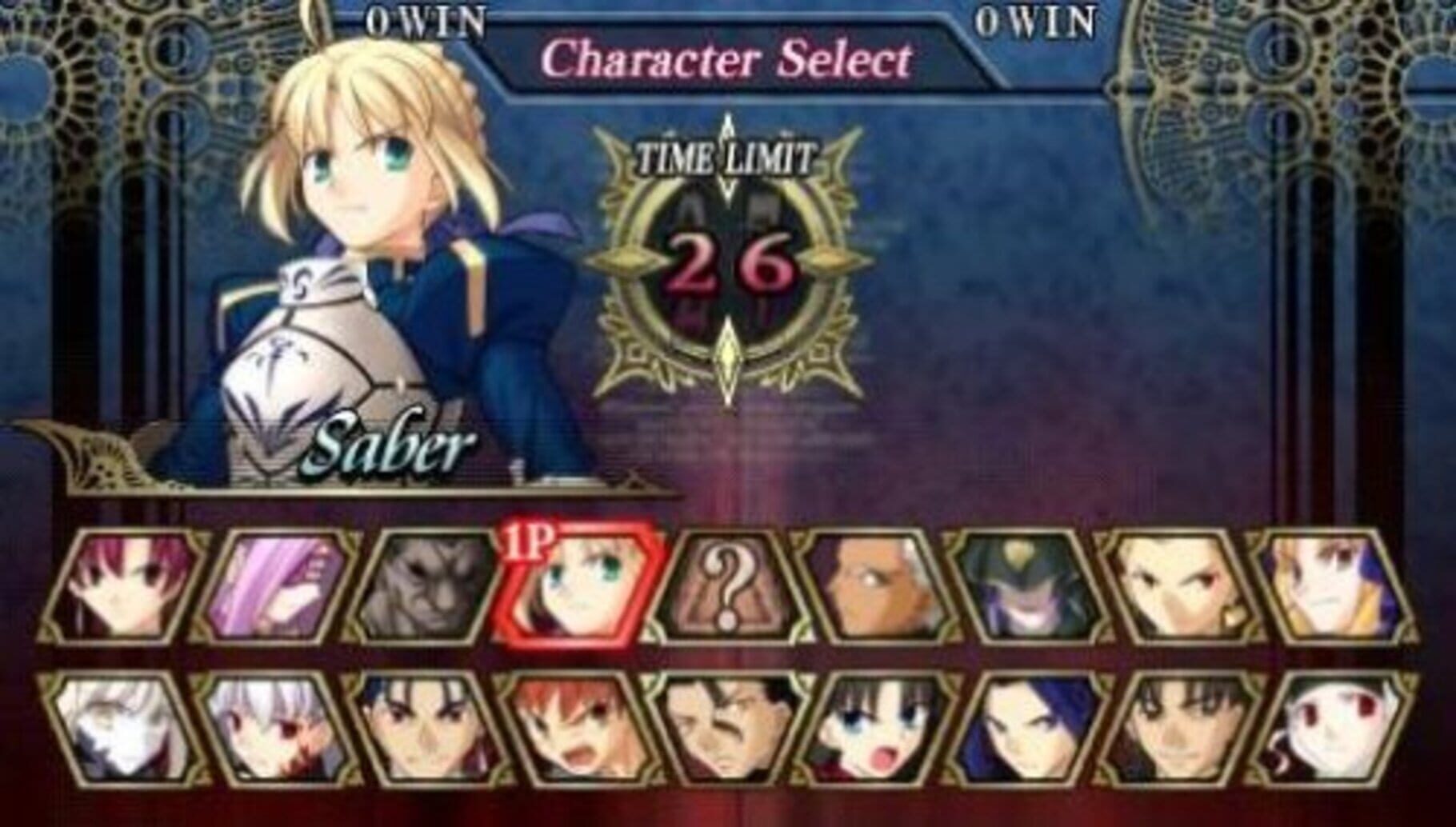
Fate/Unlimited Codes is a fighting game, which is based on duel where players can utilize a combination of different moves to damage their opponent. They can also conduct a series of battles up to two or three; depending on the value set by the player. The time limit of rounds are either limited or unlimited, depending on the player's settings. Points are used statistically to calculate a player's success in certain modes.
Character attacks are manageable by using a customizable three-button gamepad system; with the fourth being used to cancel block enemy attacks and combinations. When using attack buttons, two types of energy scales are present—magic energy and the Holy Grail's energy. The scale of magical energy is divided into three cells, allowing the players to enhance and supplement the standard types of attacks.
Development
Fate/Unlimited Codes originated from Japanese illustrator Takashi Takeuchi's desire to create a fighting game based on the narrative of Fate/Stay Night. In late 2003, during the preparations for the release of Fate/Stay Night Takeuchi, along with author Kinoko Nasu, had taken inspiration from Capcom's third-person shooter Gotcha Force, designed by Ryuuji Higurashi. Under the impression of the gameplay of Fate/Unlimited Codes, Capcom took up the idea of translating the basic principles of Fate/Stay Night into a fighting game. In September 2007, Type-Moon and Japanese video game developer Cavia, with support from Capcom, had released the comedy-fighting gameFate/tiger colosseum in the chibi art style.
All the companies planned a new game scenario of the same genre for the Namco System 246 arcade gaming machines, followed by a port to the PlayStation 2. Kazuhiro Tsuchiya was appointed producer by Type-Moon, and Takeuchi had personally supervised the project. Cavia was later forced to cut staff and temporarily suspend the development of all new projects due to bankruptcy. The materials of Fate/Unlimited Codes were later transferred to the Japanese video game developer Eighting.
Reception
Upon release, Fate/Unlimited Codes received "mixed or average" reviews from video game publications based on the review aggregate website Metacritic aimed towards the PlayStation Portable (PSP) port. The PSP port sold 34,000 units in Japan within its first week of release.
Much of the focus within reviews involved positive feedback in regards to special effects and animation. While reception of the game's graphic component was often mixed, with Country of the Games' Evgeny Zakirov noting the use of a low-poly grid for character modeling, which, according to MeriStation's William van Dijk, required player habituation. Zakirov considered this flaw "uncritical" for the PSP version. Van Dijk felt that the game's graphics were far behind Soulcalibur: Broken Destiny and Dissidia Final Fantasy.


