
The articlegameplay, story, development, reception
Gameplay
Like its predecessor, Forbidden Siren 2 is divided into numerous scenarios, organized chronologically in a table called the "Link Navigator". In order to complete a scenario, the player must accomplish a primary mission objective that usually involves reaching an exit point, finding an item, or subduing certain enemies (called shibito (屍人, shibito; lit. "corpse people") and the yamibito (闇人, yamibito; lit. "darkness people")). Objectives are interconnected via a butterfly effect, and a character's actions in one scenario can trigger a secondary objective in another.
The game's defining feature is "sightjacking," to see and hear from the perspectives of nearby shibito, yamibito, humans, and other creatures. The process is similar to tuning into a radio frequency, with the left analog stick serving as the dial. The clarity of each target depends on the distance from the player, and the direction of the dial depends on the target's orientation to the player. Once a signal is found, it can be assigned to one of the controller's four face buttons to switch between signals.
Story
Long ago, the water deity Mother was imprisoned beneath the Earth when light was created, while her mate Otoshigo fled to the ocean depths. Seeking to return to the surface, Mother sends out avatars—possessed humans under her control—to open the seven gates to the Underworld that hold her captive, all located on Yamijima Island.
In 1976, a severed undersea cable cuts all power to Yamijima. Four-year-old Shu Mikami finds a young woman, Kanae, washed ashore; she closely resembles his dead mother, and she moves in with his family. Kanae is an avatar of Mother, sent to manipulate Shu into opening the gates, but the villagers grow suspicious and catch her killing Shu's father. Fleeing with Shu, Kanae is cornered on a pier that collapses, and Shu watches her drown—a trauma that blinds him. In revenge, Mother destroys the villagers with a tsunami, and the island's entire population vanishes without explanation.
Development
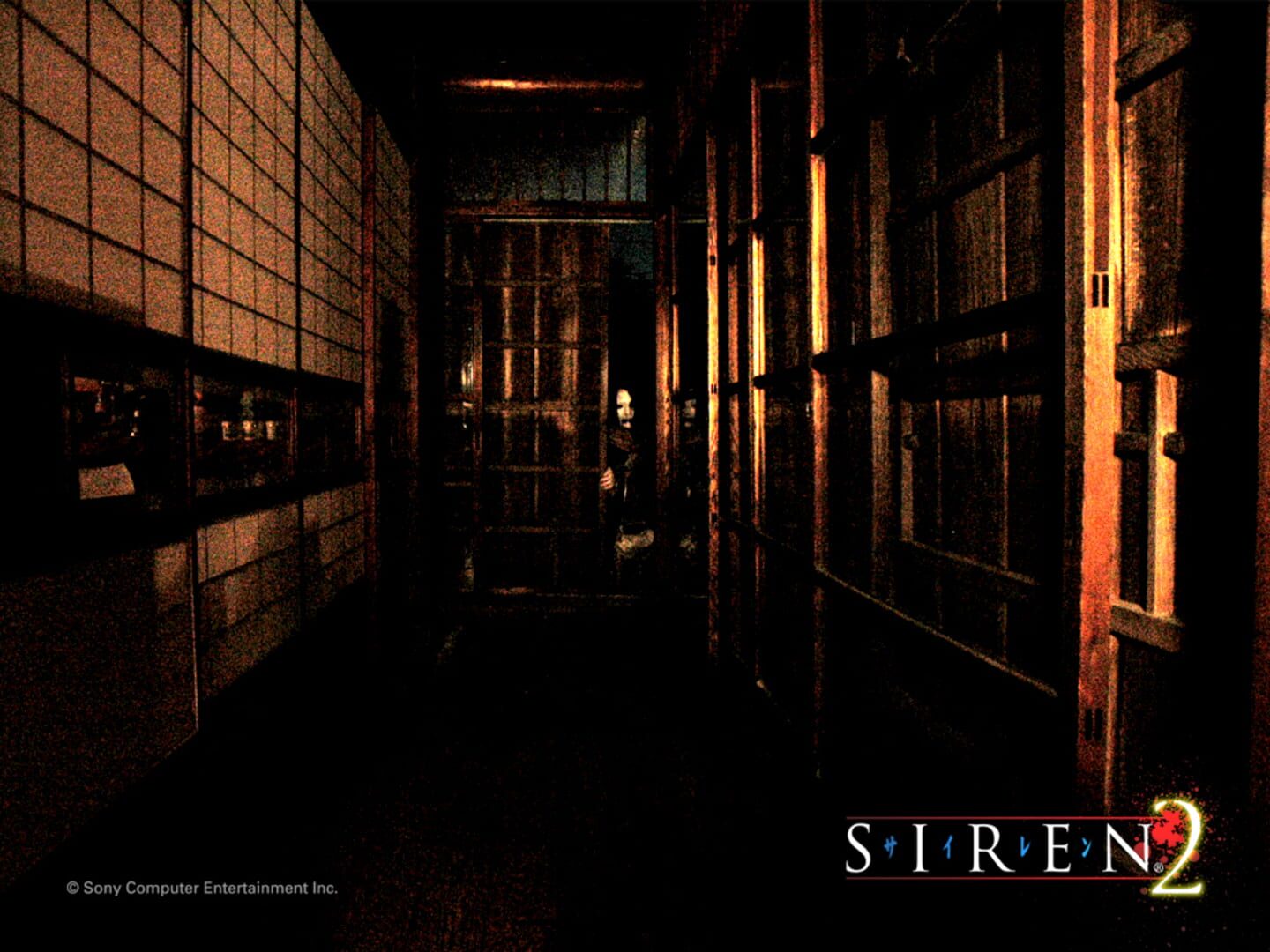
Forbidden Siren 2 was developed by Project Siren, the same Sony Computer Entertainment Japan team responsible for the original, with Keiichiro Toyama returning as director, Isao Takahashi as art director, and Naoko Satō and Toyama writing. Toyama has said the first game had been conceived as a standalone work incorporating a large amount of experimental material, and that the sequel grew from ideas left over from that project together with requests from players for a follow-up. He characterised Siren as resting on three pillars—a Japanese-style horror game, an ensemble drama with many characters, and the sightjacking mechanic—and described the sequel as changing the recipe without altering that framework.
As with the first game, the team worked in a manner closer to a film or television production than a conventional game studio, photographing actors and physical props extensively and building the game's computer graphics from that photographic data rather than modelling everything from scratch; costumes, bloodied shibito clothing and other props were stored on racks in the development office, and staff travelled the country conducting on-site research at ruins and abandoned buildings. Ruins explorer Jun Kurihara, who had assisted on the first Siren, again joined the team for location research.
Reception
Forbidden Siren 2 received "average" reviews according to the review aggregation website Metacritic. Eurogamer's Kristan Reed said that the game improved on many of the problems of the predecessor (especially the difficulty level and trial-and-error nature of the gameplay), but simultaneously fell somewhat short of the original. VideoGamer.com's Chris Pickering (a fan of Siren) also said that the game removed many of the problems inherent to the original but fell short in many respects. In Japan, Famitsu gave it a score of three nines and one eight for a total score of 35 out of 40.


