
The articlegameplay, story, development, reception
Gameplay
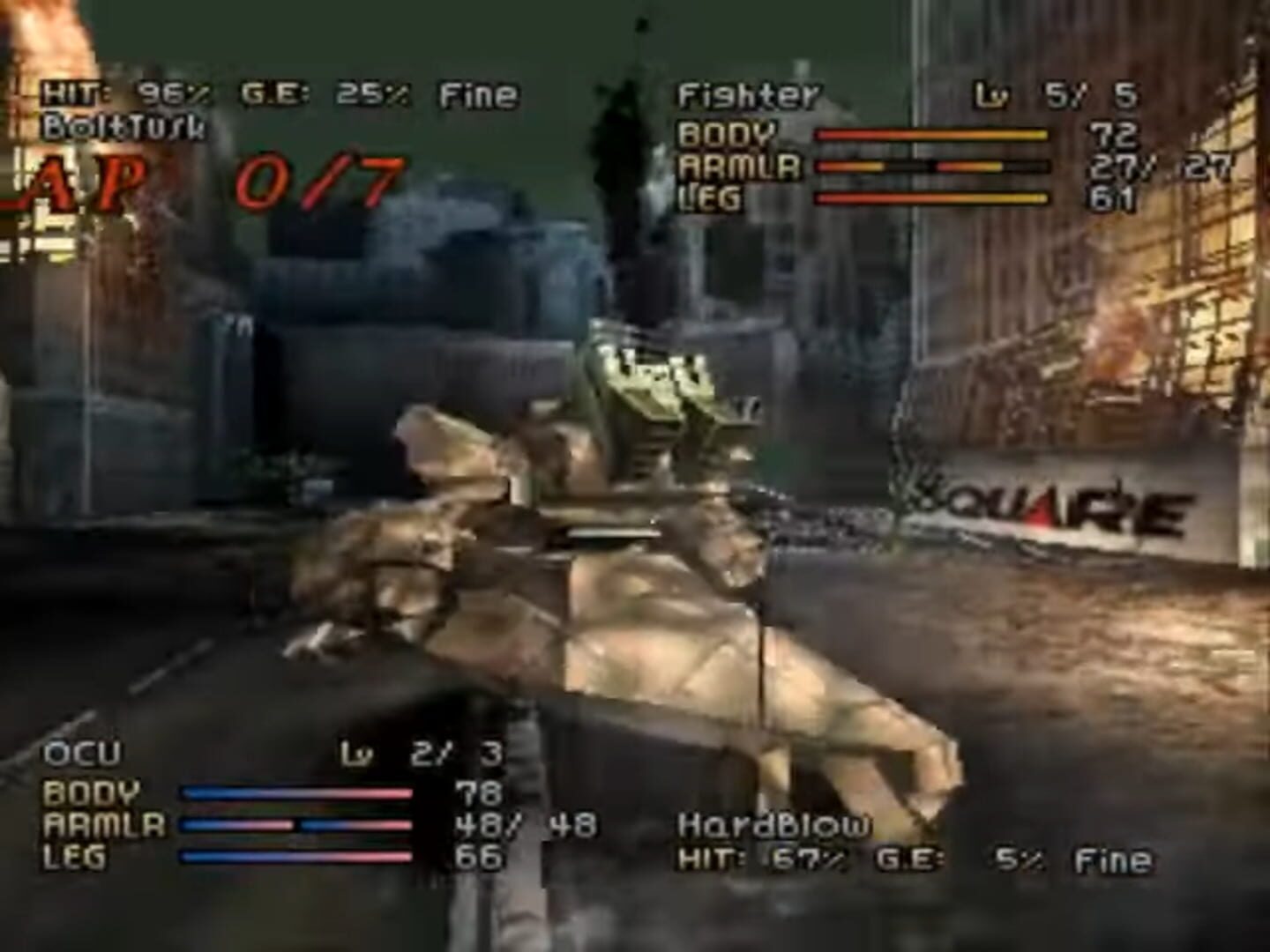
Front Mission 2 uses 3D models and a moving camera.
Front Mission 2 expands on the mechanics found in Front Mission. The video game progresses in a linear manner: watch cut-scene events, complete missions, set up their wanzers during intermissions, and sortie for the next mission. The player travels to locations on a point-and-click world map. As the player progresses through the plot, new locations are revealed on the world map.
Story
The story takes place 12 years after Front Mission 1st. Set in June 2102, the game's story of takes place in Alordesh (modern-day Bangladesh), a member state for the Oceania Cooperative Union (OCU). The formation of the OCU in the early 21st century led to rapid industrialization of developing countries such as Bangladesh. During the 1st Huffman Conflict in 2070, Bangladesh's economic growth flourishes with the OCU because of many war factories in the country.
However, the economic boom begins to slow down in 2080, with a loss of foreign investments and pullout of several businesses. Five years later, the OCU offers to provide Bangladesh with foreign aid, provided it joins the union. The Bangladeshi economy resurges briefly during the 2nd Huffman Conflict. Anti-OCU sentiments grew after the war and in 2094, Bangladesh renames itself as the "People's Republic of Alordesh".
Development
Front Mission 2 was developed by G-Craft, the company which had created and handled development of the original Front Mission. Series creator Toshiro Tsuchida acted as director. Production of Front Mission 2 ran parallel with the spin-off title Front Mission Alternative. During production, Tsuchida was approached by Square, who wanted to buy out and incorporate G-Craft into Square itself.
This deal took place midway through development, with G-Craft being redubbed as Square's Development Division 6, making Front Mission 2 the last title produced under the G-Craft name. While the previous game was produced for the Super Famicom, publisher Square decided to shift production of all core titles from Nintendo's hardware to the in-production PlayStation.
Reception
Famitsu magazine awarded the game 32 out of 40 upon its release. The magazine chose the game as the 63rd best game on the original PlayStation. At the time of the re-release of Front Mission 2 under the Ultimate Hits line on October 5, 2006, the game sold over 510,000 copies in Japan.
Front Mission 2 has been criticized for its long loading times. A workaround for this technical flaw was added in the Ultimate Hits version of the game, which enables the ability to skip battle sequences.


