


1984 · Jordan Mechner · Action · Beat 'em up
Karateka
Timed Nintendo exclusive
Karateka is a 1984 beat'em up video game by Jordan Mechner, and was his first game created while attending Yale University. It was originally programmed for the Apple II, and was later ported to several other home computers and early gaming consoles. The game was published in North America by Brøderbund, and in Europe by Ariolasoft.
- Released
- 1984
- Platforms
- Amstrad CPCAndroidApple IIAtari 7800Atari 8-bitAtari STAtari ST/STECommodore 64Commodore C64/128/MAXMS-DOSMSXNESPC-9800 SeriesWindowsZX SpectrumiOS
- Genres
- ActionBeat 'em upFighting
- Developers
- Jordan Mechner
- Publishers
- Broderbund
- Modes
- Single-player
- Perspective
- Side view
- Themes
- Action
- Country
- United States
- Age ratings
- CLASS_IND L
- Languages
- English
About
Karateka is a 1984 martial arts action game written for the Apple II by Jordan Mechner. It is his first published game and was created while he was attending Yale University. The game was published in North America by Broderbund and in Europe by Ariolasoft. Along with Karate Champ and Yie Ar Kung-Fu (both also released in 1984), Karateka is one of the earliest martial arts fighting games.
It was inspired by Japanese culture (Ukiyo-e art, Akira Kurosawa films, and manga comics) and by early Disney animated films and silent pictures. An influential game of its era, it was one of the first to use cinematic storytelling and sound design, and rotoscoped animation.
Keywords
- martial arts
- hand-to-hand combat
- karate
- artificial intelligence
- melee
- instant kill
- cga graphics
- regenerating health
Media
The articlegameplay, story, development, reception
Gameplay
Karateka uses gameplay elements found in both side-scrolling 2D platformers and fighting games.
The unnamed hero ascends a mountain into Akuma's fortress to rescue Princess Mariko. As the player directs the hero into the fortress, various foes appear and attempt to stop him, one per screen. The hero enters a fighting stance to punch, kick, and dodge each enemy. Health bars for both the player and the current enemy are displayed at the bottom of the screen, decreasing by one notch for every hit sustained.
Development
Karateka was developed by Jordan Mechner while he was a student at Yale University as a side project between classes. Having learned computer programming using the Apple II, he had written a clone of Asteroids and a modified version he titled Deathbounce. He submitted Deathbounce to Broderbund. The company declined but sent him a copy of Choplifter, then one of its top-selling games. He recognized from this game that he could pursue original game concepts instead of having to remake existing ones.
Mechner focused on a karate-themed game, influenced by the graphic features of Choplifter, his ongoing film studies and film clubs at Yale, and recent karate lessons. He drew inspiration from Japanese Ukiyo-e woodblock print art, and the cinematic works of Akira Kurosawa, early Disney animated films, and silent pictures—which he said "convey such powerful emotion and atmosphere without a word being spoken". Combining cinematic techniques with game elements, he programmed some of the screen wipes from the film Seven Samurai. Mechner reflected that he did not consider the game as a "fighting game", but instead that of "a story-based game where the gameplay mechanic is fighting".
Reception
The Apple and Commodore versions debuted on the Billboard magazine software sales chart at number two in July 1985. In January 1986, it was awarded a "Gold" certification from the Software Publishers Association for sales above 100,000 units. It is Broderbund's bestselling Commodore game as of late 1987. Sales of Karateka surpassed 500,000 units by 2000.
The game received generally favorable reviews from critics. In early 1985, Jeff Hurlbert of Hardcore Computist said the "recently released" Karateka "is the most recent and best illustration of a trend towards computer games that look like movies". He called it "a breakthrough" where art "merges with technology to produce a game almost as much fun to watch as to play". In January 1985, Computer Entertainer rated the Apple II version 7½ out of 8 stars, praising the visuals, animation, sound effects, music, karate moves, and story line, but criticizing the blonde-haired appearance of the karateka and princess in a Japanese setting.
Legacy
In February 2012, Mechner announced that he was leading a small independent development group to create a remake of Karateka for the Xbox 360 via Xbox Live Arcade and PlayStation 3 via PlayStation Network. He anticipated a release in late 2012, later moved to November 2012. The remake concept followed his work for the 2010 film Prince of Persia: The Sands of Time. He wanted a new project with a "guerrilla" feel and a much smaller scale than the film.
He considered that nearly 30 years after the game's release, he was still being interviewed about Karateka. He envisioned retelling the story without the limitations of the Apple II. He was inspired by the resurgence of small, independent game development in 2010 and 2011, and games such as Limbo that "created a powerful emotional atmosphere within a limited budget and scope".
Releases by platformdates and regions as published
Editions and related releases
- Ported as
- Master Karateka
- Remade as
- Karateka
- Built on it
- Master KaratekaKarateka
Games like this
 Timed SNK
Fatal Fury: First Contact
1999 · Neo Geo Pocket, Neo Geo Pocket Color +1
Fighting · Martial arts

Ninja Hamster
1987 · Amstrad CPC, Commodore 64 +2
Fighting · Martial arts
 84
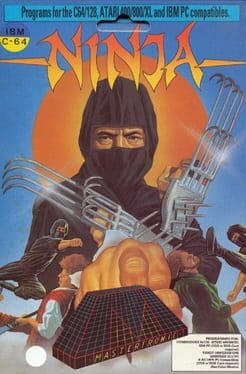
Ninja
1986 · Amiga, Amstrad CPC +8
Beat 'em up · Fighting

King of Fighters R-2
1999 · Neo Geo Pocket, Neo Geo Pocket Color +1
Fighting · Martial arts
 90
Capcom VS SNK: Pro
2000 · Arcade, Dreamcast +1
Fighting · Martial arts
 PlayStation exclusive79
The King of Fighters XI
2005 · Arcade, PlayStation 2 +1
Fighting · Martial arts

Savage Reign
1995 · Arcade, Neo Geo +3
Fighting · Martial arts
 87
IK+
1987 · Amiga, Amiga CD32 +9
Beat 'em up · Fighting
Collections1 collection
Genres
- Fighting gamesList
Description adapted from its source, CC BY-SA 4.0.