

- 75/100
- Players54 ratings

1997 · Capcom · Action-adventure · Adventure
Mega Man 64
THE BLUE BOMBER BLASTS INTO A WHOLE NEW DIMENSION
- Released
- 18 December 1997
- Platforms
- Nintendo 64PlayStationPlayStation 3PlayStation PortableWindows
- Genres
- Action-adventureAdventureShooter
- Developers
- Capcom
- Publishers
- Capcom
- Series
- Mega Man Legends
- Modes
- Single-player
- Perspective
- Third person
- Themes
- ActionScience fiction
- Country
- Japan
- Age ratings
- ESRB EUSK 6CERO A
- Languages
- English, Japanese
- Entry
- #1 in Mega Man Legends
About
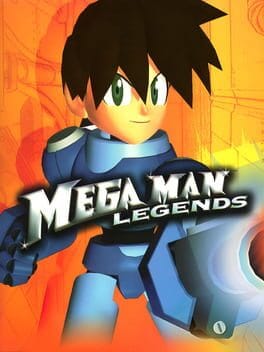
Mega Man Legends is a 1997 video game released by Capcom. It is the first game in the Mega Man Legends sub-series of Mega Man games from Capcom, and the second major 3D polygonal Mega Man title in the franchise, following Mega Man: Battle & Chase. It was released for the PlayStation in 1997 in Japan, and in 1998 in North America. A Nintendo 64 port was released in 2000 with the same title, but it was renamed Mega Man 64 for the North American release in 2001.
It was also ported to Windows in 2001, and to the PlayStation Portable in 2005, the latter only in Japan. Its most recent release was as a PS one Classic on the North American PlayStation Network in 2015.
›Story
On a tower ruin in the middle of the ocean, Mega Man retrieves a sizable blue refractor. Defeating the Reaverbots blocking his way out, he makes his way to the Flutter, which leaves the ruin. However, the Flutter experiences some engine problems and crashlands on Kattelox Island. From there, the Casketts try to find a way to repair their ship.
However, when pirates attack Kattelox's city with giant mechanical weapons, Mega Man decides to stop them. Mega Man defeats the armored robots patrolling Downtown, led by Tron Bonne, and the ones laying a siege to City Hall, led by Bon Bonne. Their leader, Teisel, decides to attack the Clozer Woods ruins, but Mega Man defeats him as well. Kattelox's mayor, Amelia, tells Mega Man the Bonnes are searching for the island's secret treasure and that legend says if somebody obtains it, a great disaster will befall the island.
Amelia asks Mega Man to investigate the island's ruins. In the Forest Ruins, Mega Man finds a large yellow Refractor. He uses this to power a boat in Uptown to access the Lake Ruins, defeating the Bonnes who had stolen the other boats and turned them into robotic weapons. Mega Man finds a huge red refractor in the Lake Ruins, which Roll and he use to repair the Flutter to access the entrance to the Clozer Woods ruins.
Inside, Mega Man unlocks the island's largest ruin, the Main Gate, hoping to find the reason why Reaverbots from the island are being activated. On the way back, the Bonnes confront the Flutter with their mothership, but Mega Man overpowers them again and destroys the Gesellschaft.
When Mega Man explores the depths of the Main Gate, he unlocks Sub-Cities across the island. While exploring the three of them, he finds the Bonnes in the Old City and destroys their newest robot, a colossal monster named Bruno. Accepting defeat, the Bonnes leave him, though they plan to steal the treasure of the Main Gate once Mega Man gets it. After using the three keys from the Sub-Cities to access the depths of the Main Gate, Mega Man discovers a stasis chamber for the ancient robot Mega Man Juno, a 3rd class bureaucratic unit from Eden, a space station orbiting above the planet.
Mega Man accidentally awakens Juno, who refers to Mega Man as "Mega Man Trigger", and realizes that Mega Man is suffering from memory loss. Juno claims that the island's population needs to be purged so it will be more controllable, and leaves Mega Man in a trap while he engages the program in the deepest depths of the ruin. Mega Man escapes the trap with help from Tron and Teisel and confronts Juno, and despite Juno upgrading to a giant form, Mega Man defeats him. Even with Juno's physical body gone, his last words transfer his backup data into the systems of Eden and confirm the Carbon Purification Process.
Data gives new commands to the system, stopping the Purification and deleting Juno's backup data from Eden. Data then reveals to Mega Man that he contains all of his previous memories from when he was Mega Man Trigger. Mega Man had stored his memories into Data as a way to prevent Eden from ever tampering with it. Data promises to restore Mega Man's memory when the time comes.
The residents proclaim Mega Man a hero and the Caskett family rides off in the repaired Flutter to continue their journey. Meanwhile, the Bonnes sail on a small boat built by Tron out of the scraps from the other robots, with the colossal refractor from the Main Gate in tow.
Keywords
- anime
- mascot
- robots
- dog
- high score
- playstation network
- digital distribution
- based on - anime
- voice acting
- protagonist's name in the title
- human
- polygonal 3d
Media
The articlegameplay, story, development, reception
Gameplay
Mega Man Legends differs significantly from the platforming gameplay of previous Mega Man games, with the primary change being its three-dimensional worlds and movement. Unlike the original Mega Man series, which are platform games, Legends is an action-adventure game. It features mechanics similar to those in Tomb Raider, such as the ability to grab and climb ledges, perform left/right diving maneuvers, control the camera manually, and use lock-on targeting.
The player controls Mega Man Volnutt throughout the game, completing various missions such as investigating ruins or fighting pirates. The game features a large world with multiple dungeons that must be explored in a specific order, as well as a town with non-player characters to interact with. The story is revealed through cutscenes.
Story
The Legends series is set on a flooded Earth, where only a few scattered islands remain and energy sources are scarce. To meet the growing demand for energy to power machinery, people rely on quantum refractors found in ancient ruins. Shards of these refractors are used as currency. However, the ultimate goal for most people is to find the Mother Lode, a legendary item of infinite power that could solve the energy crisis once and for all.
Those who explore these ruins in search of refractors are known as "Diggers" ("Digouters" in the Japanese version). They are assisted by Spotters, who use technology to map the Diggers' paths and help them avoid or defeat Reaverbots, hostile robots that guard the ruins.
Development
Producer Keiji Inafune stated that his goal was to create a new Mega Man game that would be entirely different from previous entries in the series. Aiming to appeal to gamers of all ages, Inafune decided to blend action, RPG, and adventure genres, though he questioned whether Mega Man Legends would still be engaging. All the humanoid characters in the game were animated using motion capture. One of the earliest global showings of Legends occurred at the Electronic Entertainment Expo in Atlanta, Georgia, in June 1997, where it was titled Mega Man Neo.
A demo of the game, titled "Rockman Neo" (ロックマンNEO), was later included in the Japanese director's cut version of Resident Evil. The game was released in Japan on December 18, 1997, with a re-release under the "PlayStation the Best" label following on May 4, 1999.
Reception
Since its release, Mega Man Legends has received a moderately positive critical response from video game publications, although the ports for Nintendo 64 and PC garnered mixed to negative reviews. 73% for the PlayStation version. 94%, respectively. On Metacritic, the Nintendo 64 port holds an aggregate score of 59 out of 100 based on six reviews.
James Mielke of GameSpot complimented it avoided the pitfalls of earlier platformer games bymaking the game an action and role-playing video game hybrid instead with the item shops and merchants of the later genre being represented. Despite this shift, critics appreciated how Legends retained various elements from the original Mega Man series. Game Informer praised the variations of Mega Man's special weapons, stating, "There is plenty of shoot-'em-up action for fans of traditional Mega Man titles." The storyline of the game was also commended, being described as "solid" by Game Informer and "engrossing" by GamePro, with the latter highlighting the boss characters as some of the best in the entire series.
Releases by platformdates and regions as published
Editions and related releases
- Expanded editions
- Rockman Dash: Hagane no Boukenshin
- Ported as
- Mega Man 64
- Built on it
- Mega Man 64Rockman Dash: Hagane no Boukenshin
In the same series


Games like this
 75
Mega Man Legends
1997 · Nintendo 64, PlayStation +3
Adventure · Shooter
 PlayStation exclusive70
BRAHMA Force: The Assault on Beltlogger 9
1996 · PlayStation, PlayStation 3 +1
Adventure · Shooter
 PlayStation exclusive82
Mega Man Legends 2
2000 · PlayStation, PlayStation 3 +3
Adventure · Shooter
 PlayStation exclusive70
Armored Core: Project Phantasma
1997 · PlayStation, PlayStation 3 +1
Adventure · Shooter
 PlayStation exclusive71
Future Cop: LAPD
1998 · PlayStation, PlayStation 3 +3
Shooter · Robots
 PlayStation exclusive
Galaxian 3
1990 · Port · Arcade, PlayStation +2
Shooter · High score
 82
Space Invaders
1999 · Dreamcast, Game Boy Color +5
Shooter · Often paired
 PlayStation exclusive89
Xenogears
1998 · PlayStation, PlayStation 3 +1
Anime · Often paired
Collections1 collection
Publishers
Description adapted from its source, CC BY-SA 4.0.