
The articlegameplay, story, development, reception
Gameplay
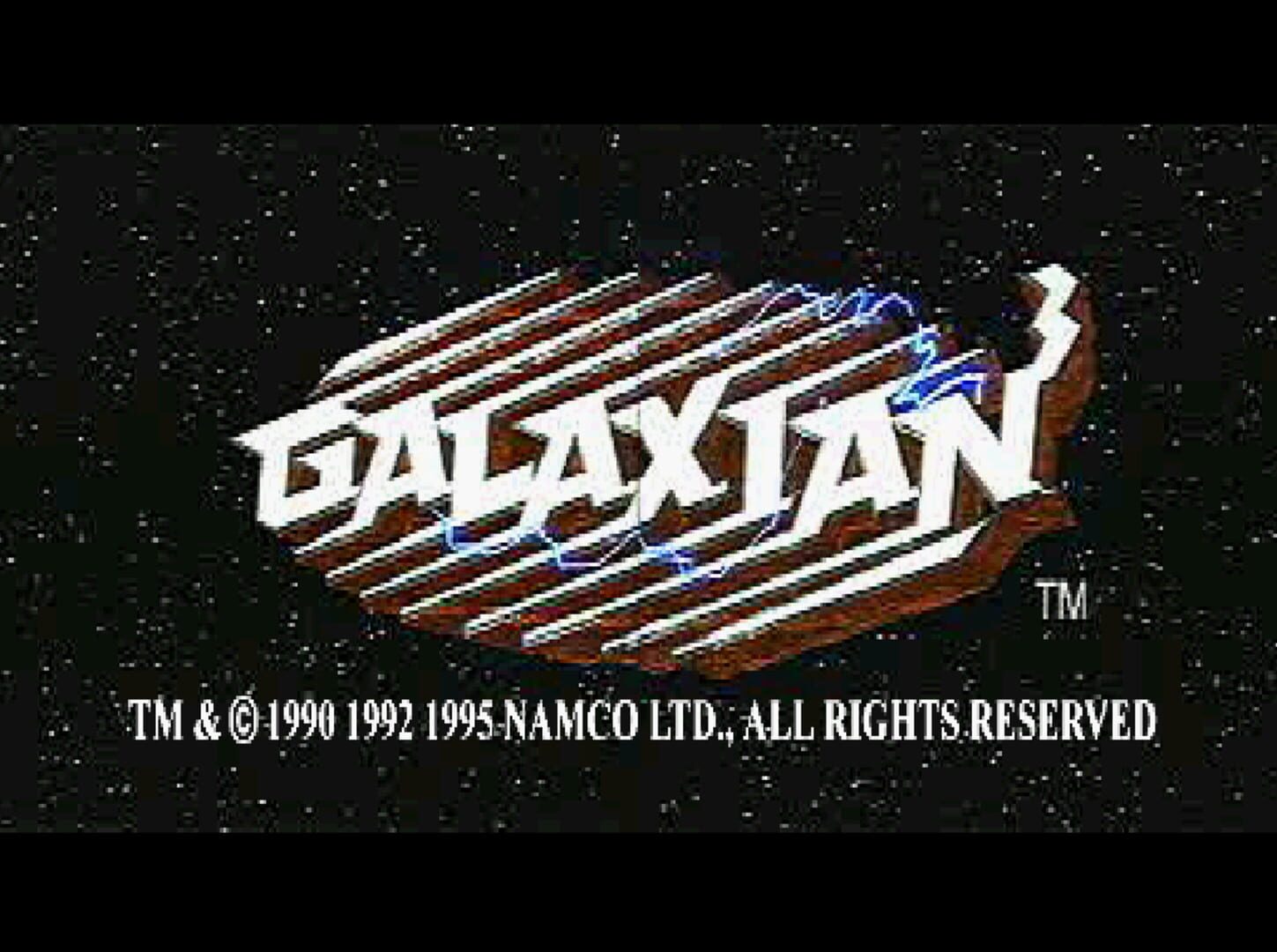
Galaxian3: Project Dragoon is a rail shooter video game. It uses Laserdisc-based video footage with 3D polygonal graphics overlaid on top. Each version supports a varied number of players; for instance, the theme park attraction allows for 28, while the PlayStation version only supports four. In the game, players assume control of the Dragoon, a massive space vessel created by the United Galaxy Space Force (UGSF) to destroy a race of hostile aliens known as the Unknown Intellectual Mechanized Species (UIMS).
Players do not control the Dragoon directly, as it moves along a pre-set path; instead, they control a colored cursor that can fire lasers at incoming enemies. The objective is to make it towards the end without getting hit. All players share one health bar, labeled as "ENERGY" and positioned at the bottom of the screen. The meter depletes when the Dragoon is hit by enemies, obstacles, or projectiles.
Development
During the late 1980s, Japanese video game company Namco began to experiment with making arcade games that felt like miniature theme park attractions, such as sit-down machines like Final Lap (1987), and motion-based games such as Metal Hawk (1988) and Winning Run (1989). Namco had also started opening up large amusement centers across Japan, which featured many of these "taikan" arcade games alongside standard video game cabinets. With the motion games being critically and commercially successful, and the amusement centers turning a high profit, the company started drafting plans for a potential Namco-themed amusement park, with attractions based on their games. Galaxian3 was the first of these attractions to be conceived. Namco planners decided on basic foundations for the game, such as how long a single-play would be and the level structure, before presenting and commissioning the game to engineer Shigeki Toyama, known for his work on Xevious and Point Blank.
Toyama's supervisor instructed him and rest of the development team to pour all of their energy into the project, even if it meant other projects had to be postponed — as such, Namco only produced a small number of games in 1990. The goal of the project was to create the "greatest game in the world", and to make an arcade game so massive that other companies couldn't imitate it, an idea believed to stem from Namco's bitter rivalry with Sega. Executives wanted the game finished in time for the 1990 International Garden and Greenery Exposition, also known as Expo '90, in Osaka, giving Toyama and the production staff a tight deadline.
Reception
Galaxian3: Project Dragoon was a monumental success. It was one of the most popular exhibitions at Expo '90 up until its conclusion, and was seen by players as an immersive, alluring piece of technology and entertainment. According to Hajime Nakatani, a designer for the game and the creator of Starblade, Galaxian3 was also a media sensation, regularly appearing as a featured topic in newspapers and television.
Galaxian3 was released for the PlayStation in Japan on April 26, 1996.
Legacy
Galaxian3: Project Dragoon is considered influential and important for being an early instance of turning video games into amusement rides, and for its usage of 3D polygonal graphics. It has achieved a small but dedicated following in more recent times, with preservation efforts being made to salvage anything related from the game to prevent it from being lost. It also influenced other companies to produce similar machines as a way to cash in on its success, such as Sega's Cyber Dome and Yotto-Group's 6D Cinema.
In 1990, Namco began work on a single-player prototype for Galaxian3 for arcades. This was the basis for Starblade, which was published a year later. With its cinematic atmosphere and technological accomplishments, Starblade was well-received, and became inspiration for titles such as Star Fox and Panzer Dragoon. It has also been ported to several systems such as the PlayStation, 3DO, and mobile phones.


