
- 79/100
- Players24 ratings
1989 · Data East · Arcade · Platformer
Midnight Resistance
Sega console exclusive
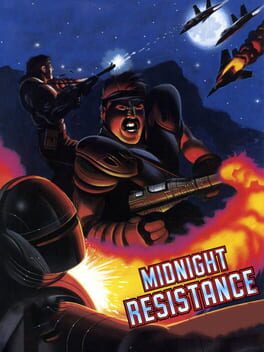
Midnight Resistance is a side-scrolling action shooting game produced by Data East for the arcades in 1989. The game was ported by Data East to the Sega Mega Drive in 1990 and by Ocean Software to various home computer platforms during the same year. The game is set in a dystopian future where the player controls a member of a resistance movement who goes on a mission to rescue his kidnapped family from a mad scientist.
- Released
- 1989
- Platforms
- AmigaAmstrad CPCArcadeAtari STAtari ST/STECommodore 64Commodore C64/128/MAXSega GenesisZX Spectrum
- Genres
- ArcadePlatformerShoot 'em upShooter
- Developers
- Data East
- Publishers
- Data East
- Modes
- Single-player
- Perspective
- Side view
- Themes
- Science fiction
- Country
- Japan
- Languages
- English
About
Midnight Resistance is a 1989 run and gun video game developed and published by Data East for arcades. It was ported to the Sega Genesis in 1991 as Data East's first video game for the console. The game was also adapted by Ocean Software to home computers.
›Story
In the arcade version, two nameless brothers are on a mission to rescue their family from an entity known as King Crimson.
In the Sega Genesis/Mega Drive version, the main character is Johnny Ford who's a member of an operative group who shuts down drug cartels in South America. After completing his last mission, Johnny returned home only to find it in shambles, and he sees a note in which King Crimson kidnapped his entire family. The reason for the abduction is that Johnny's father, Malcolm Ford, was developing a serum which could help people break their addictions to all narcotics. Since the government is unable to help Johnny, he sets off on his own to rescue his family and destroy King Crimson's empire of evil for good.
Keywords
- cyberpunk
- run and gun
- side-scrolling
- explosion
- air strike
- rotating joystick control
Media
The articlegameplay, story, development, reception
Gameplay
Midnight Resistance uses play mechanics and controls similar to that of the Contra series, and can be played by up to two players simultaneously (except Sega Mega Drive/Genesis). The main distinguishing feature is the inclusion of a rotatable joystick similar to the one used in Ikari Warriors, in addition to the traditional set of shoot and jump buttons, allowing the player to adjust his character's aim in one of eight directions by rotating the joystick clockwise or counter-clockwise. This allows the player to keep their aim in one direction while moving in another, even while crawling or jumping.
The power-up system is similar to the one featured in Heavy Barrel (a previous Data East game), in which the player can collect keys after defeating certain enemy soldiers (each player can possess up to six keys at a time). At the end of each stage the player will enter a weapon storage room in which various new weapons and other power-ups can be released from their lockers depending on the number of keys in the player's possession. When the player loses a life, he will drop all the weapons and keys he has in his possession and they can only be recovered if they do not fall off-screen.
Story
In the arcade version, two nameless brothers are on a mission to rescue their family from an entity known as King Crimson.
In the Sega Genesis/Mega Drive version, the main character is Johnny Ford who is a member of an operative group who shuts down drug cartels in South America. After completing his last mission, Johnny returned home only to find it in shambles, and he sees a note in which King Crimson kidnapped his entire family. The reason for the abduction is that Johnny's father, Malcolm Ford, was developing a serum which could help people break their addictions to all narcotics. Since the government is unable to help Johnny, he sets off on his own to rescue his family and destroy King Crimson's empire of evil for good.
Reception
In Japan, Game Machine listed Midnight Resistance on their December 15, 1989 issue as being the fifth most-successful table arcade unit of the month.
The ZX Spectrum port was awarded a score of 90% in Sinclair User and 93% in CRASH magazine. It was also included in their 100 best Spectrum games ever made, reaching number 10. The Spectrum version was also voted number 11 in the Your Sinclair Readers' Top 100 Games of All Time.
Releases by platformdates and regions as published
Title IDsone per regional release, with its latest update
Editions and related releases
- Included in
- Data East Collection 1Sega Genesis Mini 2Mega Drive Mini 2Data East Arcade 2
Games like this
 Nintendo exclusive66
Super C
1988 · Amiga, Arcade +3
Arcade · Platformer
 Nintendo exclusive71
Contra Force
1992 · NES
Arcade · Shoot 'em up
 Nintendo exclusive
Challenger
1985 · Amiga, Game Boy Advance +4
Arcade · Platformer
Cyber-Lip
1990 · Arcade, Neo Geo +2
Shooter · Run and gun
 76
R-Type Final 2
2021 · Nintendo Switch, PlayStation 4 +3
Arcade · Platformer

Game Over II
1987 · Amstrad CPC, Atari ST +6
Arcade · Platformer
 58
Game Over
1987 · Amstrad CPC, Commodore 64 +4
Arcade · Platformer
Assault Suits Valken
2004 · Port · PlayStation 2, SNES
Platformer · Shooter
Collections4 collections
Platform libraries
- Amstrad CPC games
- Atari ST gamesCommercial games
- ZX Spectrum games
- Sega Genesis gamesLicensed games
Description adapted from its source, CC BY-SA 4.0.