The articlegameplay, story, development, reception
Gameplay
Phantasmagoria is a point-and-click adventure game that features live-action actors and cinematic footage, both during scenes between the gameplay and within the three-dimensionally rendered environments of the game itself. The game was made when interactive movie games were at the peak of their popularity, with the release of such popular computer games as Wing Commander III and Under a Killing Moon. In this single-player game, the player controls protagonist Adrienne Delaney, who is always on the screen. The player can click certain areas of the screen to control her movements or make her explore specific places and objects.
The camera angles and rooms change depending on where the player moves Adrienne. The game includes only four mouse commands: look (which changes to "talk to" when selecting a person), pick up item, use item, and walk. The mouse cursor is always an arrow, unlike in most earlier Sierra On-Line games, in which the cursor could be changed to represent different functions (like walk, hand, and eye) by right-clicking. The cursor turns red when it passes over an area where the user can click to perform an action.
Once the action has been completed, the cursor will not turn red again. Objects in the game can be picked up by clicking on them or interacting with them in a film sequence, after which the item automatically goes into the inventory. If an object is small enough that it can be easily missed, a pulsing glow occasionally surrounds it to draw attention to it.
The user interface is a screen surrounded by a stone border, with buttons and eight inventory slots along the bottom. Adrienne can only hold eight items at once, and each black slot can contain an image of an item that the user can click on to retrieve or use within the game. In the middle of the inventory slots is a "P" button that brings up an options screen, allowing the player to save or restore games, change the game screen to full- or half-size, control the volume, or switch between a censored version of the game and uncensored one, with more graphic content. A chapter gauge on this screen conveys how much progress remains in a given chapter.
A fast-forward button, located above the options button, allows the user to skip past cinematic scenes. On the left side of the interface is a red skull button, which the user can click to receive hints. On the right side is a red button with a picture of a closed eye, which displays any inventory item that the user drags to the button. The display shows a close-up image that can be turned in multiple directions.
Game designer Roberta Williams, co-founder of Sierra On-Line, deliberately made the Phantasmagoria gameplay and interface simple, unobtrusive, and intuitive so it would be more accessible and less frustrating for casual gamers. According to Arinn Dembo from Computer Gaming World, the game is focused more around the story and the frightening atmosphere, rather than on a difficult gaming experience, and therefore the puzzles are relatively easy, logical, and straightforward.
Story
Successful mystery novelist Adrienne Delaney (Victoria Morsell) and her photographer husband Don Gordon (David Homb) along with her pet cat Spaz have just purchased a remote mansion off the coast of a small New England island previously owned by a famous 19th-century magician, Zoltan "Carno" Carnovasch (Robert Miano), whose five wives all died mysteriously. Adrienne hopes to find an inspiration for her next novel in her new home, but starts having nightmares immediately upon moving in. She is comforted by the loving and supportive Don. Adrienne explores the estate, making mysterious discoveries like strange music, warnings written on her computer, and ominous messages from a fortune-teller automaton. Unbeknownst to the happy couple, Carno had practiced black magic when he lived in the mansion and had summoned an evil demon that possessed him and caused him to murder his wives.
During her exploration of the grounds, Adrienne finds a secret chapel hidden behind a bricked off fireplace. After opening a locked box atop an altar, Adrienne unknowingly releases the demon that possessed Carno, which then possesses Don. Don starts acting menacingly towards Adrienne and drinking heavily, culminating in him assaulting her later on. Adrienne meets Harriet Hockaday (V.
Joy Lee), a superstitious vagrant, and her strong but dim-witted son, Cyrus (Steven W. Bailey), who are secretly living in a barn on the estate. After Adrienne agrees to let them stay, they volunteer to help around the mansion, though Don disapproves. When a technician named Mike (Carl Neimic) visits the mansion to install the phone-line, Don screams at him in a jealous rage, warning him to stay away from his wife.
Spaz also goes missing with Adrienne later discovering Spaz's collar where Don had been sitting by the fireplace earlier.
While the local townspeople believe all Carno's wives died of natural causes or accidentally, Adrienne learns through a series of visions that he murdered them in grotesque ways. Hortencia (Christine Armond), who avoided Zoltan's abuse by secluding herself in her greenhouse, (especially after the death of their daughter, Sofia, who drowned in the castle pond, suspecting Carno himself to have been responsible), was stabbed with gardening tools and then suffocated with mulch. Victoria (Holley Chant), an alcoholic, was killed when Zoltan impales her eye with a wine bottle during an argument. An overly talkative third wife, Leonora (Dana Moody), has her mouth gagged and then her neck contorted in a torture device. Finally, the food-loving Regina (Wanda Smith) was force-fed animal entrails through a funnel until she choked to death.
Harriet performs a séance for Adrienne, in which she vomits a green ectoplasm that takes the form of Carno. A repentant Carno tells her that he was possessed by the demon when he tried to learn black magic to use in his performances. He reveals that the previously trapped demon must be stopped and only she can contain it once again. Adrienne is later horrified to discover Spaz's dead body in the garden.
Adrienne visits the nearly 110-year-old Malcolm Wyrmshadow (Douglas Seale), who is being cared for by Ethel (Lilyan Chauvin); Malcolm had been Carno's apprentice as a young boy and reveals that Carno met his demise after his last wife, Marie (Traci Clauson), who was tired of being abused by him, discovered he was a murderer. Marie conspired with her secret lover, Gaston (Jeff Rector), Carno's prop master, to kill Carno by sabotaging the equipment for his most dangerous escapology trick; "The Throne Of Terror", in which Carno donned a burning hood and escaped from bonds on a throne underneath a swinging axe. The sabotage left Carno horribly burned/disfigured and falling into a coma, assumed dead, but he astonishingly survived and then attacked Marie and Gaston, mutilating them both. After killing Marie by beheading her with the throne, Carno was then impaled by Gaston, before succumbing to his own wounds.
Malcolm that reveals that it was he who had originally sealed the demon in the estate's chapel and also tells Adrienne about a ritual that can eradicate the demon. Later that night, Mike leaves the mansion, finally having completed installing the phone-line, but is then murdered by Don with an axe. Harriet, fearing for her safety, decides to leave with Cyrus as Don becomes more abusive and erratic.
The next day Adrienne discovers she cannot leave the mansion and later finds a collection of photos of her in Don's darkroom which have her head cut off. She is confronted by Don, who is now completely insane and dressed like Carno. Adrienne scars Don's face with acid from his darkroom when he tries to kill her and flees, discovering the corpses of Mike, Harriet and Cyrus hidden throughout the mansion. Don captures Adrienne and straps her into the throne, but she distracts him long enough to free herself and trigger the swinging axe, which impales and kills Don.
His death unleashes the demon, which pursues Adrienne throughout the mansion. She escapes long enough to perform the ritual to trap the demon once again. The game then ends with Adrienne walking out of the mansion with a vacant stare, almost catatonic.
Development
Phantasmagoria was a radically different game for Williams, who was best known for designing the family-friendly King's Quest fantasy adventure game series. Williams said she did not want to get typecast in a particular genre, adding: "I felt I had more to offer than fairy stories. I wanted to explore games with a lot of substance and deep emotions." Although Phantasmagoria was her first horror game, Williams had created murder and crime stories in her earlier mystery games, Mystery House and the Laura Bow series.
Williams was a fan of the horror genre, although she did not watch many horror films as a child after a traumatic experience watching Horrors of the Black Museum (1959) at a very young age. She began watching them again as a teen, and particularly enjoyed such films as Halloween (1978), and movies based on Stephen King novels, like Carrie and The Shining (1980). Williams cited the works of King and Edgar Allan Poe as the inspirations behind Phantasmagoria.
Williams had wanted to make a horror game for eight years prior to Phantasmagoria, and had started to design one on several occasions, but none came to fruition. She felt the computer game industry and software technology had not yet reached the point where an effective and frightening computer game could be made. As a result, she decided to wait until CD-ROMs were faster and could handle real actors, which she believed was crucial for a horror game because she felt the player had to be able to empathize with the character to fear for them. Williams had been considering several horror story ideas for years before making the game.
In one, the heroine answers a magician's advertisement for an assistant and gets the job, but the magician turns out to be insane. Another was set in the past, with the female protagonist getting involved in the supernatural life of a magician character. That idea evolved into a woman being married to a man who is drawn to a bizarre house that previously belonged to illusionists and is haunted by ghosts. The final story as it appears in the game has a contemporary setting, but combines elements from modern fiction, 19th century literature, and classic horror films of the 1950s.
Phantasmagoria was the first Sierra On-Line game script to be written like a film screenplay. During the writing stage, Williams was under pressure to ensure Phantasmagoria was a commercial success for Sierra. She also faced concerns from her husband Ken Williams, the company president and co-founder of Sierra, who wanted the company to focus more on lower-cost, combat-oriented animated games, and was also concerned about the level of violence in Phantasmagoria. Williams said she knew the rape scene in particular would be controversial, but she felt it was essential to the plot because it was a turning point that made Adrienne realize something was deeply wrong with Don. She felt the rest of the story "would make no sense" without the scene, but also knew there was a chance it would be cut from the game before production ended.
The script numbered roughly 550 pages when completed, about four times the size of an average Hollywood screenplay. It also included another 100 pages of storyboards representing a total of 800 scenes. In preparation for writing it, Williams spent six months watching horror films and reading horror novels, as well as reading books about how to write horror novels and screenplays. She also asked people she knew socially to tell her scary stories so she could identify the elements of fear.
She immersed herself so deeply into the genre that she began having nightmares and had to scale back her reading. She also spent about six months researching historical aspects of the story before the writing process. Williams had a history of using female protagonists in her games, like the Laura Bow series and some of the King's Quest games. She said her own personality was a partial inspiration for the protagonist Adrienne, although it was not purposeful: "I think it just kind of naturally worked out that way."
Andy Hoyos, the game's art director and a horror aficionado, participated in brainstorming sessions and discussions with Williams during the writing stage. He conceived the ideas for most of the death scenes and tried to make each one different and original with what he called "fresh approaches to murder." Williams wanted to include more scenes with Adrienne and Don as a happy, normal couple, so that Don's transformation to evil would have greater impact. She proved unable to do so while also maintaining the correct pacing for the gameplay.
Williams wrote Phantasmagoria with the mass market in mind, targeting casual players as well as die-hard computer game fans. To that end, she wrote the game in short chapters to break it into smaller, easier-to-play sections. Her targeted demographic for the game was ages 16 and older. She chose the title "Phantasmagoria" after reading the word in a reference book about the history of magic and magicians.
The term refers to a 17th-century theatrical horror show in which "spirits of the dead" were revealed in a darkened theater by the use of a modified magic lantern.
Andy Hoyos was the art director for Phantasmagoria, and Kim White, Brandee Prugh and Brian Judy were among the computer artists. It was the first computer game Prugh worked on. Mark Hood, a veteran Sierra programmer, and Mark Seibert served as Phantasmagoria project managers. Seibert called managing the project "much more of a technical and managerial problem-solving job than I ever envisioned."
Unlike previous Sierra games, it also involved managing a great deal of outside resources, such as keeping the studio and outside art contractors on schedule. The game's three-dimensional graphics were among the first rendered on Silicon Graphics software. In creating the look of the game, Hoyos drew particular inspiration from the films of Tim Burton, and he particularly tried to emulate the lighting, sets and "imagin
Reception
Phantasmagoria quickly became the bestselling game in the United States, and was Sierra's bestselling computer game to date. It grossed $12,000,000 and sold 300,000 units during its first week-end of release, debuting at number four in PC Data's August 1995 list of top-selling computer games for MS-DOS and Windows. It followed MechWarrior 2, Microsoft Flight Simulator and Myst. By September, it had reached number one on the list among computer games and ranked third among all computer software, following Windows 95 and Microsoft Plus!
InterAction, a magazine published by Sierra On-Line, wrote that no other Sierra game topped game charts as quickly as Phantasmagoria did. By the end of December, it remained at number three among overall software, and number one among computer games, and by January it was estimated as many as 500,000 copies had been sold. According to Sierra On-Line, its global sales surpassed 600,000 units by March 1996.
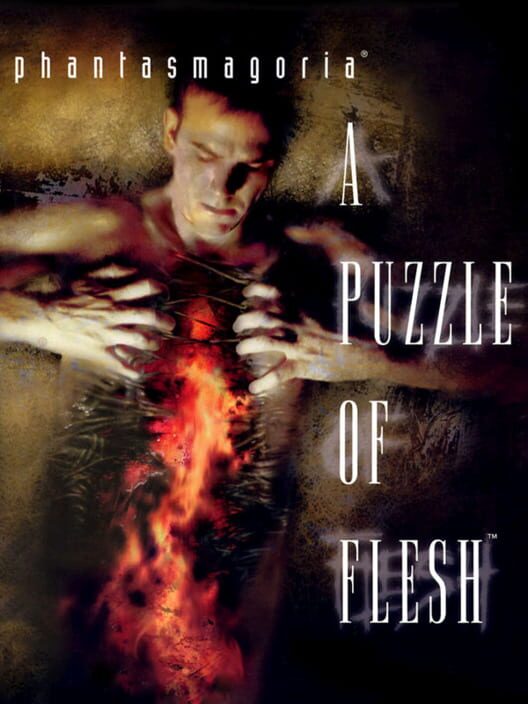
Phantasmagoria finished 1995 as the ninth bestselling game of the year according to an analysis by PC Data of sales by 42 retail chains. In January 1996, Phantasmagoria was the fourth-best seller among MS-DOS and Windows games, behind Microsoft Flight Simulator, Myst and Command & Conquer, and it was number six among all computer software. By February 10 it was number five among MS-DOS and Windows games, and by February 24 it was number 10. It received a boost in June 1996, possibly due to the pending release of its sequel Phantasmagoria: A Puzzle of Flesh, and jumped back up to seventh among bestselling computer software programs according to Computer Life magazine.
One year after Phantasmagoria was released, it still remained in the bestseller charts, and more than one million copies were ultimately sold, making it Sierra's first game to reach that milestone. NPD Techworld, which tracked sales in the United States, reported 301,138 units sold of Phantasmagoria by December 2002.
Phantasmagoria received mixed reviews. Vince Broady, executive editor of Multimedia World, said Sierra was smart to try to capture the adult market, which was looking for sophisticated games especially after the popularity of games such as The 7th Guest. Dwight Silverman of the Houston Chronicle declared it the best game of the year, calling it a "masterwork" and "as close as it gets to a film you control," although he said not everyone would appreciate it due to its violent content. Entertainment Weekly gave it a B+ and called it "one of the surest signs yet of computer games approaching the quality level of the movies."
The review said it had some suspenseful and novel twists, but also some "horrific touches (that) seem a bit derivative, such as a Freddy Krueger-like nightmare in which hands pull you through a bed." Kim McDaniel of The Salt Lake Tribune called it "the most sophisticated computer game to date" and "a weird, wild, horrific ride that will make you jump at every turn, even if you aren't normally faint-of-heart." Although McDaniel said it might be easy for experienced players, she appreciated that it was more accessible for casual players than difficult games like The 7th Guest.
A Billboard magazine review said Phantasmagoria "lives up to the advanced billing" and "aims to unnerve and succeeds gruesomely with bloody special effects interspliced in trusty scare-flick fashion with daubs of flesh and hints of sex." USA Today writer Joe Wilson gave it three-and-a-half stars and called it well-produced, visually appealing, frighteningly realistic and "a much-needed change from normal fare," although he said the plot did not start to become interesting until halfway through. Gene Emery of The Providence Journal said the game was "an impressive work, a sophisticated mix of live action and a rich computer-generated environment, coupled with a musical score that's spooky without being overwhelming." He also called the gameplay "elegant in its simplicity."
San Francisco Chronicle writer Laura Evenson called it unpredictable and addictive, comparing it to a good mystery novel. A reviewer for Next Generation was pleased with the story, the production values of the cutscenes, and the way the game mixed in full motion video without resulting in slowdown or poor control. However, he found that the lack of a challenge made it a poor value for experienced players, since they would be able to finish the entire game in a day or two, and recommended it strictly for those who were new to the adventure genre. Ric Manning of the Gannett News Service wrote, "The graphics are terrific, but don't play on a full stomach."
Steve La Rue of U-T San Diego found the game "visually opulent and interesting" with "dialogue a lot better than I expected, given the trite gothic novel plot," but also said he had to adjust to the "gradual, contemplative pace." Jack Warner of The Atlanta Journal-Constitution wrote: "It's hackneyed, but the art is so good, the acting sufficiently convincing and the atmosphere brooding enough to keep you going," although he said "precious little happens" in the first few discs.
Computer Gaming World writer Arinn Dembo called the storyline of a couple buying a haunted mansion "a cliché so familiar that it needs no explanation," but said it still worked in a computer game because the player could directly experience it in that medium, rather than simply watching it in a film. Dembo also praised the game for featuring a female protagonist, though she said Adrienne was too much of an exaggeratedly feminine "girlie-type girl." Overall, Dembo said the game "achieved a new height of realism and beauty in a computer game" and was "an important technological leap, and represents a step forward for the whole industry." Another Computer Gaming World review said Phantasamagoria "appears to deliver on its ambitious promises" and that although the puzzles are too simple for experienced gamers, the appeal of the game is exploring a setting that "would have had even the folks in Amityville
Legacy
The commercial success of Phantasmagoria had a positive financial impact on Sierra On-Line. 875, which Vince Turzo of Jeffries & Co attributed in part due to anticipation of Phantasmagoria. Sierra's stock continued to rise after it was released. 25 on September 8, 1995, translating to a 73 percent gain in less than three months, which Turzo attributed partially to Phantasmagoria's success.
26 million, compared to a loss of $850,000 in 1994. This improvement exceeded expectations in analysts' forecasts, and was thanks largely to Phantasmagoria sales.
Williams returned to work on the King's Quest series after Phantasmagoria was completed. Sierra used the same technology and Hollywood techniques from Phantasmagoria to make The Beast Within: A Gabriel Knight Mystery (1995), another interactive movie adventure game. Williams later described Phantasmagoria as the game that best represented her career as a game designer. Due to its development delays, Phantasmagoria was released after other interactive movie games like Wing Commander III and Under a Killing Moon, so it did not receive as much credit for heralding that game subgenre as the other titles.
Harley Jebens of the Austin American-Statesman said by the time it was finally released, "computer games that incorporate video [were] becoming a common sight on the software store racks." Sean Clark, a project leader at LucasArts, feared the success of Phantasmagoria would set a bad precedent in that software companies would think they need huge budgets and many discs to have a successful game, rather than focusing on quality.