

1998 · Game Freak · Adventure · Role-playing
Pokémon Blue
Nintendo exclusive
Pokémon Blue is the third core series Pokémon game released as a minor revision of Pokémon Red and Green, which were released earlier that year. It was thus the first solitary version in the core series of Pokémon games. Various fixes in the game include a graphics and sound upgrade, as well as the removal of several known glitches that had been found in the original pair. Outside of Japan, its graphics, game engine and script formed the basis of Pokémon Red and Blue, while the wild Pokémon and game-exclusive Pokémon lists were changed to match Red and Green.
- Released
- 28 September 1998
- Platforms
- Game BoyNintendo 3DS
- Genres
- AdventureRole-playingTurn-based strategy
- Developers
- Game Freak
- Publishers
- Nintendo
- Series
- Pokémon
- Modes
- MultiplayerSingle-player
- Perspective
- Bird view / IsometricSide view
- Themes
- FantasyKidsOpen world
- Country
- United States
- Age ratings
- CERO APEGI 12ESRB EUSK 0
- Languages
- English, French, German, Italian, Japanese, Spanish (Spain)
- Time to beat
- 28hwith extras
- Directors
- Satoshi Tajiri
- Composers
- Junichi Masuda
About
Pokémon Red Version and Pokémon Blue Version are 1996 role-playing video games (RPGs) developed by Game Freak and published by Nintendo for the Game Boy. They are the first installments of the Pokémon video game series and were first released in Japan as Pocket Monsters Red and Pocket Monsters Green, followed by the special edition Pocket Monsters Blue later that year. The games were released internationally in 1998 and 1999 as Pokémon Red and Pokémon Blue, while an enhanced version, Pokémon Yellow Version: Special Pikachu Edition, was released in Japan in 1998 and in other regions in 1999 and 2000.
The player controls the protagonist from an overhead perspective and navigates the fictional region of Kanto in a quest to master Pokémon battling. The goal is to become the Pokémon League Champion by defeating the eight Gym Leaders and the best Pokémon Trainers in the Kanto Region, the Elite Four. Another objective is to complete the Pokédex, an in-game encyclopedia, by obtaining all 151 Pokémon. Red and Blue use the Game Link Cable, which connects two Game Boy systems and allows Pokémon to be traded or battled between games. Both versions feature the same plot, and while they can be played separately, players must trade between both games to obtain all of the original 151 Pokémon.
›Story
The player character starts out in Pallet Town. When the player character tries to leave the town without a Pokémon of their own, they are stopped in the nick of time by Professor Oak, who invites them to his lab. There, he gives them a Pokémon of their own and a Pokédex, telling them about his dream to make a complete guide on every Pokémon in the world. After the player character battles their rival and leaves the lab, they are entitled to win every Gym Badge, compete in the Pokémon League, and fulfill Oak's dream by catching every Pokémon.
Keywords
- anime
- monsters
- evolution
- collecting
- manga
- turn-based
- breeding
- jrpg
- slot machine
- gambling
- leveling up
- super game boy enhancement
Media
The articlegameplay, story, development, reception
Gameplay
Pokémon Red and Blue are played in a third-person view, overhead perspective and consist of three basic screens: an overworld, in which the player navigates the main character; a side-view battle screen with turn based attacking; and a menu interface, in which the player may configure their Pokémon, items, or gameplay settings.
The player can use their Pokémon to battle other Pokémon. When the player encounters a wild Pokémon or is challenged by a trainer, the screen switches to a turn-based battle screen that displays the two engaged Pokémon. During a battle, the player may choose to fight using one of up to four moves, use an item, switch the active Pokémon, or attempt to flee; however, fleeing is not possible in trainer battles. Pokémon have hit points (HP); when a Pokémon's HP is reduced to zero, it faints and can no longer battle until it is revived, which is done either with an item, or healing at a Pokémon Center, healing centres for injured Pokémon.
Story
The player begins in their hometown of Pallet Town in the Kanto Region (inspired by, but not to be confused with the real life Kantō region of Japan). After venturing alone into the tall grass, the player is stopped by Professor Samuel Oak, a famous Pokémon Researcher. Professor Oak explains to the player that wild Pokémon may be living there and encountering them alone can be very dangerous. He takes the player to his laboratory where the player meets Oak's grandson, a rival aspiring Pokémon Trainer.
The player and the rival are both instructed to select a starter Pokémon for their travels out of Bulbasaur, Squirtle and Charmander. Oak's grandson will always choose the Pokémon which is stronger against the player's starting Pokémon. He will then challenge the player to a Pokémon battle with their newly obtained Pokémon and will continue to battle the player at certain points.
Development
The game developer, Satoshi Tajiri, pitched the concept of Pokémon to Nintendo's staff in 1990 and was met with skepticism. They believed his ideas were too ambitious and found it difficult to see the appeal. However, Shigeru Miyamoto saw great potential in the idea and convinced the company to go ahead with the project.
The initial concept for Pokémon stemmed from the hobby of insect collecting, a popular pastime which Tajiri enjoyed as a child. While growing up, however, he observed more urbanization taking place in the town where he lived and as a result, the insect population declined. Tajiri noticed that kids now played in their homes instead of outside and he came up with the idea of a video game, containing creatures that resembled insects, called Pokémon. He thought kids could relate with the Pokémon by individually naming them and then controlling them to represent fear or anger as a good way of relieving stress. However, Pokémon never bleed nor die in battle, only faint – this was a very touchy subject to Tajiri, as he did not want to further fill the gaming world with "pointless violence".
Reception
The games received mostly positive reviews, holding an aggregate score of 88% on GameRankings. Special praise was given to its multiplayer features: the ability to trade and battle Pokémon with one another. Craig Harris of IGN gave the games a "masterful" 10 out of 10, noting that: "Even if you finish the quest, you still might not have all the Pokémon in the game. The challenge to catch 'em all is truly the game's biggest draw."
He also commented on the popularity, especially among children, describing it as a "craze". 8 out of 10, cited the graphics and audio as somewhat primitive but stated that these were the only drawbacks. He praised the replay value due to their customization and variety and commented upon their universal appeal: "Under its cuddly exterior, Pokémon is a serious and unique RPG with lots of depth and excellent multiplayer extensions. As an RPG, the game is accessible enough for newcomers to the genre to enjoy, but it will entertain hard-core fans as well.
Legacy
com composed a list of the "Top 5 'Late to the Party' Games" showing selected games that "prove a gaming platform's untapped potential" and were one of the last games released for their respective console. Red and Blue were ranked first and called Nintendo's "secret weapon" when they were released for the Game Boy in the late 1990s. The success revitalized the Game Boy in the late 1990s. Nintendo Power listed the Red and Blue versions together as the third best video game for the Game Boy and Game Boy Color, stating that something kept them playing until they caught every Pokémon.
Game Informer's Ben Reeves called them (along with Pokémon Yellow, Gold, Silver, and Crystal) the second best Game Boy games and stated that it had more depth than it appeared. Official Nintendo Magazine placed the Red and Blue versions 52nd on their list of the 100 best Nintendo games of all time. In 2019, PC Magazine named them on their list of "The 10 Best Game Boy Games". In 2023, Time Extension included them on their "Best JRPGs of All Time" list for growing into an international phenomenon and popularizing the monster-catching genre.
Releases by platformdates and regions as published
Title IDsone per regional release, with its latest update
Box artone per regional release we hold art for
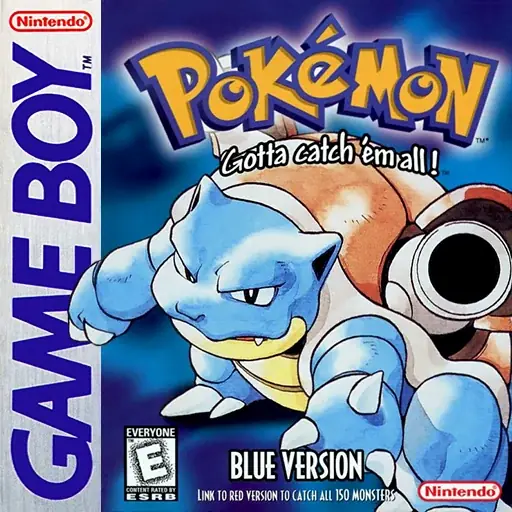
North America / Europe
Game Boy
Decompilations and portscommunity projects that rebuild or port the game
- G1R Deluxe ★ 4,125
Decompilation · Active · On gameport
- pokered ★ 5,023
Disassembly · Active · On gameport
- pokegreen ★ 28
Disassembly · Active · On gameport
- pokeblue ★ 15
Disassembly · Active · On gameport
- gen1recomp-mod-index ★ 131
Static recompilation · Active · On gameport
Static recompilation · Active · On gameport
Static recompilation · Active · On gameport
- Gen-1-Recomp-Spanish ★ 19
Static recompilation · Active · On gameport
Static recompilation · Active · On gameport
Static recompilation · Active · On gameport
- gen1recomp-ds-mod ★ 14
Static recompilation · Archived · On gameport
Static recompilation · Active · On gameport
Static recompilation · Active · On gameport
Static recompilation · Active · On gameport
Static recompilation · Active · On gameport
Static recompilation · Active · On gameport
Static recompilation · Active · On gameport
Static recompilation · Active · On gameport
Static recompilation · Active · On gameport
Static recompilation · Active · On gameport
Static recompilation · Active · On gameport
Static recompilation · Active · On gameport
Static recompilation · Active · On gameport
Static recompilation · Active · On gameport
Static recompilation · Active · On gameport
Static recompilation · Archived · On gameport
Static recompilation · Active · On gameport
Static recompilation · Active · On gameport
- gen1recompPSP ★ 4
Static recompilation · Active · On gameport
Static recompilation · Active · On gameport
Static recompilation · Active · On gameport
- gen1recomp-3DS ★ 3
Static recompilation · Active · On gameport
Static recompilation · Active · On gameport
Static recompilation · Active · On gameport
Static recompilation · Active · On gameport
Static recompilation · Active · On gameport
Static recompilation · Active · On gameport
Static recompilation · Active · On gameport
Static recompilation · Active · On gameport
Static recompilation · Active · On gameport
Static recompilation · Active · On gameport
Static recompilation · Active · On gameport
- gen1recomp_chn ★ 2
Static recompilation · Active · On gameport
Static recompilation · Active · On gameport
Static recompilation · Active · On gameport
Static recompilation · Active · On gameport
Static recompilation · Active · On gameport
- Leaf-Gen1Recomp ★ 1
Static recompilation · Active · On gameport
Static recompilation · Active · On gameport
Static recompilation · Active · On gameport
- gen1recomp ★ 1
Static recompilation · Active · On gameport
Static recompilation · Active · On gameport
Static recompilation · Active · On gameport
Static recompilation · Active · On gameport
Static recompilation · Active · On gameport
Static recompilation · Active · On gameport
Static recompilation · Active · On gameport
Static recompilation · Active · On gameport
- gen1recomp-mods ★ 1
Static recompilation · Active · On gameport
Static recompilation · Active · On gameport
Static recompilation · Active · On gameport
Static recompilation · Active · On gameport
Static recompilation · Active · On gameport
Static recompilation · Active · On gameport
Static recompilation · Active · On gameport
Static recompilation · Active · On gameport
- gen1recomp-vita ★ 1
Static recompilation · Active · On gameport
Static recompilation · Active · On gameport
Static recompilation · Active · On gameport
Static recompilation · Active · On gameport
Static recompilation · Active · On gameport
Static recompilation · Active · On gameport
Static recompilation · Active · On gameport
Static recompilation · Active · On gameport
Static recompilation · Active · On gameport
Static recompilation · Active · On gameport
Static recompilation · Active · On gameport
Static recompilation · Active · On gameport
Static recompilation · Active · On gameport
Static recompilation · Active · On gameport
Static recompilation · Active · On gameport
Static recompilation · Active · On gameport
Static recompilation · Active · On gameport
Static recompilation · Active · On gameport
Static recompilation · Active · On gameport
Static recompilation · Active · On gameport
Static recompilation · Active · On gameport
Static recompilation · Active · On gameport
Static recompilation · Active · On gameport
Static recompilation · Active · On gameport
Static recompilation · Active · On gameport
Static recompilation · Active · On gameport
Static recompilation · Active · On gameport
Static recompilation · Active · On gameport
Static recompilation · Active · On gameport
Static recompilation · Active · On gameport
Static recompilation · Active · On gameport
- gen1recomp-celio ★ 0
Static recompilation · Active · On gameport
Static recompilation · Active · On gameport
Static recompilation · Active · On gameport
Static recompilation · Active · On gameport
Static recompilation · Active · On gameport
Static recompilation · Active · On gameport
Static recompilation · Active · On gameport
Static recompilation · Active · On gameport
Static recompilation · Active · On gameport
Static recompilation · Active · On gameport
Static recompilation · Active · On gameport
Static recompilation · Active · On gameport
Static recompilation · Active · On gameport
Static recompilation · Active · On gameport
Static recompilation · Active · On gameport
Static recompilation · Active · On gameport
Static recompilation · Active · On gameport
Static recompilation · Active · On gameport
Static recompilation · Active · On gameport
Static recompilation · Active · On gameport
Static recompilation · Active · On gameport
Static recompilation · Active · On gameport
Static recompilation · Active · On gameport
Static recompilation · Active · On gameport
Static recompilation · Active · On gameport
Static recompilation · Active · On gameport
Static recompilation · Active · On gameport
Static recompilation · Active · On gameport
Static recompilation · Active · On gameport
Static recompilation · Active · On gameport
Static recompilation · Active · On gameport
Static recompilation · Active · On gameport
Static recompilation · Active · On gameport
Static recompilation · Active · On gameport
Static recompilation · Active · On gameport
Static recompilation · Active · On gameport
Static recompilation · Active · On gameport
- pokeblue ★ 0
Static recompilation · Active · On gameport
Static recompilation · Active · On gameport
Editions and related releases
- Based on
- Pokémon Red and Green
- Derivative works
- Pokémon FireRed and LeafGreenPocket MonstersPokémon Origins
- Remade as
- Pokémon LeafGreen Version
- Basis for
- Pokémon FireRed and LeafGreen
- Built on it
- Pokémon LeafGreen VersionPokémon Version Violette
In the same series
 Nintendo exclusive87
Pokémon Gold and Silver
1999 · Game Boy, Game Boy Color +1
Game Freak
 Nintendo exclusive87
Pokémon Crystal Version
2000 · Expanded · Game Boy Color, Nintendo 3DS
Game Freak
 Nintendo exclusive81
Pokémon Ruby and Sapphire
2002 · Game Boy Advance
Game Freak
 Nintendo exclusive92
Pokémon FireRed and LeafGreen
2004 · Remake · Game Boy Advance, Nintendo Switch
Game Freak
 Nintendo exclusive73
Pokémon Emerald Version
2004 · Expanded · Game Boy Advance
Game Freak
 Nintendo exclusive81
Pokémon Diamond and Pearl
2006 · Nintendo DS
Game Freak
 Nintendo exclusive81
Pokémon Platinum
2008 · Expanded · Nintendo DS
Game Freak
 Nintendo exclusive87
Pokémon HeartGold and SoulSilver
2009 · Remake · Nintendo DS
Game Freak
 85
Pokémon Black and White
2010 · Nintendo DS, PlayStation Portable
Game Freak
 Nintendo exclusive81
Pokémon Black and White 2
2012 · Nintendo DS
Game Freak
 Nintendo exclusive
Pokémon X and Y
2013 · Nintendo 3DS
Game Freak
 Nintendo exclusive84
Pokémon Omega Ruby and Alpha Sapphire
2014 · Remake · Nintendo 3DS
Game Freak
 Nintendo exclusive81
Pokémon Sun and Moon
2016 · Nintendo 3DS
Game Freak
 Nintendo exclusive74
Pokémon Ultra Sun and Ultra Moon
2017 · Expanded · Nintendo 3DS
Game Freak
 Nintendo exclusive76
Pokémon: Let's Go, Pikachu! and Let's Go, Eevee!
2018 · Remake · Nintendo Switch
Game Freak
 Nintendo exclusive77
Pokémon Sword and Shield
2019 · Nintendo Switch
Game Freak
 Nintendo exclusive68
Pokémon Brilliant Diamond and Shining Pearl
2021 · Remake · Nintendo Switch
ILCA
 Nintendo exclusive81
Pokémon Legends: Arceus
2022 · Nintendo Switch
Game Freak

Pokémon Scarlet and Violet
2022
Game Freak
 Nintendo exclusive75
Pokémon Legends: Z-A - Nintendo Switch 2 Edition
2025 · Nintendo Switch, Nintendo Switch 2
Game Freak
- Pokémon Winds and WavesNintendo exclusive
Pokémon Winds and Waves
2027 · Nintendo Switch 2
Game Freak
 Nintendo exclusive
Pocket Monsters Stadium
1998 · 64DD, Nintendo 64
HAL Laboratory
 Nintendo exclusive73
Pokémon Trading Card Game
1998 · Game Boy, Game Boy Color +1
Hudson Soft
 Nintendo exclusive68
Pokémon Pinball
1999 · Game Boy, Game Boy Color
Jupiter
Games like this

Collections1 collection
Series and characters
Description adapted from its source, CC BY-SA 4.0.