
The articlegameplay, story, development, reception
Gameplay
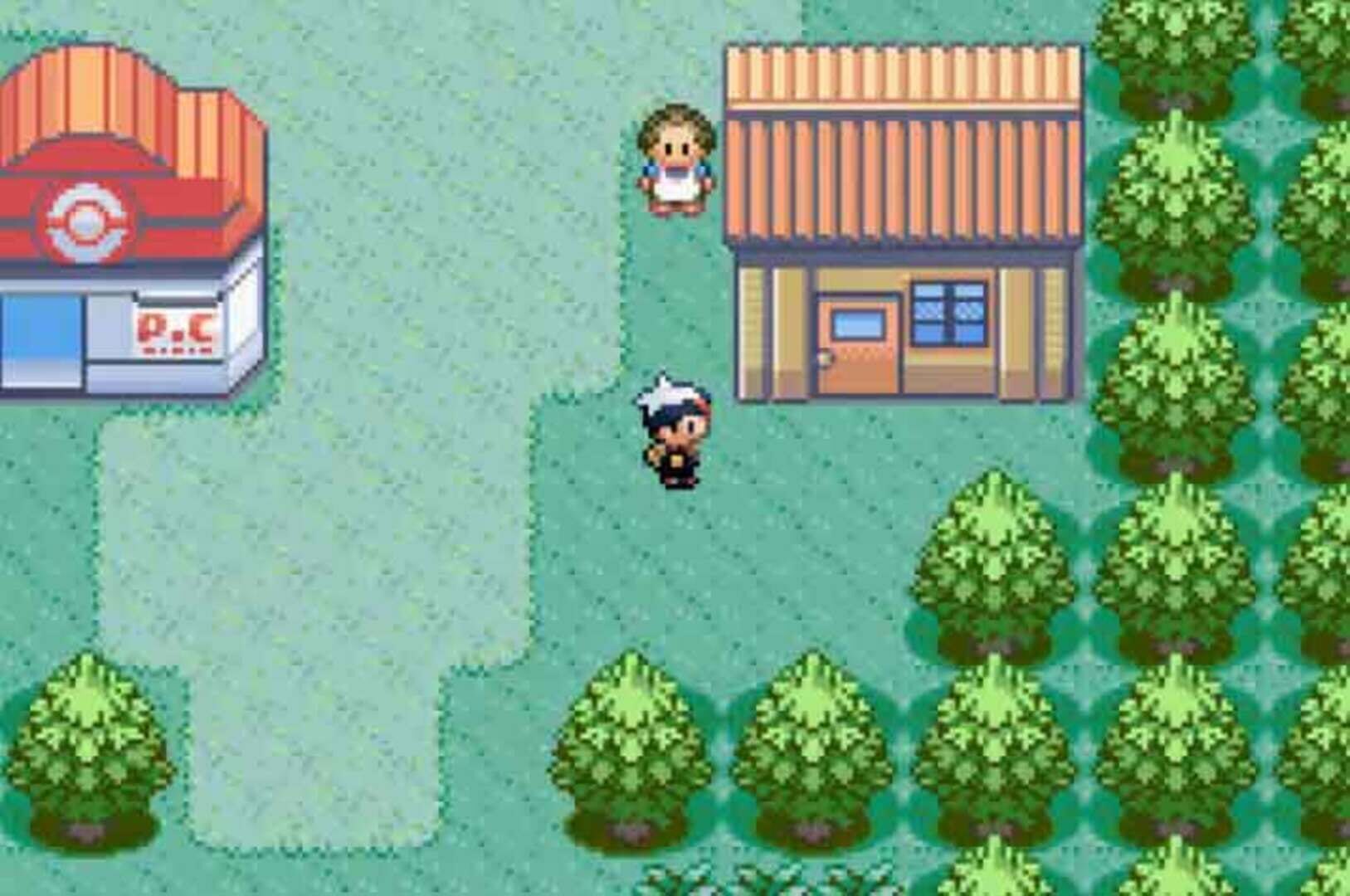
The basic mechanics of Ruby and Sapphire are largely the same as their predecessors. As with all Pokémon games for handheld consoles, the gameplay is in third-person, overhead perspective and consists of three basic screens: a field map, in which the player navigates the main character; a battle screen; and the menu, in which the player configures their party, items, or gameplay settings. Players begin the game with one Pokémon and can capture more using Poké Balls. They can also use their Pokémon to battle other Pokémon.
When the player encounters a wild Pokémon or is challenged by a trainer to a battle, the screen switches to a turn-based battle screen where the Pokémon fight. During a battle, the player may use a move, use an item, switch their active Pokémon, or flee, although fleeing is not an option in battles against trainers. All Pokémon have hit points (HP); when a Pokémon's HP is reduced to zero, it faints and cannot battle until it is revived. If the player's Pokémon defeats the opposing Pokémon (causes it to faint), it receives experience points.
Story
Pokémon Ruby and Sapphire occur in the Hoenn Region, some distance from the Kanto and Johto Regions featured in previous games. The design of Hoenn was based on the Japanese island and region of Kyushu; however, Hoenn is rotated 90° relative to Kyushu, as Junichi Masuda felt that it would provide a better gameplay balance. Like Kyushu, Hoenn possesses many smaller islands, and part of the region is dominated by sea routes, several of which contain areas where the player can dive underwater.
Like other Pokémon games, Ruby and Sapphire's gameplay is linear; the main events occur in a fixed order. The protagonist of Pokémon Ruby and Sapphire are Brendan and May, who have recently moved to a small town called Littleroot Town. At the beginning of the games, the player chooses either Treecko, Torchic, or Mudkip to protect Professor Birch, the regional professor, from attacking Poochyena. After defending Birch, the player is taken to his lab and receives the chosen Pokémon as their starter Pokémon.
Development
Pokémon Ruby and Sapphire were developed by Game Freak and Nintendo under the direction of Junichi Masuda. As with its predecessors, Ken Sugimori was the art director, although these were the first games in which he did not single-handedly produce all of the art. When asked where his design team came up with the ideas for all of the new Pokémon, Sugimori stated that they got their ideas from past experiences in their childhood involving nature, animals, and the media and then base them on insects. Even looking at the world in a different perspective sometimes provided inspiration for the creatures. "First we select an insect and after that we add essential elements to the insects to make it more like Pokemon, such as adding some hard shape to it, to be more like steel," Sugimori said, describing the process of creating a Pokémon.
As the Game Boy Advance was able to handle enhanced graphics, Ruby and Sapphire were the first games in the series that allowed up to four people to share information at one time, as opposed to the previous limit of two. However, the development team used a more basic graphics engine to keep the game simple and not overly confusing. The team wanted the games to appeal to a large audience, so the game was designed to be easy enough for younger generations of children to play, but new features were added to bring the veteran gamers back.
Reception
The games were met with mostly positive reviews. 5 out of 10 rating and awarded them the Editor's Choice Award; in 2007, the games were collectively named the tenth best Game Boy Advance game of all time in an IGN article. 5 out of 10 rating and awarded them an Outstanding Award. GamePro gave the games 5 out of 5 stars and named them Editor's Choices.
1 out of 10, naming it the best Game Boy Advance game of March 2003. com gave them a B−.
Legacy
Pokémon Omega Ruby and Pokémon Alpha Sapphire are enhanced remakes of Pokémon Ruby and Sapphire. The new titles were developed by Game Freak and published by Nintendo for the Nintendo 3DS. They were released worldwide for the Nintendo 3DS on November 21, 2014, exactly twelve years after the original release date of Ruby and Sapphire, while the European release was the following week.
==== Pokémon Box: Ruby and Sapphire ====


