The articlegameplay, story, development, reception
Gameplay
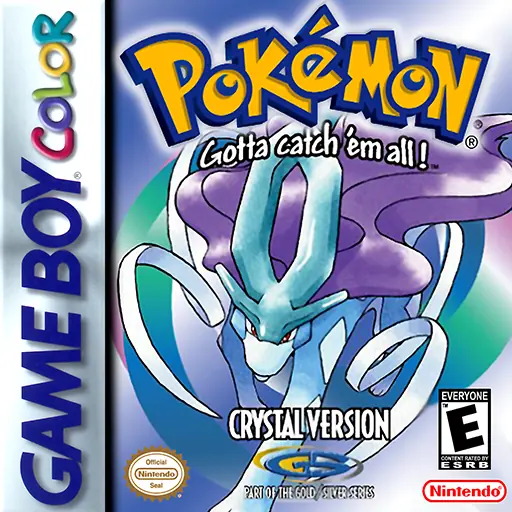
Similar to Pokémon Gold and Silver, Pokémon Crystal is a role-playing video game where players navigate a fictional world by capturing, training, and battling with Pokémon. In addition, Crystal enhances aspects of Gold and Silver, providing cosmetic and gameplay improvements. The visual presentation of Crystal is enhanced through the animation of Pokémon sprites when first encountered in battle, the inclusion of signposts appearing on the screen when entering a new area, and a range of minor graphical enhancements to various locations in the game. It includes the ability to select one of two player characters, adding Kris, a female trainer, with a unique sprite. The game introduces a Battle Tower, a new stadium that allows players to battle a series of seven trainers with three Pokémon set at customizable maximum levels to win prizes.
The Japanese release of Pokémon Crystal supported the Mobile Adapter GB, a peripheral device enabling wireless connectivity between a Game Boy Color or Game Boy Advance and a mobile phone for online interactions using the Mobile System GB service. Pokémon Crystal players were provided with various interactive features, including the ability to battle and trade online, access news updates, participate in quizzes, and engage in minigames. Players could also create or download battle replays, which could be transferred to Pokémon Stadium 2 on the Nintendo 64 using a Transfer Pak. A special item was also distributed via Mobile System GB that allowed players to catch the rare Pokémon Celebi. Users were charged a per-minute connection fee, with additional charges ranging from ¥10 to 100 for accessing specific online features, such as battling, trading, and downloading content.
Story
The setting and story of Crystal remains largely the same as in Gold and Silver, with the player seeking to raise and battle Pokémon to defeat the Johto Gym Leaders and Elite Four to be the Johto League Champion. However, several encounters and additional characters are introduced to the overarching narrative. Crystal features a greater role for Legendary Pokémon, with the player awakening Suicune, Entei, and Raikou, and encountering them at various stages of the game. The plotline features a new character, Eusine, who has been searching for Suicune, providing the player with a more direct and narrative pathway to battling and capturing Suicune and the remainder of the game's Legendary Pokémon. Crystal also includes minor changes to how the player encounters the Gym Leader Clair, and additions to the role of the Pokémon Unown in the Ruins of Alph, with players able to complete additional puzzles to receive rewards and messages from the Unown.
Development
Crystal was developed by Game Freak in 1999 following the release of Pokémon Gold and Silver. Crystal was the first Pokémon game to feature Junichi Masuda as a lead director, who had previously been a composer for the Pokémon franchise and sub-director for Gold and Silver. Nintendo initially announced development of Crystal and the Mobile Adapter GB in December 1999, with the game developed under the working title of Pokémon X. Artist Ken Sugimori stated that Crystal was primarily developed to support Nintendo's launch of the Mobile System GB service.
Masuda noted that the title of the game was intended to be associated with the "crystals used in electronic transmissions". Nintendo president Hiroshi Yamauchi stated that "Pokémon, which incorporates elements of exchange and 'collection', would be the best way to get people to understand the new genre of games that use mobile phones."
Reception
Critical reception to Pokémon Crystal upon release was generally positive, with reviewers praising the variety of additional features added to the game. Writing for GameSpot, Frank Provo stated that the game's additions provide "a great deal of value", highlighting the features that "enhance and broaden the game's overall variety", including timed events, quality of life improvements and visual embellishments. Nintendo Power highlighted the addition of the Battle Tower, finding the feature a "truly challenging" addition that would appeal to "hard-core fans". Kelly Starr of Nintendo Gamer found "enough little differences" to make the game a "worthwhile addition," directing praise at the ability to play as a female trainer, the inclusion of location signs, and the enhanced animations.
Many critics considered the additions to Crystal insubstantial and difficult to distinguish from Gold and Silver. Craig Harris of IGN noted the game featured improvements to the overall design," but found the cosmetic changes to be "very little", expressing frustration that the title was the "same game engine" that had been used for several years. Simon Brew of Game Boy Xtreme found "little else on offer" for long-time players, remarking that the game "stretched the traditional formula as far as it could go". Chris Johnston for Electronic Gaming Monthly stated the additions "don't alter the game-playing experience at all," suggesting the changes should have been part of the original game. Chris Thompson of Pocket Games conceded that the game was an "excellent" introduction for new players, but its additions were insufficient to justify a repeat purchase.
Legacy
Retrospective reviews of Crystal have praised the game as one of the best titles in the Pokémon franchise. Darryn Bonthuys of GameSpot stated Crystal was "the definitive Pokémon game of the Game Boy era" and one of the best Game Boy Color titles, highlighting its "revolutionary" animations and story. Chris Tapsell of Eurogamer praised Crystal as "the best Pokémon game" due to its "peerless artistry", and the "quaint, restricted painterly presentation" of its animations. Arjun Joshi of Nintendo Life remarked that Crystal "(added) even more life to an already vibrant game", praising the game's animations and "captivating and memorable" additions to the game's plot.
Many reviewers have also observed that Crystal pioneered features that would become standard in successive Pokémon games, including the pattern of an enhanced version following the release of the primary games in a generation, the selection of the player character's gender, an overarching narrative featuring chosen one themes, and the inclusion of a Battle Tower feature. Tomas Franzese of Dual Shockers notes that the game was important in establishing "multiple precedents" for the series and its future direction. Nintendo Power commented that whilst the innovation of the Mobile Adapter GB was confined to the Japanese market, its design also served as a major influence for portable networking features of later Nintendo products, including the Game Boy Advance Wireless Adapter and Nintendo DS.