The articlegameplay, story, development, reception
Gameplay
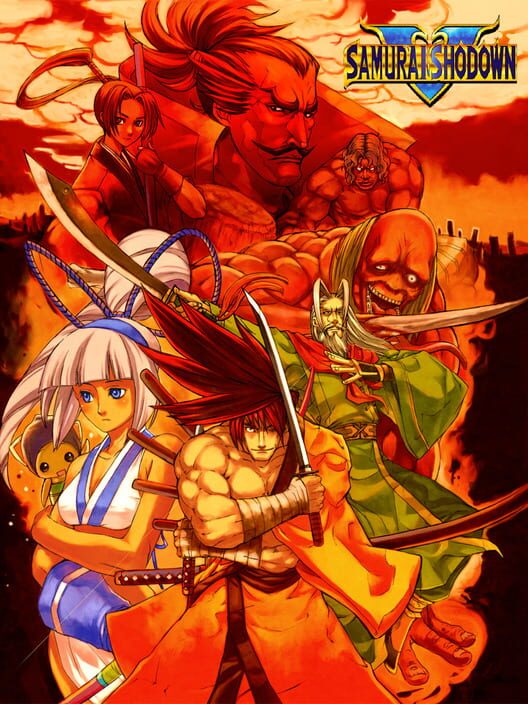
Following up on the extremely enthusiastic fan reception of the first Samurai Shodown game, SNK rebuilt the sequel from the ground up, including almost all of its predecessor's cast, adding several new characters, and refining the overall gameplay with more responsive control, more moves (particularly the use of the POW meter as a super special move meter; these moves not only cause severe damage to the opponents but also break their weapons, forcing them to fight unarmed for a short interval before a replacement weapon is issued), and a substantial number of Easter eggs.
The overall gameplay was expanded to include several movement options, such as being able to roll forward and backward, ducking to avoid high attacks, or doing small hops to avoid low strikes. This game was also the first game to incorporate an offensive blocking technique or "parry", via a command issued at the last second, a player would be able to deflect the incoming attack and leave their adversary open to attack by a split second. Such a technique was later also used in Namco's Weaponlord and later popularized by Capcom's Street Fighter III. There are also cameo appearances from other SNK characters, a hidden boss who would occasionally come out to challenge players, and several other treats for fans to uncover.
Story
One year after the defeat of Amakusa from within the first Samurai Shodown, a new threat soon emerges in the form of Mizuki Rashojin: a vengeful spirit who possess a local shrine priestess named Mizuki and seeks to bring forth chaos and destruction to the world in the name of the dark god Ambrosia's will. Those who had fought before in the past during Amakusa's reign of terror now find themselves, along with a few new faces, battling against Mizuki and her loyal forces in order to determine the fate of the entire world itself.
Reception
In North America, RePlay reported it to be the 12th most-popular arcade game in October 1994, despite only being available for location testing at the time. In Japan, Game Machine listed it on their December 1, 1994 issue as being the most-successful table arcade unit of the month. It went on to be Japan's eighth highest-grossing arcade game of 1995.
According to Famitsu, both the Neo Geo AES and Neo Geo CD versions sold over 75,066 and 20,487 copies during their first week on the Japanese market, respectively. The AES version went on to sell 205,554 units and the CD version 129,951 units, for a total of 335,505 units sold in Japan.
Samurai Shodown II was well received by critics and considered an improvement over the original. The four reviewers of EGM gave the Neo Geo home version unanimous scores of 9/10 each and the "Game of the Month" title, saying that the game improved in every aspect over its already excellent predecessor. They later ranked it #4 in the 1995 EGM's "Hot 50", higher than any other fighting game. GamePro praised improvements such as the revised POW meter and secret moves as well as "the best graphics ever seen in a hand-drawn animated fighting game" but said the combos are still unbalanced, with some characters able to do far more damage than others.
They remarked that, in combination with other recent releases such as Fatal Fury Special, SNK was close to overtaking Capcom as the premier maker of fighting games. A reviewer for Next Generation said that the game was the same as its predecessor aside from some "minor improvements", but that "that's what makes it so darn good."
Samurai Shodown II made GameSpot's list of the greatest games of all time and EGM's list of top ten cult classics. It was also ranked as the 18th best arcade game of the 1990s by Complex. Retro Gamer included it among top ten Neo Geo games: "With its beautiful graphics, silky smooth animation and eclectic character roster, the second part of SNKs Samurai Shodown series is easily its best. The 202-meg cart featured new fighters, glorious backdrops and even slicker controls than the impressive original.
A massive arcade success, Samurai Shodown II was a fantastic two-fingered salute to Capcom and proved that SNKs style and ambition knew no bounds. It certainly lacks the depth of later games in the series, but for sheer fun and accessibility Samurai Shodown II is without equal. A truly monumental fighter that still plays brilliantly today." In 2008, they gave the XBLA re-release a review score of 91%.
In 2019, Game Informer ranked it as the 9th best fighting game of all time.
According to Retro Gamer, "this incredible game proved that SNK was willing and able to challenge genre conventions and go toe to toe with Capcom in the fighting game arena. The heated competition between the two companies would last through the decade and beyond as both companies tried to out-innovate each other with each new release." The game's awkward Engrish text intro has often been commented on. Chad Okada (Game Lord) stated that efforts to localize the text were stunted as the small profit earned from Neo Geo home versions was not considered worth the time and money needed to fix translation errors.
Next Generation reviewed the Neo-Geo version of the game and stated that "Unfortunately, even in its full arcade reproduction, Samurai Showdown II is still just another fighting game. It's definitely a game every Neo-Geo owner should invest in, but not a reason to buy a machine if you don't own one."