Ludography
65/100
Players49 ratings
60/100
Critics2 reviews
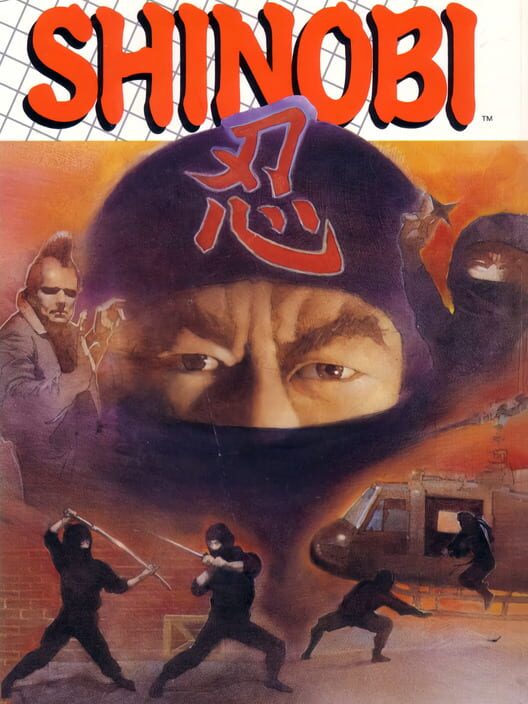
Shinobi cover

1987 · Action · Adventure

Shinobi

The five missions in the game are each three or four stages long. Several hostages are being held in each stage; Joe must rescue all of them before he is allowed to finish the stage. The last stage in each mission has no hostages, but instead features a powerful boss character whom Joe must defeat. After completing each of the first four missions the player is taken to a bonus stage, where he can earn an extra life if he is able to kill all of the ninjas leaping towards him.

Completing the fifth mission ends the game. Also, once the fifth mission begins, continues are no longer allowed; the player has to finish the game with however many lives he has left at that point. If the player earns a place on the high score board, the number of credits it took him to get that score is displayed along with his score.

Joe's standard weapons are an unlimited supply of shuriken, along with punches and kicks when attacking at close range. One hostage per stage gives him a power-up. When powered-up, his throwing stars are replaced by a gun that fires large, explosive bullets, and his close-range attack becomes a katana slash. Joe can also perform "ninja magic," which may be used only once per stage and kills (or damages, in the case of bosses) all enemies on the screen. The game also allows the enemies to hide behind boxes or use shields to block Musashi's shurikens.[4]

Joe can be killed with one hit, provided he is hit by a projectile or melee attack, but if he does not find himself in those situations, the player can touch regular enemies and just be pushed back without being damaged. Since most enemies appear in the same place on each level, it is possible to master the game by memorizing their locations and devising patterns to defeat them.

At the end of each stage, the player receives score bonuses based on performance. Completing the stage without using ninja magic or without using any throwing stars or bullets earns the player a point bonus. The player has three minutes to complete each stage; remaining time at the end of the stage is also converted to bonus points and added to the player's score.

Also known as
忍 -SHINOBI- · Electronic Shinobi · Electronic Shinobi LCD Video Game
Released
16 November 1987
Platforms
ArcadeTurboGrafx-16AmigaAmstrad CPCAtari ST/STECommodore C64/128/MAXMS-DOSMSXZX SpectrumAtari STCommodore 64Master SystemNESXbox 360
Genres
ActionAdventureArcadeBeat 'em upPlatformer
Developers
—
Publishers
Tengen
Modes
Single-player
Perspective
Side view
Themes
Action
Country
Japan
Age ratings
CERO BPEGI 12ESRB E10+
Languages
EnglishJapanese
Composers
Yasuhiro Kawakami

About

Shinobi (忍) is a 1987 hack and slash video game developed and published by Sega for arcades on the Sega System 16 board. The player controls ninja Joe Musashi, who must stop the Zeed terrorist organization from kidnapping students of his clan.

Shinobi was a commercial success in arcades. It topped the monthly Japanese table arcade charts in December 1987, and became a blockbuster hit in the United States, where it was the highest-grossing conversion kit of 1988 and one of the top five conversion kits of 1989. It was adapted by Sega to its Master System game console, followed by conversions to the Nintendo Entertainment System, PC Engine, and home computers. It was re-released as downloadable emulated versions of the original arcade game for the Wii and Xbox 360.

The arcade game was released for the Nintendo Switch in January 2020 through the Sega Ages series. Shinobi's success inspired various sequels and spin-offs of the Shinobi series.

Keywords

  • ghosts
  • martial arts
  • ninja
  • death
  • side-scrolling
  • hostages
  • crime
  • high score
  • boss fight
  • digital distribution
  • bonus stage
  • virtual console

Media

The articlegameplay, story, development, reception

Gameplay

The controls of Shinobi consist of an eight-way joystick and three action buttons for attacking, jumping, and using ninjutsu techniques called "ninja magic". The player can walk forward or perform a crouching walk by pressing the joystick diagonally downward. The player can jump to higher or lower floors by pressing the jump button while holding the joystick up or down. The protagonist Joe Musashi's standard weapons are an unlimited supply of shurikens, and punches and kicks.

Rescuing certain hostages in each stage will grant him an attack upgrade, replacing throwing stars with a gun, and his close-range attack becomes a katana slash. Musashi's ninjutsu techniques can only be used once per stage and will clear the screen of all enemies or cause significant damage to a boss. Depending on the stage, the three ninjutsu techniques are a thunderstorm, a tornado, and a doppelganger attack.

Enemies include punks, mercenaries, ninjas, and the Mongolian swordsmen guarding each hostage. Musashi can bump into most enemies without harm and can only be killed if he is struck by an attack, gets hit by a projectile, or falls into a bottomless hole. The stage will then restart, but any saved hostages will be retained. When the player runs out of lives, additional coins will continue the game, except for the final mission.

The time limit is three minutes per stage, and bonus points are awarded for time, with additional bonuses for refraining from ninjutsu technique (except on the fifth level) or using only melee attacks. Extra lives are awarded for achieving certain scores, completing the bonus round, or rescuing a special hostage.

A bonus round has a first-person perspective of throwing shurikens at incoming enemy ninjas, for an extra life.

Story

A ninja named Joe Musashi must stop a criminal organization called Zeed from kidnapping the children of his ninja clan. Five missions consist of three stages in the first mission and four stages each in the rest. Musashi approaches Zeed's headquarters and frees all the hostages in the first two or three stages, with a boss at the final stage of each mission. At the start of each mission, the player is shown the objective, with a file containing a photograph of the enemy boss and a map display pinpointing the location of the next stage.

Reception

In Japan, Game Machine listed Shinobi as the most successful table arcade unit of December 1987. It was a blockbuster hit in the United States, where it became the highest-grossing arcade conversion kit of 1988, and one of the top five highest-grossing conversion kits of 1989.

The arcade game received critical acclaim. Clare Edgeley of Computer and Video Games noted it as one of several popular "martial arts simulation" games at London's Amusement Trades Exhibition International (ATEI) show in January 1988, along with Taito's Ninja Warriors and Data East's Vigilante. She said it plays similarly to Ninja Warriors, but that it also has elements from Namco's run and gun game Rolling Thunder (1986), introduces bonus stages, and is more challenging overall. She praised the "clean colourful graphics" with large "well defined" sprites, and the action gameplay for being fast-paced and challenging, concluding that the game is "well worth playing".

Nick Kelly of Commodore User rated it 8 out of 10, also noting similarities to Rolling Thunder, but said Shinobi looks good, "plays brilliantly", and "combines several kinds of shoot'em and beat'em up action in one well-thought-out, well-executed game." Sinclair User also compared it to Rolling Thunder and other martial arts games, but considers Shinobi "sufficiently different to be familiar without being boring." Retrospectively, Black Belt magazine in 2003 called Shinobi "one of the best martial arts arcade games of the 1980s".

Sega's conversion for the Master System received critical acclaim. Computer and Video Games praised the "well defined" graphics, good sound, and "excellent" gameplay. Computer Entertainer scored it a full 8 out of 8 stars, calling it "the best game with a martial arts theme that we've seen on a video game system." It was awarded 4 out of 5 stars in Dragon. Classic Game Room's retrospective review reflected that the game is a classic, though less so than the 16-bit sequel The Revenge of Shinobi.

Zach Gass of Screen Rant included Shinobi and its sequels in his list of ten "awesome" hack-and-slash games in 2020.

Legacy

According to Den of Geek, "Shinobi is arguably the most ‘important’ and influential ninja game, as well as kicking off the genre’s longest running franchise."

In 1989, Sega released a sequel called The Revenge of Shinobi (The Super Shinobi in Japan) as one of the first games for its new Mega Drive game console. An arcade sequel called Shadow Dancer was also released in 1989. Shadow Dancer retains the original gameplay, adding a canine companion.

Other sequels were released for the Game Gear, Mega Drive/Genesis, Sega Saturn, the PlayStation 2, and the Nintendo 3DS. Alex Kidd in Shinobi World is a parody of Shinobi starring former Sega mascot Alex Kidd, released for the Master System in 1990.
Releases by platformdates and regions as published

Releases by platform
PlatformReleasedRegions
Arcade16 November 1987Japan
TurboGrafx-168 December 1989Japan
Amiga31 December 1989North America · Europe 31 December 1989
Amstrad CPC31 December 1989Europe
ZX Spectrum31 December 1989Europe
Commodore C64/128/MAX31 December 1989Europe
Atari ST/STE31 December 1989Europe
MS-DOS31 December 1989North America · Europe 31 December 1989
MSX31 December 1989Europe

Title IDsone per regional release, with its latest update

Title ids and disc serials by release
PlatformTitle IDRegionLatest update
Sega Master System/Mark IIIG-1353Japan—
TurboGrafx-16AS01001Japan—

Decompilations and portscommunity projects that rebuild or port the game

Editions and related releases

Included in
Master System Plug & PlayMaster System 3DVD Karaoke Game DVT-G100Game Box Série LutasSonic's Ultimate Genesis CollectionMaster System EvolutionMaster System 3 Collection: 131 Super Jogos na MemóriaSega Astro City MiniMaster System 3 Collection: 112 Super Jogos na MemóriaMaster System 3 Collection: 105 Super Jogos na MemóriaMaster System 3 Collection: 120 Super Jogos na MemóriaMaster System 3 Collection
Ported as
ShinobiSega Ages: Shinobi
Built on it
Shinobi

Games like this

Collections13 collections

Publishers

Development status

Description adapted from its source, CC BY-SA 4.0.