
The articlegameplay, story, development, reception
Gameplay
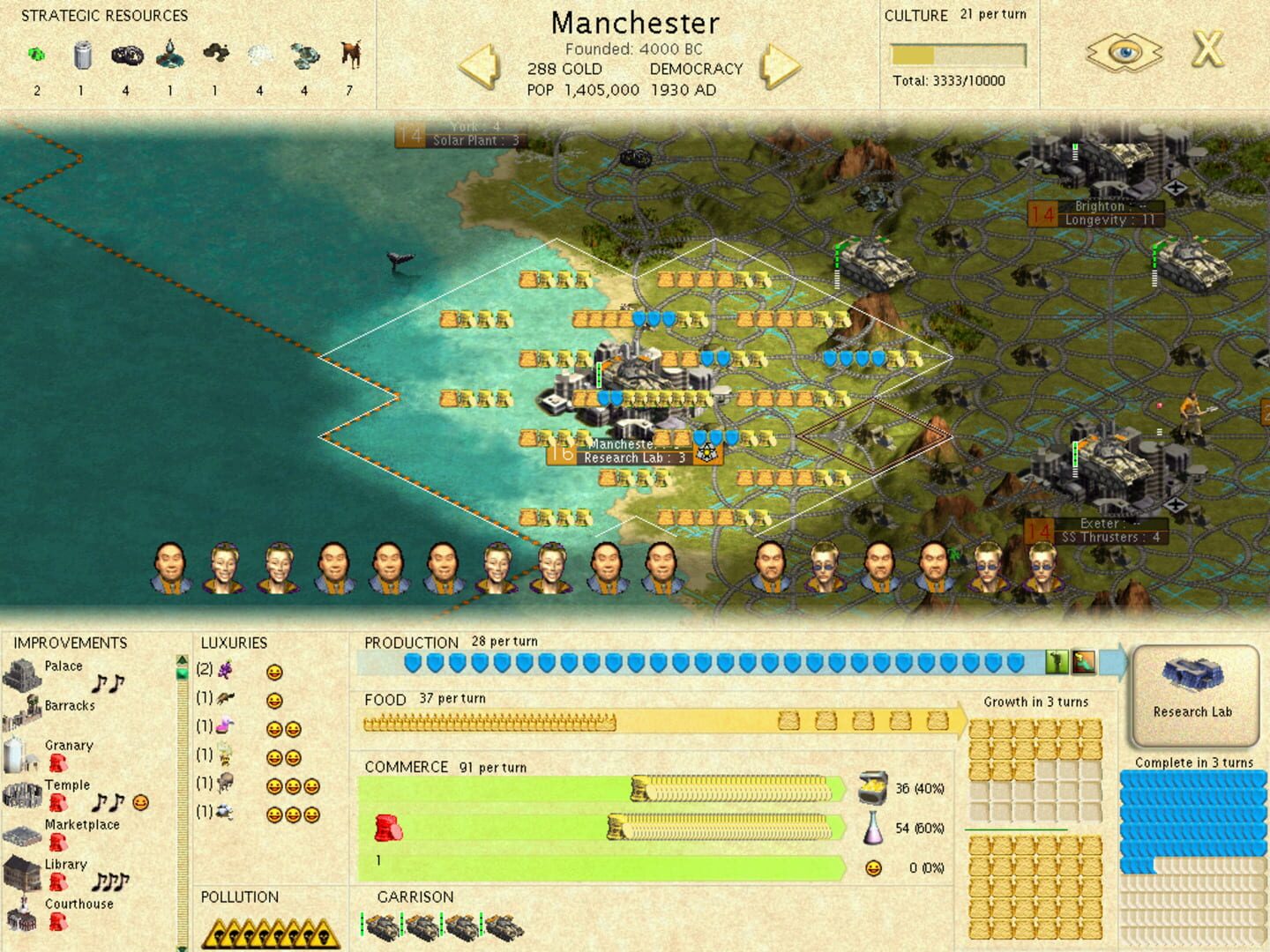
The game map is made up of square tiles on a grid. Each city, terrain improvement, and unit is located in a specific tile, and each tile can host any number of units. Land tiles can contain a transportation improvement (road or railroad) and a land improvement (farm or mine) or a city. , no two cities may touch.
Each tile is made of a particular type of terrain that determines, among other things, how much food, production, and trade it produces when "worked". A tile can only be worked if it is one of the twenty tiles surrounding a city. A tile can only be worked by one city at a time, and each city can only work a number of tiles equal to or less than its population.
Development
Civilization III was released after about two years of development on October 30, 2001. Developed by Westlake Interactive and published by MacSoft, a version for Mac OS was released on January 6, 2002.
Reception
In the United States, Civilization III entered NPD Intelect's weekly computer game sales rankings at #1 for October 28–November 3, 2001. Its Collectors Edition SKU claimed second during the period. Thanks to this debut, Civilization III became the country's fourth-best-selling computer title of October as a whole, with an average retail price of $49. In its second week of availability, the game was pushed to #2 by Backyard Basketball, and the Collectors Edition was absent from the top 10.
Firaxis's title remained in NPD's weekly top 10 from November 11–December 1, and took sixth place for November as a whole. After an absence, it reappeared in the weekly top 10 twice during December and secured 11th for the month. 5 million.


