The articlegameplay, story, development, reception
Gameplay
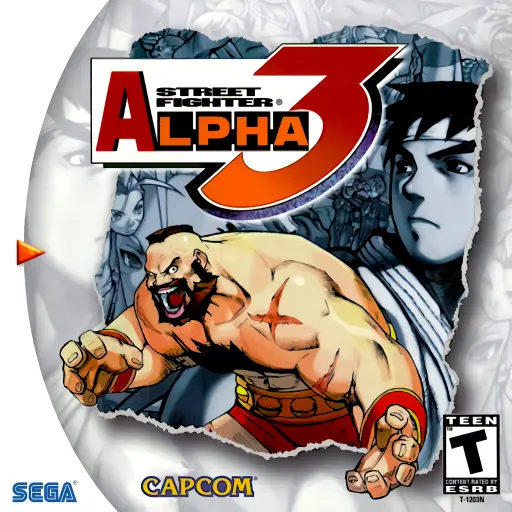
Street Fighter Alpha 3 discards the "Manual" and "Auto" modes from the previous Alpha games, and instead offers three different playing styles known as "isms" for the player to choose from. The standard playing style, A-ism (or Z-ism in Japan), is based on the previous Alpha games, in which the player has a three-level Super Combo gauge with access to several Super Combo moves. X-ism is a simple style based on Super Street Fighter II Turbo (the term "X-ism" being a reference to that game's Japanese title, Super Street Fighter II X), in which the player has a single-level Super Combo gauge and access to a single but powerful Super Combo move. The third style, V-ism (or "variable" style), is a unique style that allows the player to perform custom combos similar to the ones in Street Fighter Alpha 2, but cannot use Super Combos.
In X-ism, the player cannot air-block nor perform Alpha Counters, and can only use one Super Combo move in its powerful Level 3 version. To activate V-ism's Custom Combo, the player must press both kick and punch buttons of the same strength. X-ism has the highest attack power but the least defense. A-ism has more attack power than V-ism and a similar level of defense.
All three modes have variations of movesets for each character, adding considerable depth to the gameplay. In addition, there are hidden modes that add handicaps to the player as well as benefits (for example, Classic mode prevents the use of Super Combos, but also makes the character unable to be knocked in the air and juggled).
Alpha 3 also introduces a "Guard Power Gauge" which depletes each time the player blocks; if the gauge is completely depleted, then the player will remain vulnerable to an attack. The bar shrinks when broken and is refilled to its new maximum; it can be shrunk a number of times. While the character has the least defense of all modes in X-Ism, it also has the largest guard bar, and vice versa for V-ism with A-Zism being in the middle. Also, the guard bar varies between characters, with Zangief for example having a very large guard bar. The guard bar does not exist in Dramatic Battle matches, so no guard crushing is possible there.
I-ism is a customizable style exclusive to the Dreamcast version's World Tour and Saikyo Dojo modes and the PSP version's World Tour mode.
The controls for several actions have been modified from the previous Alpha games. For example, the level of a Super Combo move in A-ism is now determined by the strength of the attack button pressed (i.e. Medium Punch or Kick for a Level 2 Super Combo), rather than the number of buttons pushed; throwing is now done by pressing two punch or kick buttons simultaneously.
Story
Two years after the events of Street Fighter Alpha 2. Various World Warriors follow a path that leads them to track down M. Bison and his Doomsday Device, the Psycho Drive, and just like the first two Alpha games, Each character has their own storylines, their rivals in their fifth and ninth matches, final battle against M. Bison, their own endings involving them defeating Bison, some of them invading the Shadaloo base and destroying the Psycho Drive, which causes Bison’s body to explode. Bison’s soul survives and possesses Rose, but Shadaloo scientists created him a new body.
Reception
In Japan, Game Machine listed Street Fighter Alpha 3 on their September 1, 1998 issue as being the second most-successful arcade game of the month. Its April 15, 2001 issue reported that Zero 3 Upper was the best-selling arcade game of the month.
On release, Famitsu magazine scored the Sega Saturn version of the game a 32 out of 40; they later scored it 30 out of 40. The PlayStation version also scored 32 out of 40 on release.
The Official UK PlayStation Magazine said that the game would outlast Tekken 3, and stated "the only thing to tarnish this is the graphics. So if you think gameplay is more important than texture-mapped polygons, consider the score to be a ten."
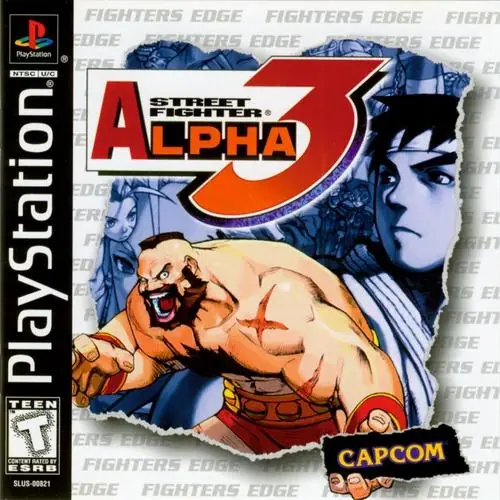
Next Generation reviewed the PlayStation version of the game, rating it four stars out of five, and stated that "Capcom may have outdone itself with the most playable and innovative fighting game since the original Street Fighter II."
Game Informer gave the PlayStation portable version of the game an overall score of 7.75 out of 10 praising how the game being a great version of the classic fighting game and the gameplay and loading times as being seamless and stating “a perfect arcade conversion that will please Street Fighter fans.”
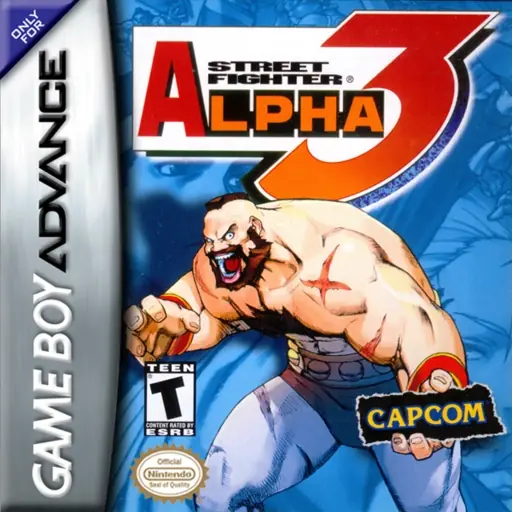
By 2003, the Game Boy Advance version had sold over 30,000 copies. Meanwhile, the original PlayStation version sold a million units as of June 2016.
In 2019, Game Informer ranked it as the 18th best fighting game of all time.