

- 70/100
- Players57 ratings
- 88/100
- Critics2 reviews
- Player reviews
- 80% positive2,607 reviews
- Steam Deck
- Playable
- Runs on
- Windows
- Price
- Free
Where to get it

1994 · Bethesda Softworks · Action role-playing · Role-playing
The Elder Scrolls: Arena
The Elder Scrolls - Arena is the first RPG fantasy game of the Elder Scrolls series.
- Released
- 25 March 1994
- Platforms
- MS-DOSWindows
- Genres
- Action role-playingRole-playing
- Developers
- Bethesda Softworks
- Publishers
- Bethesda Softworks
- Series
- The Elder Scrolls
- Modes
- Single-player
- Perspective
- First person
- Themes
- ActionFantasySandboxOpen world
- Country
- United States
- Age ratings
- PEGI 16ACB MESRB TGRAC 12+
- Languages
- English
- Time to beat
- 27hmain story62hcompletionist
About
The Elder Scrolls: Arena is a 1994 action role-playing game developed and published by Bethesda Softworks. The first game in the Elder Scrolls series, it was released for MS-DOS on March 25, 1994. The game follows the player trying to uncover a conspiracy against Emperor Uriel Septim VII.
Arena takes place on the entire continent of Tamriel, complete with wilderness, towns and dungeons which are procedurally generated. The game features a day/night cycle and includes a spell creation system that allows players to mix various spell effects. Development for Arena was initially planned to have the player travel in towns across Tamriel, fighting other teams in their arenas until the player became "grand champion". As development on the game progressed, side quests took more importance, and the tournament aspect of the game took a back seat. Role-playing elements were added to the game, and the game expanded to include towns outside the arenas and dungeons beyond the cities.
›Story
The imperial battlemage Jagar Tharn betrays the Emperor Uriel Septim by imprisoning him in an alternate dimension, then assuming the Emperor’s identity and place on the throne. A lone prisoner must travel to Tamriel’s most famous and dangerous sites to collect the shattered Staff of Chaos, save the Emperor and free the Empire.
Players say
Media
The articlegameplay, story, development, reception
Gameplay
The game is played from a first-person perspective. Melee combat is performed by right-clicking the mouse and dragging the cursor across the screen to attack as if swinging a weapon. Magic is used by cycling through a menu found by clicking the appropriate button on the main game screen, then clicking the spell to be used, and its target.
The game's world is infinite. While the game's manual claims that the player can walk from one village to another, in actuality it is infinite and requires fast travel to get between towns. This is achieved by combining procedurally generated content and specifically designed world spaces to create a realistic and massive wilderness, where one may find inns, farms, small towns, dungeons, and other places of interest. The towns contain developer-designed buildings and shops, but the order in which these appear and their names are procedurally generated. There are several hundred dungeons and 17 specially designed dungeons for the main quest.
Story
The game's setting begins in Tamriel on the 389th year of the Third Era when Emperor Uriel Septim VII summons his advisor and Imperial Battlemage Jagar Tharn over concerns of betrayal from within the court. His concerns are justified when Tharn is revealed to be the traitor, magically trapping the Emperor and his general, Talin Warhaft, in another dimension.
When Tharn proceeds to magically disguise himself as Emperor to usurp the throne, his conspiracy is witnessed by mage apprentice Ria Silmane, whom he murders before she can warn the Elder Council. Tharn then summons demon minions to replace the Emperor's Guard. In his disguise, he sends the player character, a court official and subordinate of General Warhaft, to die in the Imperial dungeons.
Development
Designer Ted Peterson recalls the experience: "I remember talking to the guys at SirTech who were doing Wizardry: Crusaders of the Dark Savant at the time, and them literally laughing at us for thinking we could do it." Peterson worked alongside Vijay Lakshman as one of the two designers of what was then simply Arena, a "medieval-style gladiator game". The game's engine was derived from the same codebase as that of The Terminator: Rampage from 1993.
Ted Peterson, Lakshman and Julian LeFay were those who, in Peterson's opinion, "really spear-headed the initial development of the series." Game journalist Joe Blancato credits company co-founder Chris Weaver with the development: "If Weaver had a baby, Arena was it, and it showed." During the development of Arena, Todd Howard, later executive producer of Oblivion, lead designer on Skyrim and Fallout 3 and 4 and director of Starfield, joined Bethesda Softworks, testing the CD-ROM version of Arena as his first assignment. Peterson had joined the company in 1992, working assignments on Terminator 2029, Terminator: Rampage, and Terminator: Future Shock, as well as other "fairly forgettable titles".
Reception
When previewing the game in December 1993, Computer Gaming World noted Arena's "huge world split into nine provinces", many races and terrains, NPC interactions, and absence of level limits. The magazine stated that the game had sophisticated graphics "without forgetting the lessons of the past in terms of game design" or being "more like [console] action games", citing similarities with Ultima IV, Wasteland, Dragon Wars, and Darklands. The magazine in April 1994 said that Arena "looks like a cross between Ultima Underworld and Might and Magic: World of Xeen", with both depth and sophisticated 3D graphics. It surmised "This may be the 'biggest' world, in terms of game play, that will reach store shelves this year", with a "rich and compelling" storyline and setting.
The magazine's Scorpia in May 1994 noted the game's "many, many, many side quests". She liked the combat ("the most natural way of fighting that I've seen in a first-person game"), magic system, world detail, and character creation, but disliked Arena's instability "even with three patches so far" and insufficient travel time to finish quests. Scorpia complained that "in a game of this size, everything eventually becomes mechanical and repetitious", including towns, conversation trees, quests, and enemies, reporting that "Everything is isolated, and there is no sense of a coherent whole here". She said that "Arena ...
Releases by platformdates and regions as published
Editions and related releases
- Included in
- The Elder Scrolls AnthologyThe Elder Scrolls Bundle
- Followed by
- Q739450Daggerfall Unity
In the same series

The Elder Scrolls Travels: Shadowkey
2004 · N-Gage
Vir2L Studios
 84
Daggerfall Unity
1996 · MS-DOS, Windows
Bethesda Softworks
 52
An Elder Scrolls Legend: Battlespire
1997 · MS-DOS, Windows
Bethesda Softworks
 Xbox exclusive74
The Elder Scrolls III: Morrowind
2002 · Windows, Xbox
Bethesda Game Studios
 Timed Xbox83
The Elder Scrolls IV: Oblivion
2006 · Mobile, PlayStation 3 +2
Bethesda Game Studios
 82
The Elder Scrolls IV: Shivering Isles
2007 · Expansion · PlayStation 3, Windows +1
Bethesda Game Studios
 84
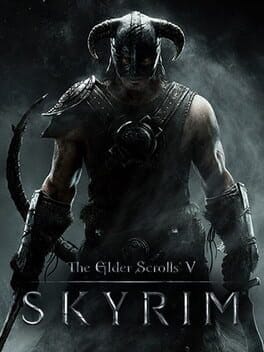
The Elder Scrolls V: Skyrim
2011 · Nintendo Switch, PlayStation 3 +5
Bethesda Game Studios
 71
The Elder Scrolls Online
2014 · PlayStation 4, PlayStation 5 +5
ZeniMax Online Studios
 74
The Elder Scrolls: Legends
2017 · Android, Nintendo Switch +5
Dire Wolf Digital
 Nintendo exclusive40
The Elder Scrolls: Blades
2020 · Android, Nintendo Switch +2
Bethesda Game Studios
 76
The Elder Scrolls IV: Oblivion Remastered
2025 · Remaster · Nintendo Switch 2, PlayStation 5 +2
Virtuos
 PlayStation exclusive
The Elder Scrolls Travels: Oblivion
— · PlayStation Portable
 Xbox exclusive
The Elder Scrolls VI
— · Windows, Xbox Series X/S
Bethesda Game Studios
Games like this
 85
Dragon Age: Inquisition
2014 · PlayStation 3, PlayStation 4 +3
Role-playing · Wizards
 88
Dragon Age: Origins
2009 · PlayStation 3, Windows +2
Role-playing · Wizards
 78
Might & Magic X: Legacy
2014 · Windows, macOS
Role-playing · Wizards
 73
Ultima Underworld II: Labyrinth of Worlds
1995 · FM Towns, MS-DOS +3
Role-playing · Magic
 PlayStation exclusive83
Ultima Underworld: The Stygian Abyss
1992 · FM Towns, MS-DOS +4
Role-playing · Magic
 PlayStation exclusive79
Champions: Return to Arms
2005 · PlayStation 2
Action role-playing · Role-playing
 Nintendo exclusive84
The Bard's Tale
1985 · Amstrad CPC, Apple II +10
Role-playing · Wizards
 Xbox exclusive84
Fable
2007 · Expanded · Windows, Xbox +2
Action role-playing · Role-playing
Collections2 collections
Platform libraries
- Free PC gamesList › A
Licensing
Description adapted from its source, CC BY-SA 4.0.