
The articlegameplay, story, development, reception
Gameplay
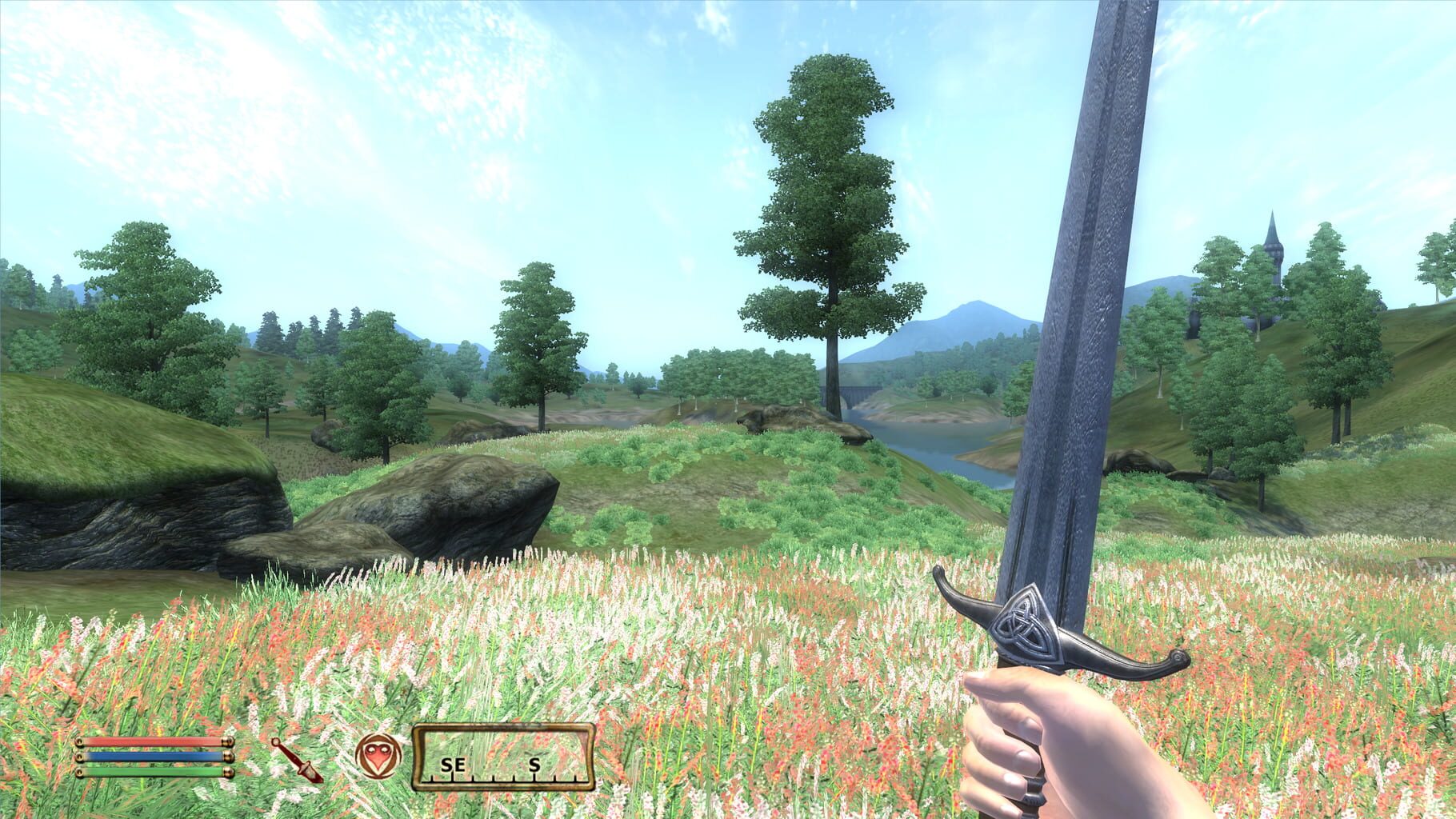
Oblivion is an open world role-playing game (RPG) that incorporates open-ended gameplay. The player can follow side-quests, interact with NPCs, dispatch monsters, develop their character, and travel anywhere in the province of Cyrodiil at any time while playing the game, provided that the areas are not quest-specific and otherwise inaccessible when not questing. The game never ends, and the player can continue playing after completing the main quest. The gameplay includes a fast-travel system, in which an icon appears on the game world map every time the player visits a new location.
This excludes the game world's main cities which are already unlocked for fast travel from the start of the game. The player can arrive at the desired location instantaneously by selecting the icon on the map.
Story
Oblivion is set in the year 433 of the Third Era, six years after the events of The Elder Scrolls III: Morrowind, although it is not a direct sequel to Morrowind or any other game in the series. The game is set in Cyrodiil—a province of Tamriel, the continent on which all the games in the series have so far taken place.
Cyrodiil has been the capital of three human empires throughout Tamriel's history. In the distant past, the original empire, known as the Alessian Empire, was founded when a human slave named St. Alessia led an uprising against the Ayleids, an elven faction that at one point held dominion over Tamriel. The Ayleids were devout worshipers of the Daedra, magical creatures from Oblivion, a dangerous realm that is in another dimension.
Development
The game was developed by Bethesda Game Studios, a United States-based software company. The Elder Scrolls III: Morrowind's lead designer Ken Rolston oversaw the development team. The PC and Xbox 360 versions of the game were co-published by 2K Games and Bethesda Softworks, while the PlayStation 3 version was co-published by Ubisoft in Europe alongside Bethesda. Work on Oblivion began shortly after the release of Morrowind in 2002. By mid-September 2004, Oblivion had been officially announced, and its title revealed.
During Oblivion's development, Bethesda concentrated on creating a system with a more realistic storyline, believable characters, and meaningful quests than had been done in the past. In comparison with previous titles in the series, the game features improved artificial intelligence thanks to the use of Bethesda proprietary Radiant AI software, and enhanced physics facilitated by the Havok physics engine. The graphics took advantage of advanced lighting and shader routines such as high-dynamic-range rendering (HDR) and specular mapping that became significantly more feasible in the seventh console generation. Bethesda developed and implemented procedural generation tools in the building of Oblivion's terrain, leading to the expedited creation of landscapes that are more complex and realistic than in past titles.
Reception
Oblivion received universal acclaim from critics, and became a commercial success. 7 million copies by April 10, 2006, and sold over 3 million copies by January 2007. 3 million by November 2011. 5 million copies worldwide.
Reviewers praised the game for its impressive graphics, expansive game world, and schedule-driven NPCs. Eurogamer editor Kristan Reed stated that the game "successfully unites some of the best elements of RPG, adventure and action games and fuses them into a relentlessly immersive and intoxicating whole." GameSpot's Greg Kasavin wrote that compared to Morrowind, which was one of the best role-playing games he has seen in years, "Oblivion is hands-down better, so much so that even those who'd normally have no interest in a role-playing game should find it hard to resist getting swept up in this big, beautiful, meticulously crafted world." X-Play's Jason D'Aprile stated, "All the games in this series have been known for their sheer vastness and freedom of choice, but the Elder Scrolls IV takes that concept and runs with it."


