The articlegameplay, story, development, reception
Gameplay
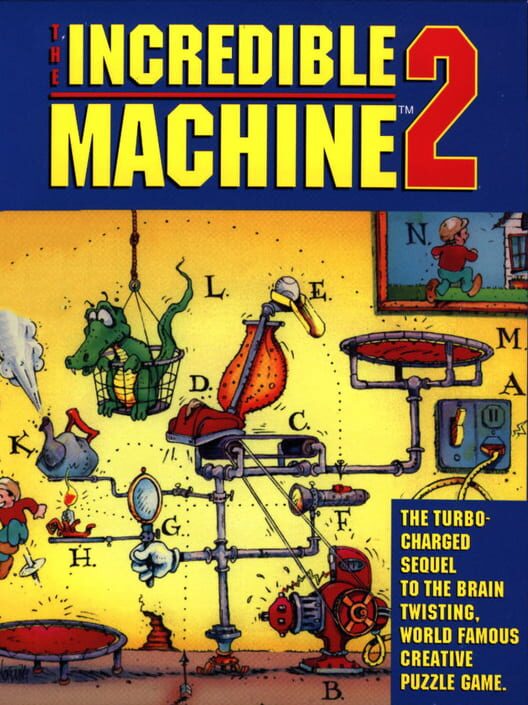
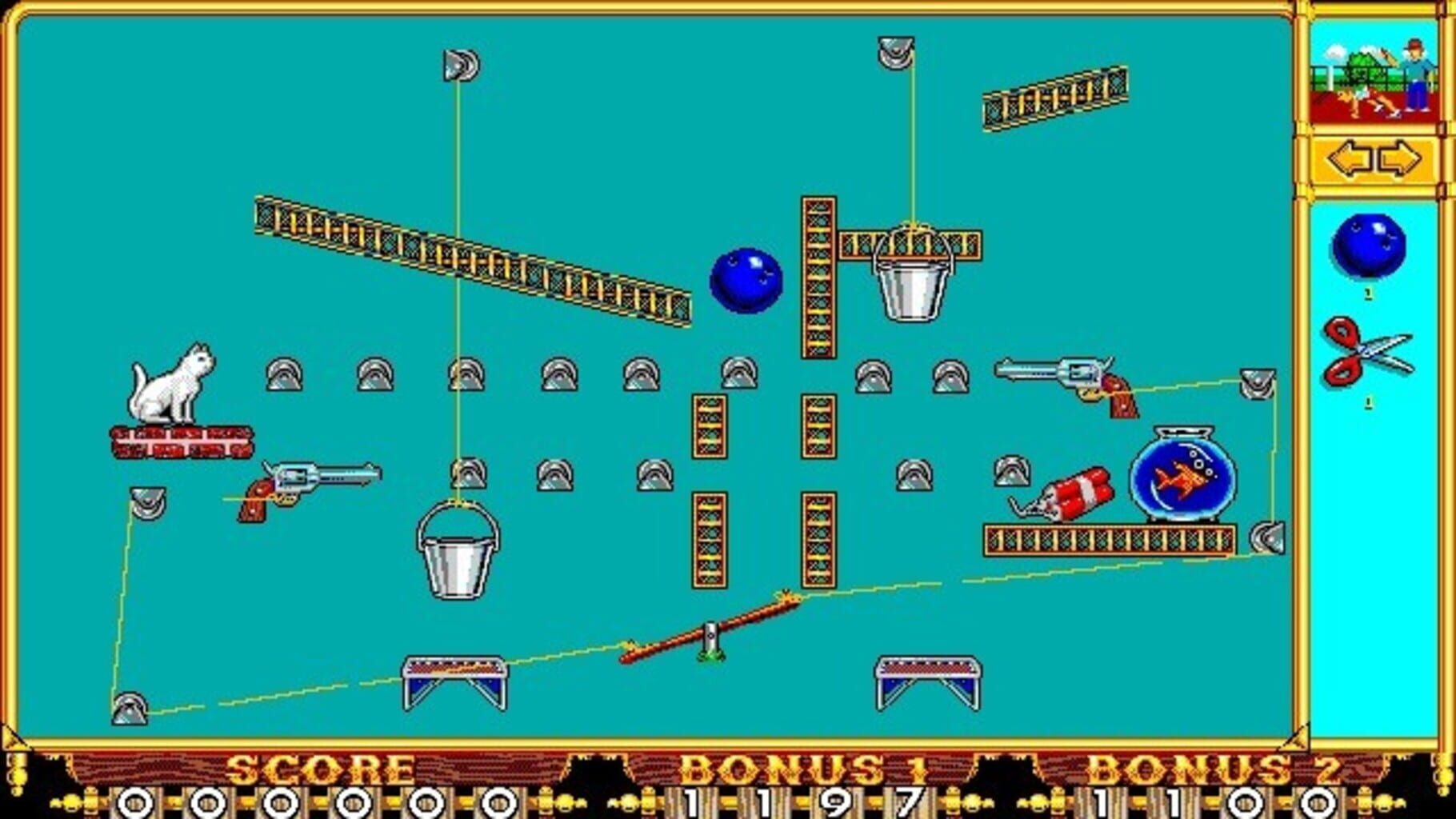
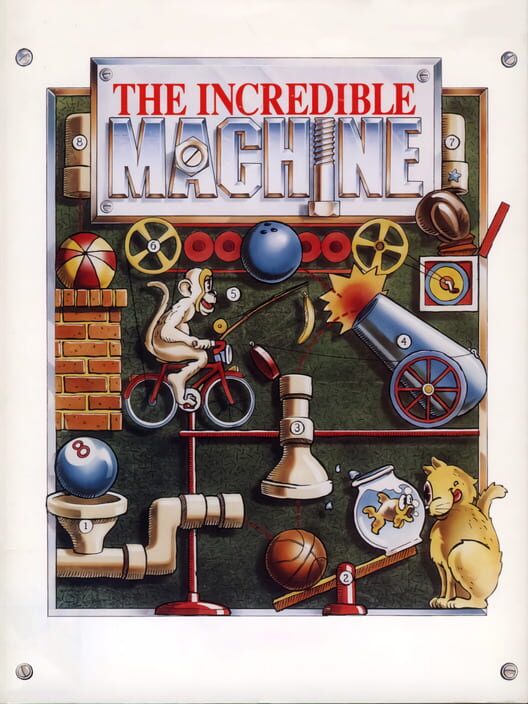
The general goal of the games is to create a series of Rube Goldberg devices: arrange a given collection of objects in a needlessly complex fashion so as to perform some simple task, such as "put the ball into a box" or "start a mixer and turn on a fan". Available objects range from simple ropes and pulleys to electrical generators, bowling balls, and even cats and mice to humans, most of which have specific interactions with or reactions to other objects: for example, mice will run towards nearby cheese, and light sources placed next to a magnifying glass will ignite wicks. Levels have a set of fixed objects that cannot be moved by the player, and the player must solve the puzzle by carefully arranging a provided set of objects around the fixed items. There is also a "freeform" option that allows the user to "play" with all the objects with no set goal or to also build their own puzzles with goals for other players to attempt to solve.
Notably, the games simulate not only the physical interactions between objects but also ambient effects like varying air pressure and gravity. The engine does not use a random number generator in its physics simulation, ensuring that the results for any given machine are deterministic.
Reception
Neil Harris reported in Computer Gaming World in 1994 that showing The Incredible Machine to an engineer friend caused "a chain reaction that brought productive work to a halt at a major naval yard".
IGN described Return of the Incredible Machine: Contraptions as "a vintage blend of educational and entertainment software at their finest".
By 2000, the series had sold over one million copies.
During the 4th Annual Interactive Achievement Awards, the Academy of Interactive Arts & Sciences honored Return of the Incredible Machine: Contraptions with the "PC Family" award.
Legacy
The Incredible Machine: Even More Contraptions was included in the 2005 edition of Hoyle Puzzle Games as a bonus game.
A mobile phone version was developed by Mobile Interactions Group and published by Vivendi Games Mobile in 2006.
A new game was announced for a download release on Xbox Live Arcade, but was later canceled.
The Incredible Machine Mega Pack (which includes Even More Incredible Machine, The Incredible Machine 3, Return of the Incredible Machine: Contraptions, and The Incredible Machine: Even More Contraptions) was published by Playdom and released on GOG.com on October 1, 2009.
The Incredible Machine for iOS is the first version in the series to be developed and released by Disney for the AppStore. This revamped version contains new art, sounds, and levels, as well as a redesigned user interface. Disney released The Incredible Machine on June 8, 2011, at E3 in Los Angeles, CA. The app has been retired from the app store as a decision made by Disney.
In 2013, Tunnell began the work on a new game, called Contraption Maker, which is billed as a "spiritual successor" to the Incredible Machine series. Kevin Ryan and Brian Hahn, the other two developers on the original game, worked on Contraption Maker as well, along with other developers at Spotkin, a video game development company started by Tunnell.
Contraption Maker features improved "HD" graphics, and has a robust physics engine. The game features over 200 official puzzles and over 100 different parts. It also has Steam Workshop support, so users can create and share their own puzzles.
The game was first released on Steam through its Early Access program on August 28, 2013. Throughout its time in the program, Contraption Maker had 6 Alpha releases, adding features such as multiplayer and copy-and-paste, new parts, and new puzzles, followed by a Beta release in May 2014. The final (1.0) release was made in July the same year, and Contraption Maker left the Steam Early Access program. Since release, three expansion packs have been released, with the latest released in December 2023.