


1990 · Origin Systems · Role-playing · Turn-based strategy
Ultima VI
Nintendo console exclusive
Ultima VI sees the player return to Britannia, at war with a race of gargoyles from another land, struggling to stop a prophecy from ending their race. The player must help defend Britannia against these gargoyles, and ultimately discover the secrets about both lands and its peoples.
- Released
- 1990
- Platforms
- AmigaApple IIGSAtari STAtari ST/STECommodore 64Commodore C64/128/MAXFM TownsMS-DOSNEC PC-9800 seriesPC-9800 SeriesSNESSharp X68000Windows
- Genres
- Role-playingTurn-based strategy
- Developers
- Origin Systems
- Publishers
- Origin Systems
- Series
- Ultima
- Modes
- Single-player
- Perspective
- Bird view / Isometric
- Themes
- FantasyOpen world
- Country
- United KingdomUnited States
- Languages
- English
- Time to beat
- 90hcompletionist
- Composers
- Todd Porter
About
Ultima VI: The False Prophet, released by Origin Systems in 1990, is the sixth part in the role-playing video game series of Ultima. It is the third and final game in the "Age of Enlightenment" trilogy. Ultima VI sees the player return to Britannia, at war with a race of gargoyles from another land, struggling to stop a prophecy from ending their race. The player must help defend Britannia against these gargoyles, and ultimately discover the secrets about both lands and its peoples.
Ultima VI continues to advance the technology of the Ultima series. The game world is larger, with a 1024x1024 tile map seamlessly connected and to scale. World interactivity is further increased with object manipulation, movement, and crafting. Graphics and sound are likewise advanced with the use of new sound card technology and VGA graphics cards, and the user interface is streamlined with the use of point-and-click icons.
›Story
Though believed to be mythological creatures the existence of Gargoyles was discovered shortly after the first expedition into the geologically unstable underworld. At first, they seemed content to remain in their subterranean domain, but recently they began appearing in our world, seemingly bent on doing us great harm. These diabolical nemeses have begun to seize our holy shrines and places of enlightenment. Scores of homes and villages in our land have been destroyed during nocturnal raids mounted by the daemonic fiends, while countless others stand empty and deserted.
Local and government militias have organized in opposition to the calamitous invasion from below. Whole brigades of skilled warriors from Serpent's Hold have clashed with these tireless foes on the field of battle, but to no avail. The Gargoyles' methods suggest that they are searching for something of great value. It is even rumored that they may seek your destruction, though why this should be is not known to us.
Keywords
- overworld
- grid-based movement
- sequel
- leveling up
- voice acting
- developer voice acting
- party system
- developer cameo
- british accent
- old-fashioned english
- pc to console port
- scummvm compatible
Media
The articlegameplay, story, development, reception
Gameplay
This game ended the use of multiple scales; in earlier games a town, castle, or dungeon would be represented as a single symbol on the world map, which then expanded into a full sub-map when entering the structure. In Ultima VI, the whole game uses a single scale, with towns and other places seamlessly integrated into the main map; dungeons are now also viewed from the same perspective as the rest of the game, rather than the first-person perspective used by Ultima I-V. The game retained the basic tile system and screen layout of the three preceding games, but utilized a much more colourful and detailed oblique map view and displayed NPC portraits during conversations. These changes took full advantage of the recently released VGA graphics cards for PCs.
Story
Some years after Lord British has returned to power, the Avatar is captured and tied on a sacrificial altar, about to be sacrificed by red demon-like creatures, the gargoyles. Three of the Avatar's companions, Shamino, Dupre and Iolo, suddenly appear, save the Avatar and collect the sacred text the gargoyle priest was holding.
The Avatar's party flees through a moongate to Castle Britannia, and three of the gargoyles follow. The game begins with the player fighting the gargoyles in Lord British's throne room. After the battle, the Avatar learns that the shrines of Virtue were captured by the gargoyles and he embarks on a quest to rescue Britannia from the invaders.
Development
The development of the Ultima series originated on the Apple II and every prior game had been developed primarily on that platform. By 1990 the market for 8-bit computers in the US had nearly evaporated, so there was no Apple II version for the first time. A version for the 16-bit Apple IIGS had been planned, and rumored to have been started, but was never released (despite mentions of the machine on the box packaging and manual). The game was ported to the Commodore 64, although not without trimming considerable trimming of aesthetics (no portraits) and gameplay (no horses, no working gems, reduced NPC dialogs, simplified quests, etc.).
Major changes were made that distinguished Ultima VI from earlier Ultima games. Several of these changes were influenced by Origin's 1988 action role-playing game, Times of Lore, created by Chris Roberts, and FTL Games's 1987 RPG Dungeon Master. One such change was the world design, where no longer would towns and castles be represented by icons on the overworld map, but where everything in the game world is represented on the same 1024 × 1024 tile map, except for dungeons and smaller outdoor maps. The caverns and dungeons beneath the land were also no longer represented in first-person view, but changed to an overhead, oblique isometric view, like the rest of the game.
Reception
In 1990, the game had sold under 100,000 copies in the United States.
Scorpia of Computer Gaming World in 1990 stated that she "had some profound, mixed feelings about" Ultima VI because of the changes to the user interface, graphics, and gameplay. The change to a single scale for the world, for example, greatly increased travel and exploration time; long quests had small rewards; and performance became sluggish with many characters on screen. She liked, however, the "solid story" that elegantly concluded the second trilogy, lack of pointless outdoor encounters, and improved NPC dialogues, and concluded that Ultima VI "is a very good game". In 1993, Scorpia criticized the middle of the game and the hunt for the pirate map, but stated that it was "definitely worth your time".
Legacy
A fan-made recreation of Ultima VI using the Dungeon Siege engine, The U6 Project (aka Archon), was released on 5 July 2010. Another remake project uses the Exult engine, using graphics from Ultima VII. Ultima 6 Online is an MMO version of Ultima VI.
Releases by platformdates and regions as published
Editions and related releases
- Included in
- Ultima 4+5+6The Ultima Collection
- Followed by
- Ultima VII: The Black GateUltima VII
- Follows
- Ultima V: Warriors of DestinyUltima V
In the same series
 64
Ultima I
1981 · Apple II, Apple IIGS +4
Richard Garriott
 56
Ultima II
1982 · Apple II, Atari 8-bit +8
Richard Garriott
 Nintendo exclusive51
Ultima 3: Exodus
1983 · Amiga, Apple II +13
Richard Garriott

Ultima: Escape from Mt. Drash
1983 · Commodore VIC-20, VIC-20
 Nintendo exclusive88
Ultima 4
1985 · Apple II, Atari ST +4
Origin Systems
 Nintendo exclusive80
Ultima V
1988 · Amiga, Apple II +10
Origin Systems
 Nintendo exclusive60
Ultima: Runes of Virtue
1991 · Game Boy
Origin Systems
 PlayStation exclusive83
Ultima Underworld: The Stygian Abyss
1992 · FM Towns, MS-DOS +4
Looking Glass Studios
 Nintendo exclusive90
Ultima VII
1992 · MS-DOS, SNES
Origin Systems
 79
Ultima VII Part Two: Serpent Isle
1993 · MS-DOS, macOS
Origin Systems
 70
Ultima VIII: Pagan
1994 · MS-DOS, PC-9800 Series +1
Origin Systems
 Nintendo exclusive56
Ultima: Runes of Virtue II
1994 · Port · Game Boy, SNES
Origin Systems
 73
Ultima Underworld II: Labyrinth of Worlds
1995 · FM Towns, MS-DOS +3
Looking Glass Studios
 81
Ultima Online: Kingdom Reborn
1997 · Linux, Windows
Origin Systems
 62
Ultima IX: Ascension
1999 · Windows
Origin Systems

Lord of Ultima
2010 · Browser
EA Phenomic
Games like this

Feda: The Emblem of Justice
1994 · SNES, Sega Saturn
Role-playing · Overworld
 Nintendo exclusive79
Etrian Mystery Dungeon
2015 · Nintendo 3DS
Role-playing · Grid-based movement
 Nintendo exclusive89
Fire Emblem: Three Houses
2019 · Nintendo Switch
Role-playing · Turn-based strategy
 86
Sea of Stars
2023 · Android, Nintendo Switch +7
Role-playing · Turn-based strategy
 Nintendo exclusive77
Pokémon Sword and Shield
2019 · Nintendo Switch
Role-playing · Turn-based strategy
 Nintendo exclusive88
Xenoblade Chronicles 2
2017 · Nintendo Switch
Role-playing · Party system
 85
Baldur's Gate
1998 · Linux, Windows +2
Role-playing · Often paired
 82
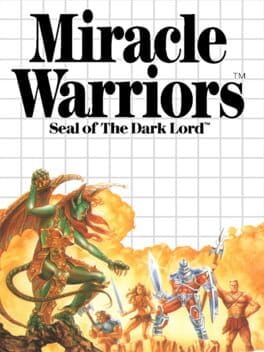
Miracle Warriors: Seal of the Dark Lord
1986 · FM-7, MSX +8
Role-playing · Overworld
Collections2 collections
Platform libraries
- Apple IIGS gamesUnreleased games
- Atari ST gamesCommercial games
Description adapted from its source, CC BY-SA 4.0.