
The articlegameplay, story, development, reception
Gameplay
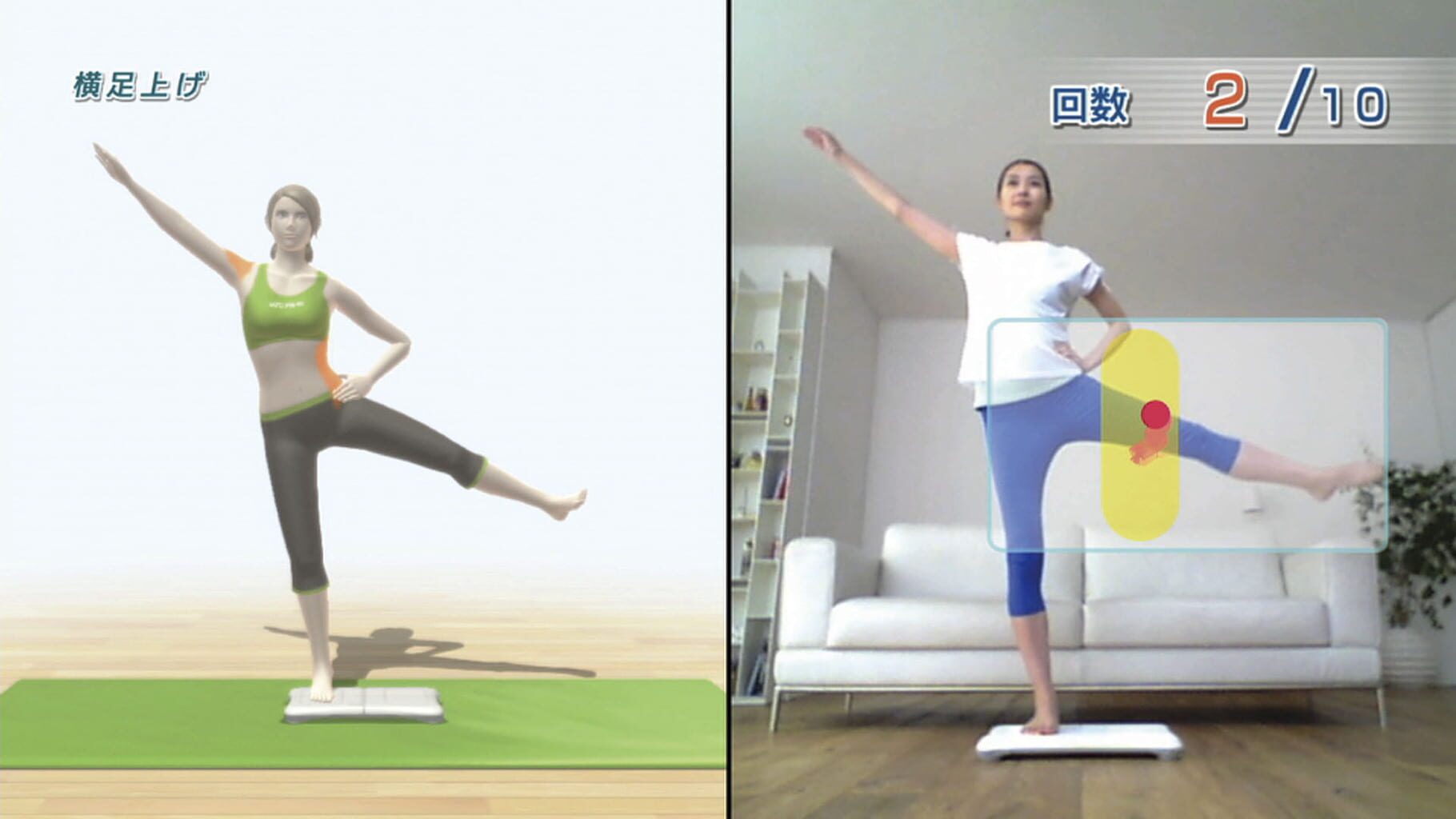
Wii Fit requires the use of the Wii Balance Board, a unique platform peripheral that the player stands upon during play. The Wii Balance Board can detect and track the user's center of balance (COB), a feature heavily used in the game; it will also measure weight in the same way as a bathroom scale. Wii Fit contains more than 40 activities designed to engage the player in physical exercise, which consist of yoga poses, strength training, aerobics, and balance games. Most activities generally focus on maintaining COB and improving posture.
Players register and play in Wii Fit via a user profile, assigned with the player's date of birth, height, and Mii character, that keeps track of the player's progress. Physical activities done outside of Wii Fit can also be logged into the profile. Wii Fit allows up to eight different profiles to be registered.
Development
Wii Fit was first revealed as Wii Health Pack by Nintendo's chief game designer Shigeru Miyamoto, during a conference in mid-September 2006. Then described as a "way to help get families exercising together", the game idea had first been included in Miyamoto's original design document for a core group of games including Wii Sports and Wii Play, the entirety of which was scribbled onto a sheet of paper.
As with other games designed by Miyamoto such as Nintendogs, the design of Wii Fit was influenced by activities in his daily life. He states that he and his family had become more health-conscious, going to the gym and tracking their weight. He found that it had become "fun over time to talk about these things", and as weighing oneself "didn't make much of a game", Nintendo decided to build games around the idea to mesh with the concept. The Wii Balance Board had been worked on for "almost two years", and was inspired by heavy sumo wrestlers' need to weigh themselves with two scales.
Reception
Wii Fit was well received. 18% score on GameRankings, aggregated from the scores of 57 media outlets, and got an average score of 81 on MobyGames. While the playful balance and aerobics minigames have generally been praised as simple fun, criticism for the game is aimed at its limitations in offering a serious workout regime. com's review, one such limitation was attributed to the lack of structure the game imposes on the player, stating that while having "complete freedom to choose what you want to do, you might find yourself cheating, despite your best intentions."
X-Play also noted that the brief activities are separated by menus, making it difficult for one to keep up a constant heart rate, with GameRevolution criticizing a serious limitation: "as a stand-alone fitness trainer it suffers greatly by the inability to assemble a full, unbroken workout without the horrible 'fitness interruptus' necessitated by bothersome menu navigation and obtrusive Wii remote usage." Some have also pointed out a lack of Nintendo's usual charm in game design, specifically in the yoga and strength training exercises which take place in a muted setting that one critic referred to as "the world's most lifeless, depressing gym." Despite these limitations, the game's friendly front-end and amount of activities are cited as appealing features to those who are perhaps seeking an introduction to daily exercise. In a review on IGN, Wii Fit was said to create "an environment in which working out is less daunting and as a result enjoyable – fun, even."
Legacy
The third installment in the series, Wii Fit U, was released for the successor to the Wii, the Wii U. While maintaining most of the overall features of its predecessors, the game uses the Wii U GamePad and can also sync data with the optional Fit Meter, a pedometer accessory which measures activities such as steps taken and altitude. Released on the Nintendo eShop in October and November 2013 to major markets, a retail version, made available in Europe and Australia in December 2013, was scheduled for release in North America in January 2014, and in Japan the following month.
A new exercising game for the Nintendo Switch, Ring Fit Adventure, was released on October 18, 2019. It attaches the right Switch Controller on a wheel peripheral included in the game (called the Ring-Con) and attaches the left Switch Controller to their left thigh by a Leg Strap. This is intended to perform more complex maneuvers for stretching, poses, and jogging in place: compared to the Wii Fit Board. This game introduces a new protagonist (Ring Fit Trainee) who performs these exercises to go on a role-playing adventure. The Trainee has their own Ring-Con ingame that can be used to defeat mobs in combat.


