
- 80/100
- Players20 ratings

1999 · SCE Studio Liverpool · Racing
Wipeout 3
The third release of Psygnosis's seminal anti-grav racing series, and also the first game from the series to remain exclusive to the PlayStation. Set in the "F7200 Anti-Gravity Racing League", players control anti-gravity racing craft to eliminate competitors and complete events across a futuristic urban metropolis.
- Released
- 8 September 1999
- Platforms
- PlayStationXbox 360
- Genres
- Racing
- Developers
- SCE Studio Liverpool
- Publishers
- —
- Series
- Wipeout
- Modes
- MultiplayerSingle-player
- Perspective
- First personThird person
- Themes
- ActionScience fiction
- Country
- United Kingdom
- Age ratings
- ESRB E
- Entry
- #4 in Wipeout
About
Wipeout 3 is a 1999 racing video game developed by Psygnosis and published by Sony Computer Entertainment for the PlayStation. It is the fourth game and third main instalment in the Wipeout series, following Wipeout 64 (1998), and the third on PlayStation following Wipeout 2097 (1996). It is the first game in the series to be released on neither a Sega or Nintendo console nor personal computers. Players control anti-gravity ships and use weapons to force other contenders out of the race.
Psygnosis hired design studio The Designers Republic to create a simple color scheme and design for in-game menus and race courses, to create what a Psygnosis staff member called "a believable future". The game is one of the few PlayStation titles to run in 16:9 widescreen and high-resolution mode, offering crisper graphics and visuals. Wipeout 3's soundtrack is composed of electronica tracks selected by DJ Sasha and features contributions by Orbital and The Chemical Brothers. The game was re-released in Europe as Wipeout 3: Special Edition in August 2000, which contained additional tracks and content.
Keywords
- sequel
- instant replay
- anti-gravity racing
- licensed soundtrack
- future sport
- greatest hits
Media

The articlegameplay, story, development, reception
Gameplay
Wipeout 3 is a racing game that retains the same basic elements of its predecessors. The game is set in the future, where players control futuristic anti-gravity ships owned by eight different racing corporations and pilot them on eight circuits. Each craft is equipped with an energy shield that absorbs damage sustained on the track; if the shield is disabled, the player's craft can be knocked out of the race. Shields are regenerated in a pit lane set apart from the main course.
The less time is spent in the pit lane, the less the shield will regenerate. In addition to shields, each racing craft contains airbrakes for navigating tight corners, as well as a "Hyperthrust" option. Players can activate Hyperthrust to increase their speed, but using Hyperthrust drains energy from the shields, making the craft more vulnerable. Scattered across each raceway are weapon grids that bestow random power-ups or items.
Development
Developer Psygnosis began developing the next entry in the Wipeout series in 1999, three years after the release of Wipeout 2097. In the interim, Psygnosis had been acquired by Sony and released Wipeout 64, a Nintendo 64 exclusive title that proved the franchise remained popular. Sony gave the team a small budget and tight schedule—only nine months—to ship the game before the new PlayStation 2 arrived. Because of the time constraints, lead designer Wayne Imlach recalled that the team was conservative about adding new features or changing too much of the formula, instead focusing on refining what had been established in 2097.
Psygnosis retained many of the developers of the original game to preserve the distinctive racing experience of the earlier games. At the same time, Psygnosis sought to make the game more accessible to new players of the fast-paced racer, and kept early courses easier for these players; the difficulty was adjusted for later courses so that experts would still experience a challenge. An initial pool of 20 tracks was whittled down to 8 after playtesting; the developers wanted a variety of tracks that favored different ships and had different difficulty levels. Wipeout 3 was the first Wipeout game to take advantage of PlayStation controllers with analogue sticks, used to offer smoother control of the player's craft.
Reception
Critical reception of Wipeout 3 was generally positive; the game has a critic average of 87/100 Game Rankings, and a metascore of 89 at Metacritic. GamePro said that the game was "hands-down the best futuristic racing game to ever come on the PlayStation. Its blazing frame rate, smooth graphics, and kick-ass soundtrack make it the must-have game for anyone who has a passion for fast, furious fun." Critics noted that if players liked or disliked previous games, Wipeout 3 would not change their mind. Favorable reviews often called it the best game in the series, refining what made the first two games memorable.
Reviewers who gave Wipeout 3 lower marks noted a sense of disappointment that the series broke little new ground. Stuart Miles of The Times considered Wipeout 3 a good game, but felt that he had been expecting much more from the sequel; "It's as if the programmers have concerned themselves more with the overall look and feel, rather than further developing the existing gameplay," he wrote. Alistair Wallace of Gamasutra, in a retrospective on Wipeout 2097, remembered that "I enjoyed [Wipeout 3] because it was more of the same and I loved it, but I think the series ran out of its innovation. Doing loop the loops isn't a big deal really". Joe Fielder of GameSpot summed up its review of the game by judging the game an excellent racer, but not able to beat Wipeout 2097 as the best futuristic racing game of all time.
Releases by platformdates and regions as published
Editions and related releases
- Expanded editions
- Wipeout 3 Special Edition
- Followed by
- Wipeout Fusion
- Built on it
- Wipeout 3 Special Edition
In the same series
 71
Wipeout
1995 · Android, MS-DOS +6
SCE Studio Liverpool
 Timed PlayStation82
Wipeout 2097: The Soundtrack
1996 · Amiga, PlayStation +3
SCE Studio Liverpool
 Nintendo exclusive71
Wipeout 64
1998 · Nintendo 64
SCE Studio Liverpool
 PlayStation exclusive71
Wipeout Fusion
2002 · PlayStation 2
SCE Studio Liverpool
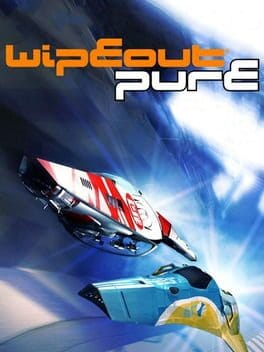 PlayStation exclusive85
Wipeout Pure
2005 · PlayStation Portable
SCE Studio Liverpool
 PlayStation exclusive81
Wipeout Pulse
2007 · PlayStation 2, PlayStation Portable +1
SCE Studio Liverpool
 PlayStation exclusive76
Wipeout HD Fury
2008 · PlayStation 3
SCE Studio Liverpool
 PlayStation exclusive82
Wipeout 2048
2012 · PlayStation 4, PlayStation Vita
SCE Studio Liverpool
 PlayStation exclusive89
Wipeout Omega Collection
2017 · Bundle · PlayStation 4, PlayStation VR
 Xbox exclusive60
Wipeout in the Zone
2011 · Xbox 360
Wanako Studios
Games like this
 Timed Nintendo72
Star Wars Episode I: Racer
1999 · Dreamcast, Game Boy Color +6
Racing · Anti-gravity racing
 68
Formula Fusion
2017 · PlayStation 4, Windows +1
Racing · Anti-gravity racing
 57
Ballblazer
1984 · Amstrad CPC, Apple II +11
Racing · Future sport
 22
Fast and Furious: Showdown
2013 · Nintendo 3DS, PlayStation 3 +3
Racing · Often paired
 72
Grid
2019 · PlayStation 4, Stadia +2
Racing · Often paired
 75
Smuggler's Run
2000 · Game Boy Advance, GameCube +1
Racing · Often paired
 PlayStation exclusive72
Jet Moto 3
1999 · PlayStation
Racing · Anti-gravity racing
 PlayStation exclusive68
Need for Speed II: SE
1997 · PlayStation, Windows
Racing · Often paired
Collections4 collections
Platform libraries
- Xbox 360 games (M–Z)
- PlayStation (console) games (M–Z)Games list (M–Z)
- PlayStation (console) games (M–Z)Games list (M–Z)
Publishers
- Sony Interactive Entertainment gamesVideo games
- Sony Interactive Entertainment gamesVideo games
Genres
- Racing gamesList › 1990s
Description adapted from its source, CC BY-SA 4.0.