Ludography
Astron Belt cover

1983 · Arcade · Flight simulation

Astron Belt

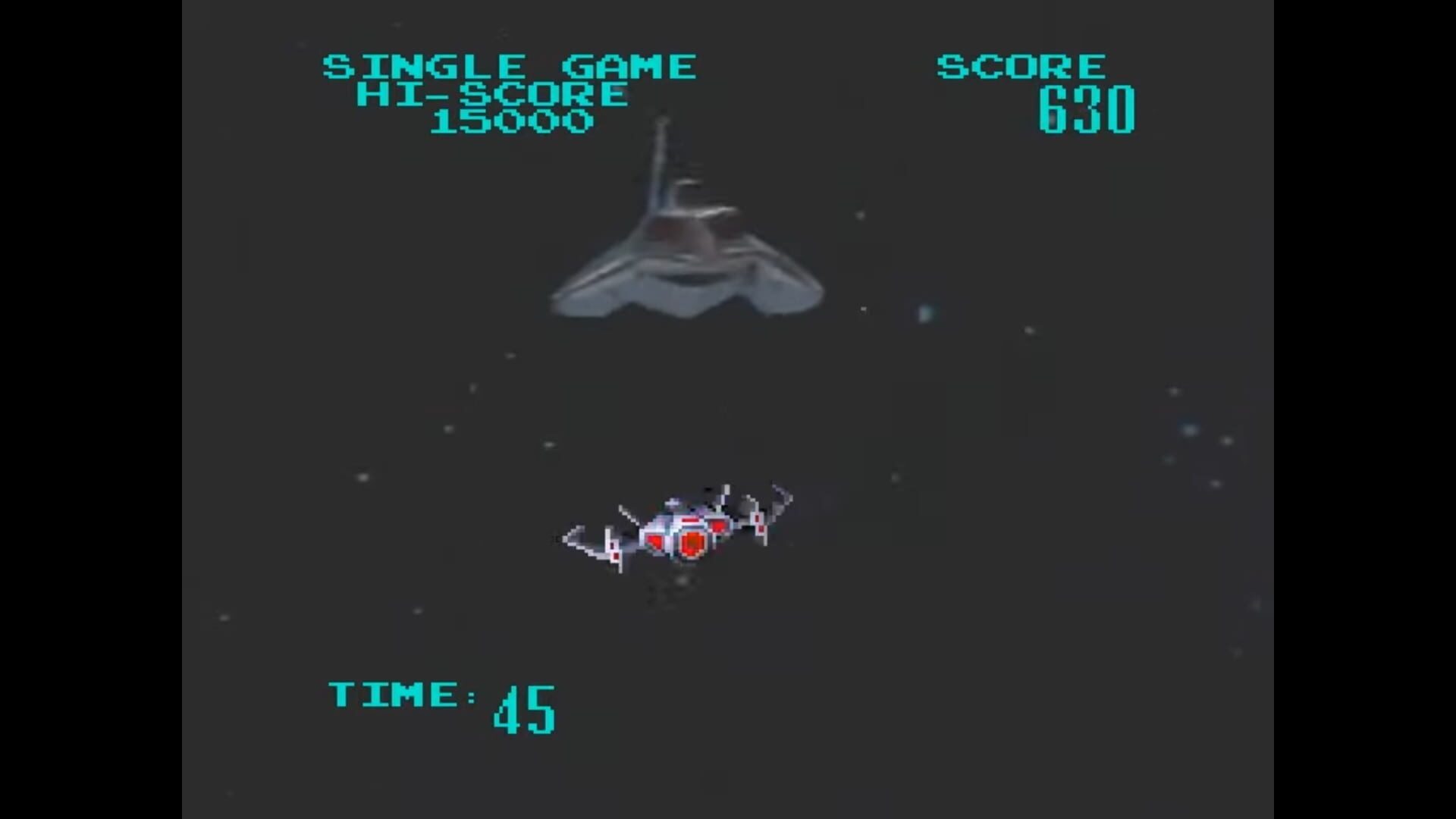
The player controls a lone spacecraft on a mission to singlehandedly take down the entire enemy armada. Enemy fighters and ships shoot at the player, and there are mines and other objects that must be shot or avoided.

Released
1983
Platforms
ArcadeMSX
Genres
ArcadeFlight simulationShoot 'em upShooter
Developers
—
Publishers
Midway Games
Modes
Single-player
Perspective
Third person
Themes
ActionScience fiction
Country
Japan
Languages
English

About

Astron Belt (アストロンベルト) is a LaserDisc video game in the form of a third-person, space combat rail shooter, released in arcades in 1983 by Sega in Japan, and licensed to Bally Midway for release in North America. Developed in 1982, it was the first major arcade laserdisc video game. The game combines full-motion video (FMV) footage from the laserdisc with real-time 2D graphics. The arcade game was available in both upright and cockpit arcade cabinets, with the latter having illuminated buttons on the control panel, a larger 25" monitor (the upright used a standard 19"), and a force feedback vibrating seat.

The game was first unveiled at the 20th Amusement Machine Show, held in Tokyo during September 1982, and then at Chicago's Amusement & Music Operators Association (AMOA) show, held during November 18–20, 1982. This marked the beginning of laserdisc fever in the video game industry, and released in Japan during early 1983, with Sega projecting to ship 10,000 cabinets that year. It was subsequently released in Europe, where it was the first laserdisc game released in the region. However, Bally Midway delayed the game's release in the United States to fix several hardware and software bugs, by which time it had been beaten to public release by several laserdisc games including Dragon's Lair.

Keywords

  • rail shooter
  • shoot 'em up
  • 2.5d
  • cinematic
  • spaceship
  • space battle
  • laserdisc
  • on-rails
  • full motion video
  • planet
  • contextual controller rumble
  • rail shooting segment

Media

The articlegameplay, story, development, reception

Gameplay

The player controls a lone spacecraft on a mission to singlehandedly take down the entire enemy armada. Enemy fighters and ships shoot at the player, and there are mines and other objects that must be shot or avoided.

The game is divided into waves. At the end of each wave is a command ship that must be destroyed. In later waves the enemy fighters move and shoot more aggressively, and their shots are more accurate. Some waves take place in open space, while others require the player to battle enemies while flying through narrow trenches and tunnels.

Reception

In Japan, Game Machine listed Astron Belt as the top-grossing upright/cockpit arcade cabinet for four months in 1983. In June 1983, it was the top upright/cockpit cabinet of the month. It remained at the top of the Game Machine upright/cockpit charts through October 1, 1983, before being dethroned by Namco's Pole Position on October 15, 1983. Astron Belt remained in the top ten through December 1983.

In the United States, Astron Belt topped the Play Meter laserdisc arcade charts for street locations by August 1, 1984, while being in the top three for arcade locations. It remained among the top five laserdisc arcade games for street locations and top ten for arcade locations through November 1984.

Legacy

Astron Belt was responsible for starting the LaserDisc interactive movie craze when it was shown at the 1982 AMOA show. One of the games it inspired was Dragon's Lair (1983).

Sega introduced a sequel, Star Blazer, at Tokyo's Amusement Machine Show (AM Show) in September 1983. It was unanimously hailed as the "strongest" LaserDisc game of the show. Bally Midway distributed it as Galaxy Ranger in North America in 1984. It had the same controls and very similar gameplay to Astron Belt, and one machine could be converted to the other by simply changing the LaserDisc, game ROMs, and sound board. In Japan, Game Machine listed Starblazer on their January 15, 1984 issue as being the third most-successful upright arcade unit of the month.

Releases by platformdates and regions as published

Releases by platform
PlatformReleasedRegions
Arcade1 May 1983Japan
MSX31 December 1984Japan

Games like this

Collections3 collections

Platform libraries

Genres

Publishers

Description adapted from its source, CC BY-SA 4.0.