
The articlegameplay, story, development, reception
Gameplay
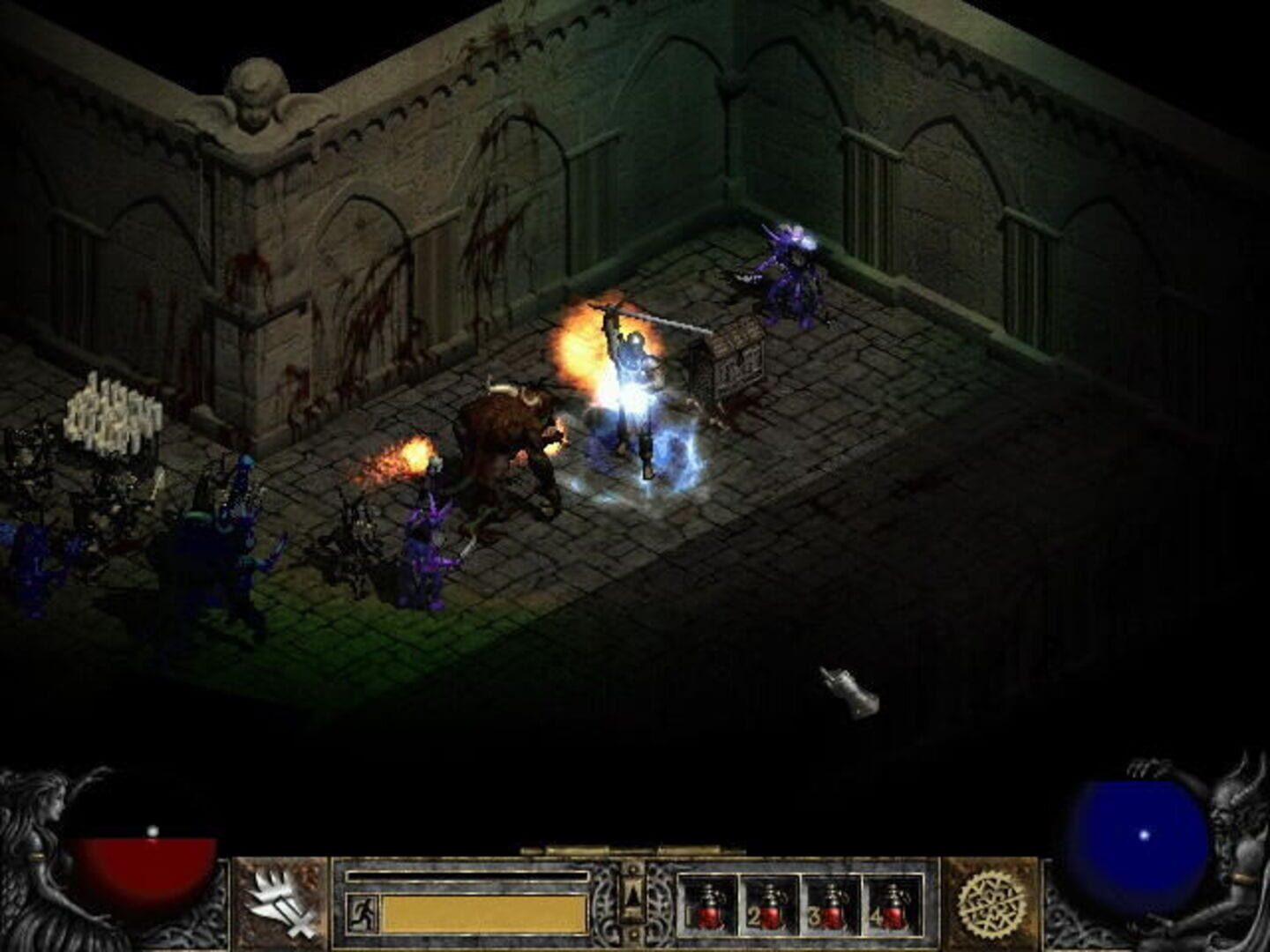
Diablo II's storyline progresses through four chapters or "acts", the Lord of Destruction expansion adds the fifth chapter Act V which continues the story where Act IV left off. Each act follows a predetermined path, but the wilderness and dungeons between key areas are randomly generated. The player progresses through the story by completing a series of quests within each act (six per act, except for Act IV which only has three quests), compared to the preceding Diablo which most quests are assigned at random and most are optional. Diablo II also has optional side dungeons for extra monsters and experience.
In contrast to the first Diablo, whose levels consisted of descending deeper and deeper into a Gothic-themed dungeon and Hell, Diablo II's environments are much more varied. Act I is similar to the original Diablo; the Rogue Encampment is a simple palisade fort, with plains and boreal forests making up the wilderness area, and the Monastery resembles the typical medieval fortress. Act II mimics Ancient Egypt's desert and tombs; Lut Gholein resembles a Middle Eastern city and palace during the Crusades. Act III is supposedly based on the Central American jungles; Kurast is inspired by the lost Mayan civilization.
Story
Diablo II takes place after the end of the previous game, Diablo, in the world of Sanctuary. In Diablo, an unnamed warrior defeated Diablo and attempted to contain the Lord of Terror's essence within his own body. Since then, the hero has become corrupted by the demon's spirit, causing demons to enter the world around him and wreak havoc.
A band of adventurers who pass through the Rogue Encampment hear these stories of destruction and attempt to find out the cause of the evil, starting with this corrupted "Dark Wanderer." As the story develops, the truth behind this corruption is revealed: the soulstones were originally intended to imprison the Prime Evils after they were banished to the mortal realm by the Lesser Evils. With the corruption of Diablo's soulstone, the demon is able to control the Dark Wanderer and is attempting to free his two brothers, Mephisto and Baal. Baal, united with the mage Tal-Rasha, is imprisoned in a tomb near Lut Gholein. Mephisto is imprisoned in the eastern temple city of Kurast.
Development
Diablo II was announced by Blizzard in 1997, with a planned launch in the first quarter of 1998. According to designer and project lead Erich Schaefer, "Diablo II never had an official, complete design document... for the most part we just started making up new stuff." Lead developer David Brevik wanted to fix all of the outstanding issues from the first Diablo, including improved multiplayer, more distinction between the character classes, and building the game more horizontally across a large virtual space of land rather than the vertical, multilevel dungeon of Diablo.
The game was slated to have two years of development work, but it took Blizzard North over three years to finish. Part of this delay was attributed to Brevik's focus on gameplay from Ultima Online, and trying to improve on features from that game for Diablo. Brevik also brought in concepts from games like Civilization and Master of Orion, which led to the creation of the character skill tree. The team was given creative freedom to come up with further ideas, often spending time playing video games for inspiration, but this haphazard development path led to the game's delay.
Reception
Diablo II has a positive reception. The PC version of the game achieves an overall score of 88/100 on Metacritic and 89% at GameRankings. GameSpy awarded the game an 86 out of 100, IGN awarded the game an 8.3 out of 10, and GameSpot awarded the game an 8.5 out of 10.
Greg Vederman reviewed the PC version of the game for Next Generation, rating it five stars out of five, and stated that "Diablo II is a must-have PC title. That's all there is to it."


