

- 80/100
- Players37 ratings
- 88/100
- Critics3 reviews

1990 · Remake · Chunsoft · Adventure · Role-playing
Dragon Quest IV
Remake
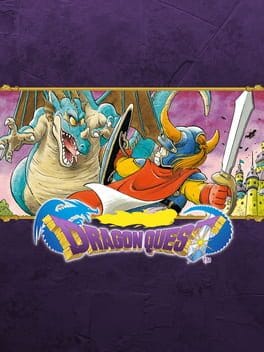
Embark on a journey to explore the land, seas and skies of the Dragon Quest universe in this grand entry from the Zenithia Trilogy. Soon to follow are Dragon Quest V: Hand of the Heavenly Bride and Dragon Quest VI: Realms of Reverie.
- Released
- 11 February 1990
- Platforms
- AndroidNESNintendo DSPlayStation
- Genres
- AdventureRole-playing
- Developers
- Chunsoft
- Publishers
- Enix
- Series
- Dragon Quest
- Modes
- Single-player
- Perspective
- Bird view / Isometric
- Themes
- Fantasy
- Country
- Japan
- Age ratings
- ESRB E10+ACB PG
- Languages
- English
- Copies sold
- 3.2 million
- Entry
- #4 in Dragon Quest
- Time to beat
- 20hmain story22hwith extras44hcompletionist
- Directors
- Koichi Nakamura
- Composers
- Koichi Sugiyama
About
Dragon Quest IV: Chapters of the Chosen, titled Dragon Warrior IV when initially localized to North America, is a 1990 role-playing video game, the fourth installment of the Dragon Quest video game series developed by Chunsoft and published by Enix, and the first of the Zenithian Trilogy. It was originally released for the Famicom on 11 February 1990 in Japan. A North American NES version followed in October 1992, and would be the last Dragon Quest game localized and published by Enix's Enix America Corporation subsidiary prior to its closure in November 1995, as well as the last Dragon Quest game to be localized into English prior to the localization of Dragon Warrior Monsters in December 1999. The game was remade by Heartbeat for the PlayStation, which eventually was available as an Ultimate Hits game.
The remake was ported by ArtePiazza to the Nintendo DS, released in Japan November 2007 and worldwide in September 2008. A mobile version based on the Nintendo DS remake was released in 2014 for Android and iOS.
›Story
Chapter 1: Ragnar McRyan and the Case of the Missing Children
Ragnar McRyan, one of the soldiers in the royal palace of Burland, is sent by the king on a journey to find out why children are disappearing across the kingdom. He is accompanied by Healie.
Chapter 2: Alena and the Journey to the Tourney
Alena, Tsarevna of Zamoksva, slips out of the castle in hopes of attending a tournament in the castle of Endor. She is accompanied by the priest Kiryl and the mage Borya.
Chapter 3: Torneko and the Extravagant Excavation
Torneko lives in Lakanaba with his wife and son, and works part-time in the local weapon shop. He wants to become the best merchant in the world, so he leaves his hometown in search of profit.
Chapter 4: Meena and Maya and the Mahabala Mystery
Maya the dancer and her younger sister Meena the fortune teller, have left Monbaraba in search of vengeance against Balzack, their father's traitorous apprentice.
Chapter 5: The Chosen
The Hero has been brought up by the inhabitants of a remote and nameless mountain village. But Psaro and his legions destroy the village, leaving only the hero alive. The hero leaves in search of his seven companions, in the hopes of defeating Psaro and saving the world.
Chapter 6
Chapter 6 is not part of the main storyline of the game and consists of post-game extra features. It was only included in remakes of Dragon Quest IV. Features of this chapter include a bonus dungeon and the ability to add Psaro as a member of the party after completing certain events.
Keywords
- 1980s
- wizards
- magic
- turn-based
- episodic
- dragon
- classic
- village
- chosen one
- castle
- turn-based combat
- 8-bit
Media
The articlegameplay, story, development, reception
Gameplay
Dragon Quest IV offered several new features over the first three titles, while carrying on many of those introduced in the previous games. Similar features included are the day and night cycles, the ability to travel via ship and a flying vehicle (this time, a hot air balloon), and the three levels of keys. They are Thief, Magic and Ultimate (originally localized as Final). There are also travel doors, which allow the party to move a great distance on the world map with little travel.
Unlike the Hero in Dragon Warrior III, the Hero of Dragon Quest IV is not required to be in the party at all once the wagon becomes available. Despite this, the Hero is again the character that possesses the most powerful healing and attack spells. Many spells, weapons, armor, and shops (including the vault/bank) function the same as in past games.
Story
In the original version, the game is divided into five chapters. The first four provide back-story for the Hero's party members, while the fifth follows the Hero themself as they meet up with the other characters.
Chapter One follows the soldier, Ragnar McRyan, who is tasked by the King of Burland to find children who have gone missing from a nearby town, befriending a Healslime named Healie, who aspires to become human. Ragnar finds and defeats the monster responsible for the abductions and returns the children to their homes. In doing so, he learns the monsters were looking for the Legendary Hero, who is supposedly still a child, in order to kill them. Ragnar decides to leave his home and set out on a quest to protect them.
Development
According to Yuji Horii, he wanted to have something the player went around collecting as the previous Dragon Quest games had crests and orbs respectively. However, he did not want to do the same thing over again by forcing the player to collect a certain number of items before they beat the game; mini medals instead have nothing to do with clearing the game. The promotional illustrations for the Japanese version were drawn by famed manga artist Akira Toriyama, who provided the artwork for the previous games in the series and would continue to do so for every future installment.
Unlike all the other games up to this point, the changes in this version were not as radical. Among them were the usual religious/violence censorship, new graphics for the opening copyright and ending credits, and the betting in the Casino was slightly modified to allow more money being won during a bet.
Reception
Upon release in Japan, the game sold out 1.3 million cartridges and grossed ¥14 billion ($98 million at the time, or $242 million adjusted for inflation) within one hour of its release. By 1992, it had sold 3 million units in Japan. The original Famicom version went on to sell 3.1 million units, becoming the fourth best-selling game of the system, below its predecessor Dragon Quest III. The original game sold a worldwide total of 3.18 million copies, including 3.1 million in Japan and 80,000 in the United States, grossing several hundred million dollars by 1993 ($740 million adjusted for inflation).
The PlayStation version of Dragon Quest IV was the fourth best-selling game in Japan in 2001 with over 1 million copies sold, and has sold nearly 1.2 million copies as of December 26, 2004. As of August 8, 2008, the DS remake has sold 1.15 million units in Japan, and 1.46 million copies worldwide as of May 31, 2009.
Releases by platformdates and regions as published
Editions and related releases
- Part of
- Dragon Warrior IV
- Ported as
- Dragon Quest IV: Chapters of the Chosen
- Built on it
- Dragon Quest IV: Chapters of the Chosen
- Remake of
- Dragon Warrior IV
In the same series
 70
BS Dragon Quest
1986 · Remake · Android, Game Boy Color +11
Chunsoft
 Nintendo exclusive71
Dragon Quest Monsters: Joker
2006 · Nintendo DS
Tose Co.
 Timed PlayStation81
Dragon Quest Builders
2016 · Android, Nintendo Switch +5
Square Enix
 40
Dragon Quest II
1987 · Remake · Android, Legacy Mobile Device +7
Chunsoft
 Nintendo exclusive78
Dragon Quest Monsters: Joker 2
2010 · Nintendo DS
Tose Co.
 82
Dragon Quest Builders 2
2018 · Nintendo Switch, PlayStation 4 +2
 80
Dragon Quest III
1988 · Android, NES +4
Chunsoft
 Nintendo exclusive
Dragon Quest Monsters: Joker 3
2016 · Nintendo 3DS
Tose Co.
 Nintendo exclusive85
Dragon Quest V: Hand of the Heavenly Bride
1992 · Android, Nintendo DS +1
Chunsoft
 Nintendo exclusive80
Dragon Quest VI: Realms of Revelation
1995 · Android, Nintendo DS +1
Heartbeat
 PlayStation exclusive80
Dragon Quest VII
2000 · Android, PlayStation
Heartbeat
 87
Dragon Quest VIII: Journey of the Cursed King
2004 · Android, Nintendo 3DS +1
Level-5
 Nintendo exclusive86
Dragon Quest IX: Sentinels of the Starry Skies
2009 · Nintendo DS
Level-5
 Timed Nintendo
Dragon Quest X: Mezameshi Itsutsu no Shuzoku Online
2012 · Android, Docomo Market +6
Square Enix
 84
Dragon Quest XI S: Echoes of an Elusive Age
2017 · Nintendo 3DS, PlayStation 4 +2
Square Enix
 Nintendo exclusive80
Dragon Quest Heroes: Rocket Slime
2005 · Nintendo DS
Tose Co.
 PlayStation exclusive
Dragon Quest: Shounen Yangus to Fushigi no Dungeon
2006 · PlayStation 2
Cavia
 Nintendo exclusive61
Dragon Quest Swords
2007 · Wii
Genius Sonority
 Nintendo exclusive
Dragon Quest: Monster Battle Road
2008 · Arcade, Wii
Eighting
 Nintendo exclusive63
Dragon Quest Wars
2009 · Nintendo DS
Intelligent Systems
 77
Dragon Quest Heroes: The World Tree's Woe and the Blight Below
2015 · Nintendo Switch, PlayStation 3 +2
Koei Tecmo Holdings
 Nintendo exclusive
Theatrhythm Dragon Quest
2015 · Nintendo 3DS
indieszero
 77
Dragon Quest Heroes II
2017 · Nintendo Switch, PlayStation 3 +3
Omega Force

Dragon Quest Walk
2019 · Android, iOS
Games like this
 Nintendo exclusive84
Dragon Quest IV: Chapters of the Chosen
2007 · Remake · Nintendo DS
Adventure · Role-playing
 Timed PlayStation81
Genshin Impact
2020 · Android, HarmonyOS NEXT +6
Adventure · Role-playing
 76
Princess Connect! Re:Dive
2018 · Android, Windows +1
Adventure · Role-playing
 Nintendo exclusive
Just Breed
1992 · NES
Adventure · Role-playing
 Nintendo exclusive88
Super Mario RPG
1996 · Nintendo Switch, SNES +3
Adventure · Role-playing
- Nintendo exclusive80
Dragon Quest VI: Maboroshi no Daichi
1995 · SNES
Adventure · Role-playing
 79
Record of Lodoss War: Deedlit in Wonder Labyrinth
2021 · Nintendo Switch, PlayStation 4 +4
Adventure · Role-playing
 83
Secret of Mana
1993 · Android, Nintendo Switch +10
Adventure · Role-playing
Collections5 collections
Platform libraries
- Nintendo Entertainment System gamesLicensed games
- PlayStation (console) games (A–L)Games list (A–L)
Themes
Description adapted from its source, CC BY-SA 4.0.