
The articlegameplay, story, development, reception
Gameplay
Players of Monster Hunter Tri take on the role of a hunter from the hunting Guild, assigned to help Moga Village, a small fishing community that is under threat of monsters from a nearby deserted island. The player does this by completing free hunts on the island, where they collect materials and slay or capture monsters which are converted into resources that can be used to improve the village, and by completing time-limited quests for the Guild, typically slaying or capturing a monster in a specific region, for in-game money (zenny) and material resources that can be used to create equipment that allows them to take on more difficult monsters. Improving the village gives the player access to a farming area and a fishing fleet, from which herbs, mushrooms, bugs and honey can be harvested, companions that can help while on the field, and access to a trader that can provide rare items to the player.
The player's character has 1 base defence and can increase it by the armor created by the player. In particular, the player selects from one of ten weapon classes, primarily divided into melee weapons like swords and hammers, and ranged weapons like bows and bowguns. Each weapon type has a unique style of play when used in the field; sword users need to build up consecutive attacks to increase a combo meter to inflict larger damage on their foes but must keep an eye on their blade's sharpness, while bowmen can perform weak but fast ranged attacks including applying special coatings to their arrows to inflict debuffs on enemies. The player can also equip different sets of armor, which impart attack and defensive bonuses.
Development
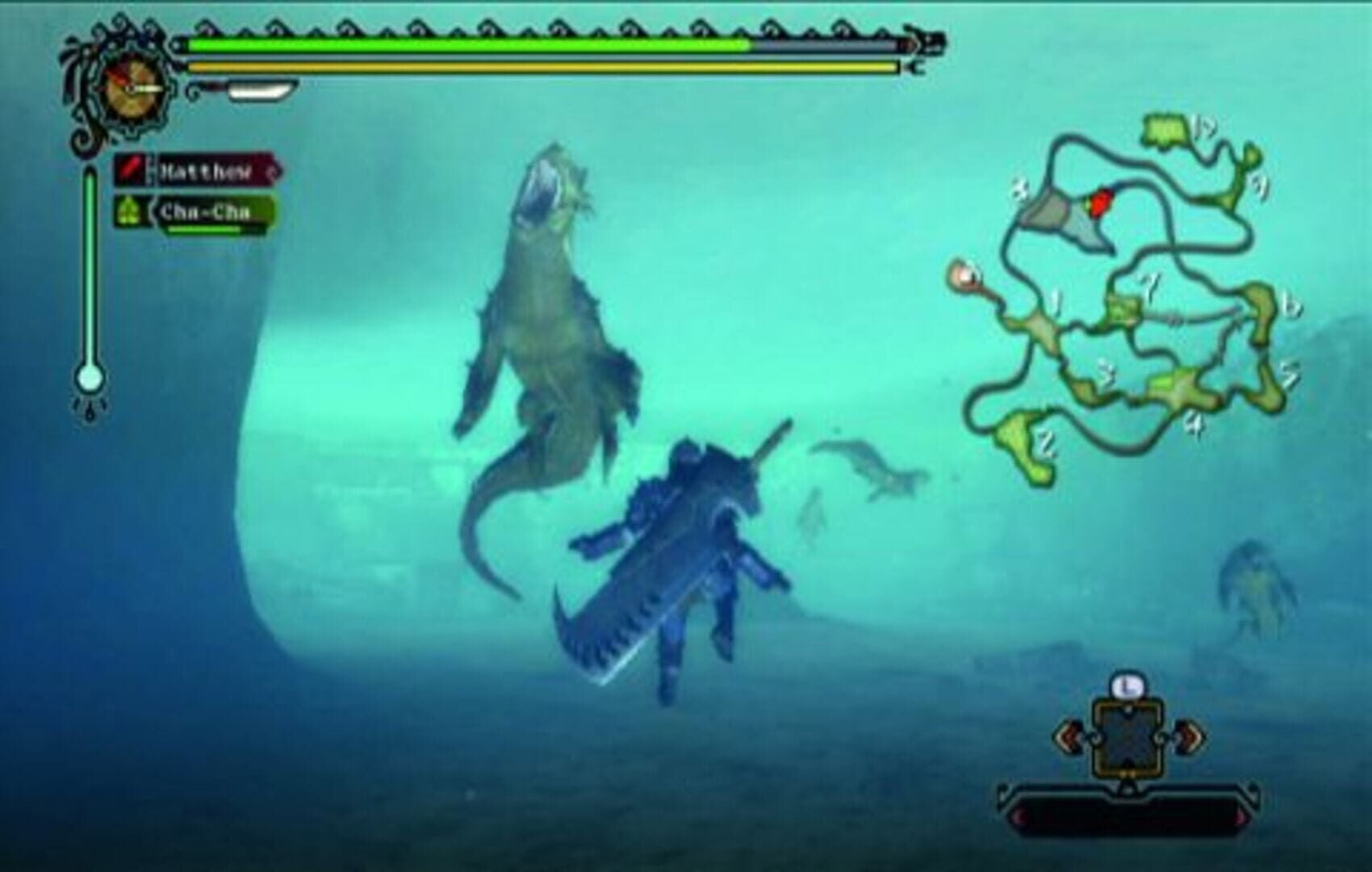
The ecosystems in Monster Hunter Tri have been expanded to include underwater environments. Director Kaname Fujioka, in a 2017 interview, said that they wanted to include underwater sections and combat in Monster Hunter, both to try something different from what other games have done with this, and trying to see how underwater combat would work. While it was included in Tri, Fujioka said that the amount of effort they needed to program these sections took too much time away from what other parts they could develop, and generally have left underwater combat out of future Monster Hunter games, but would like to come back to it sometime in the future.
Eighteen new monsters were developed for the game, and while there were only 3 of the same boss monsters from the previous games (Rathalos, Rathian and Diablos), their interactive AI was completely redesigned. Each weapon class has been updated with new moves and innovations. Some Weapon Classes have been removed, probably due to short time while programming underwater battle for each weapon. The only ones that make it out to the final cut where, the Sword and Shield, Great Sword, Hammer, Bowguns (Light and Heavy) Lance, Longsword, and the new Switch Axe, which can switch between Axe and Sword forms.
Reception
The game and the Ultimate versions received "favorable reviews" on all platforms according to video game review aggregator Metacritic. In Japan, Weekly Famitsu certified the Wii version with a score of 40/40, making it the eleventh game to receive a perfect rating from the magazine in its 20-year history, as well as the third title for the Wii.
8 out of 10 and called it "a meaty experience, with the same addictive reward system that forms the core of many MMORPGs. If you have a few friends who also enjoy the game, you'll enjoy hours and hours of hunting together. Even if you prefer to play offline, there's a ton to do. Unfortunately, while fans of the series will probably love Monster Hunter Tri, Capcom has a lot of kinks to iron out if they want to appeal to the Western masses."


