The articlegameplay, story, development, reception
Gameplay
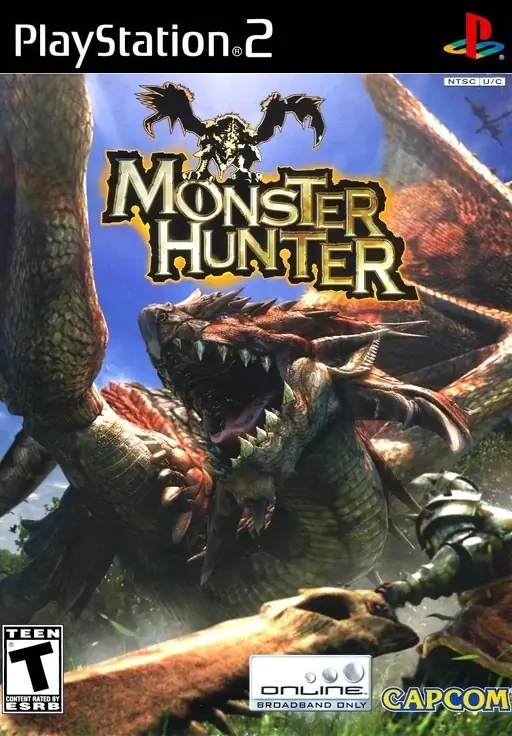
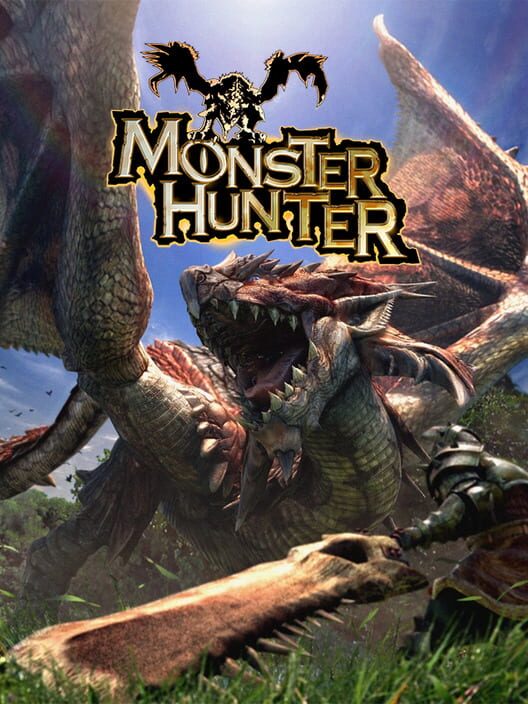
Monster Hunter places the player in the role of an up-and-coming hunter who must accomplish various quests to achieve glory. Armors, weapons, and other items are created from the remains of slain monsters by carving off their horns, scales and bones, as well as from mining for ores in the field. Monster Hunter plays in a similar fashion to Phantasy Star Online allowing the player to team up with up to three other hunters online to take down stronger monsters.
Monster Hunter is played through quests given to the hunter by the Village Elder or the Town Guild. Village Quests can be classified into four categories: hunting, gathering, capture and event. They are also categorized into different levels, ranging from 1 to 8. Higher level quests become available after quests in the previous level are completed. There are three types of quests:
Hunting: Hunting quests make up the majority of the missions. As the name implies, the hunter will track, provoke, and eventually slay a monster or a number of monsters.
Gathering: Gathering quests are missions in which the hunter must "gather" items like herbs or monster parts.
Capture: The hunter must weaken, but not kill the prey, and then capture it with a trap.
The Event quests are an online-only feature. Every week, a new Event quest is available to hunters of any rank. These quests vary in style and difficulty. Some of the rarer weapons can be made only through Event quest rewards.
Event quests are not vital to a hunter's success in the game, but are a useful way to gain experience and to obtain some rare items. Contract fees and time limits vary. All of the quests allow two deaths, but the third death marks the failure of the quest. Regardless of which player actually dies, three deaths will still fail the quest.
The only exceptions to this rule are some of the Event quests and all the Training missions, which are failed with just one death.
Hunters can be classified as either Blademasters or Gunners. The Blademaster classification consists of five sub-categories: Sword and Shield, Great Swords, Lances, Hammers, and Dual Swords (Dual Swords were added in the international release and are thus unavailable in the original Japanese release). Blademaster weapons can also be of a certain element, be it fire, water, thunder or dragon as well as status effects such as poison, stun or sleep. Gunners have two choices: Light bowgun, and Heavy Bowgun. Classifications and use of sub-category weapons are not chosen and solidified into a file; hunters are able to choose to use any weapon they want, before the start of any quest or event, as long as they have the proper money and/or supplies to do so.
Armor is always dependent on whether one chooses to use a Blademaster or Gunner weapon (excluding some few which can be worn either way). Blademaster armor usually focuses on stronger physical protection, while Gunner armor usually focuses on elemental protection. Certain armor combinations provide the user with skills such as fast eating (drinking potions faster) or being able to sharpen your weapon fast and better.
Combining ingredients to make items such as healing potions or traps for monsters is a very important feature. Although many of the combinations must be discovered by the player, some combinations are hinted at throughout the game. Success is dependent on many factors, such as rarity of the items to be combined and amount of "combo books" a player has on hand or even certain armor skills. Some of the items in the game of the highest rarity can only be obtained by combining.
Development
Monster Hunter was a part of an initiative from Capcom's Production Studio 1 to develop three network focused games on the PlayStation 2. The other games were Auto Modellista and Resident Evil Outbreak. Capcom's plan was that at least one of the games would sell a million copies. Both Monster Hunter and Resident Evil Outbreak eventually sold a million copies each.
Monster Hunter's online servers outside Japan were closed down on December 31, 2007.
"After more than 3 years of online service, the external company providing server hosting for both Resident Evil: Outbreak and Monster Hunter has decided to exit the PlayStation 2 online business altogether, with no possibility of outsourcing either the service or the technology."
Monster Hunter's online servers in Japan closed down on July 1, 2011. (PlayStation 2 versions only)
Reception
The game received "mixed or average" reviews according to video game review aggregator Metacritic. In Japan, Famitsu gave it a score of all four eights, for a total of 32 out of 40.