
The articlegameplay, story, development, reception
Gameplay
Similar to its predecessor, Wilds is an action role-playing video game played from a third-person perspective. In Wilds, players take on the role of a custom hunter character who travels to the "Forbidden Lands", a distant, unexplored landmass with an ecosystem filled with unique monsters. As with previous games in the series, the player's hunter tracks and fights monsters, either capturing or slaying them, from which they gain rewards in the form of monster parts and other resources. Along with other resources collected in the game world, the player can then craft new armor, weapons, consumables, and other gear, which allow them to fight more difficult monsters.
The game world features several biomes, each of which is a large open world for players to freely explore. In Wilds, players can seamlessly move between the larger world and their hunter village where they can cook food, replenish their supplies, and craft new gear. Quests can also be started whenever players locate their targets in the wilds. The game introduces a type of mount called a Seikret which aids player exploration and directs them towards their current objective, and can also be ridden while in combat. The Seikret allows the player character to carry two distinct weapons while hunting monsters, though armor can only be changed in the village.
Story
A group of explorers led by former hunter Fabius finds a boy named Nata in the wasteland. Nata claims to hail from the Forbidden Lands, a harsh, uncharted region of the Old World that was presumed to be uninhabited. Nata's people, the Keepers, were attacked by the "White Wraith", a monster previously thought to be extinct. Fabius summons a recently promoted hunter and their palico to investigate the monster and escort Nata home.
The hunter, palico, and Nata are joined by Alma, a guild handler, and Gemma, a blacksmith, forming the Avis Unit. Also on the expedition are the Astrum Unit: Olivia, a veteran hunter, Athos, Olivia's palico, Erik, a botanist, and Werner, a guild engineer.
Development
Wilds was developed by Capcom, using their internal RE Engine. Following the large influx of players from Monster Hunter World, the developers spent more time on research and development to determine what features they wanted to include to meet the wider range of players anticipated for Wilds, according to art director Kaname Fujioka. By 2024, Wilds had been in development for at least five to six years.
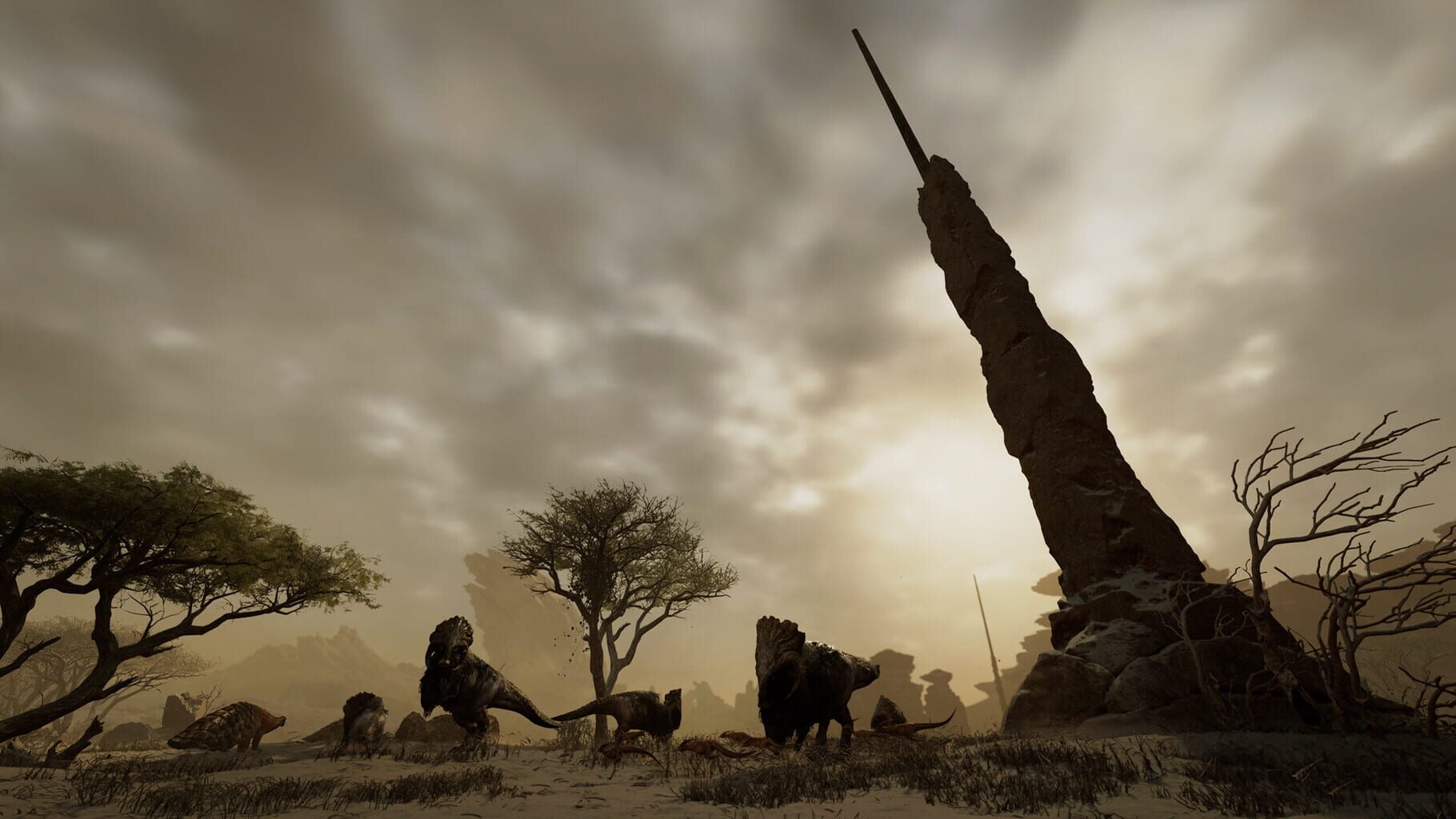
The team strove to create a realistic ecosystem and simulate a natural environment in the game. According to Yuya Tokuda, the game's director, players can observe the life forms in the game as they live out their life cycles, and watch how monsters interact with each other. Monsters do not stay in a single location on the map and will instead move around freely. Predators follow prey, and the state of the world is persistent.
Reception
Monster Hunter Wilds received very positive reviews from critics. According to review aggregator platform Metacritic, the PlayStation 5 and Microsoft Windows versions of the game received "generally favourable", based on 104 and 45 critic reviews, respectively, whilst the Xbox Series X version received "universal acclaim", based on 14 critic reviews. OpenCritic determined that 95% of critics recommended the game. In Japan, four critics from Famitsu gave the game a total score of 39 out of 40, with three critics awarding the game a perfect 10.
Reviewers were mixed on the perceived decrease in difficulty present in Wilds; IGN's Tom Marks described the game as "light on any real challenge", and stated that he'd only "fainted two times total across dozens of hours", comparing the experience to far more challenging encounters in the base game of Monster Hunter World. Marks, however, did note that "the easier turning will probably get more people through the door." Harte referred to the game's campaign as "easy, but not boring." Eurogamer's Matt Wales also noted that, whilst noting he was a series veteran, he had "still haven't failed a quest forty hours in", pondering if the games "aggressive streamlining" was "robbing the series of some of its distinctive personality." Edge criticized the post-credits gameplay as not having "the same self-sustaining impetus" as other games in the series, attributed in part to the game's streamlining.


