The articlegameplay, story, development, reception
Gameplay
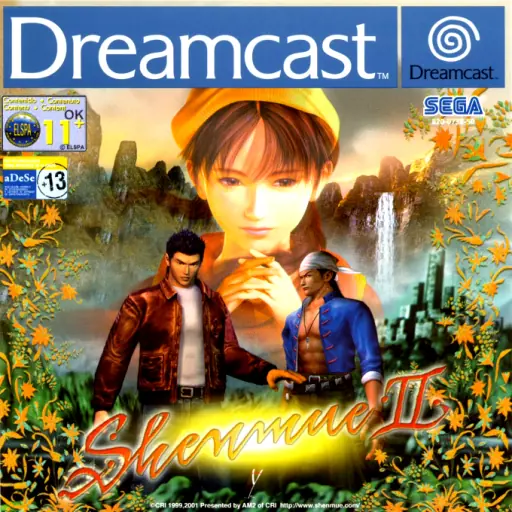
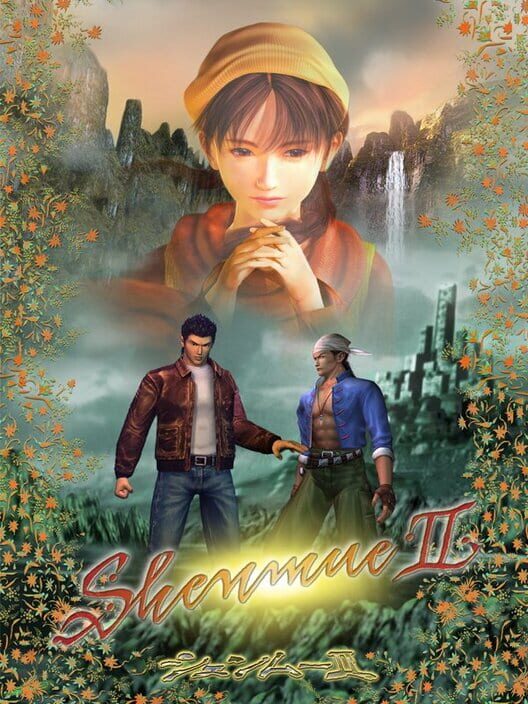
Like the original Shenmue, the player controls the teenage martial artist Ryo Hazuki in his journey for revenge. Most of the game is spent exploring the open world, searching for clues, examining objects and talking to non-player characters for information. The game features a 3D fighting system similar to Sega's Virtua Fighter series; Ryo can fight multiple opponents at once and practice moves to increase their power. In quick-time events, the player must press the right combination of buttons at the right moment to succeed.
Shenmue II adds several features. Players can ask for directions from passersby, and fast-forward the game clock when waiting for a scheduled event, such as a shop opening or character arriving. Unlike the first Shenmue, taking a job is not part of the main story, and the player can choose how to earn money—for example, by gambling, arm wrestling, street fighting or running a pachinko stand. Ryo can spend money on items such as capsule toys or 1980s arcade games including Hang-On, After Burner, Space Harrier and Out Run. The Dreamcast version allows the player to import their save data from the first Shenmue, transferring money, items and martial arts moves.
Story
In 1987, the teenage martial artist Ryo Hazuki arrives from Japan in Wan Chai, Hong Kong, on the trail of his father's killer, Lan Di, of the criminal Chi You Men organization. He searches for Master Lishao Tao, the only link to the whereabouts of Yuanda Zhu, a martial arts expert who sent Ryo's father a letter warning him of Lan Di's intentions. When Ryo finds Tao, whose real name is Xiuying Hong, she refuses to help, considering his quest for vengeance reckless. The two part ways, but Xiuying continues to monitor Ryo's progress.
Ryo encounters Wuying Ren, the wily leader of a street gang. Ren decides to help Ryo after deciding there may be money to be made in Ryo's mysterious phoenix mirror; Lan Di took the second mirror, the dragon mirror, when he killed Ryo's father. Wong, a street boy who admires Ren, and Joy, a free-spirited motorcyclist, assist Ryo in his journey.
Ren informs Ryo that Zhu is hiding from the Chi You Men in Kowloon Walled City, a crime-ridden enclave of Hong Kong. They locate Zhu there but are ambushed by the criminal Yellow Head organization and Zhu is kidnapped. Ryo and his allies infiltrate the Yellow Head headquarters, but Wong and Joy are captured. Ryo defeats a powerful martial artist and rescues Joy. On the rooftop of the Yellow Head building, Ryo rescues Wong and Zhu from the Yellow Head leader, Dou Niu, as Lan Di departs by helicopter.
At Ren's hideout, Zhu reveals that Lan Di killed Ryo's father because he believes Iwao killed his own father. He also reveals that the mirrors will lead to the resurrection of the Qing dynasty, the last imperial dynasty of China. Zhu advises Ryo to continue his search in Bailu Village in Guilin, where he says Lan Di is also heading.
In the mountains of Guilin, Ryo rescues a girl, Shenhua Ling, after she dives into a river to rescue a deer. Shenhua's family is connected to the legacy of the mirrors, and she seems to have magical abilities. They walk through the mountains to her village. At Shenhua's family home, a tree named Shenmue (Chinese for "sedge tree") is in bloom; she explains that her name means "flower of the Shenmue tree".
The pair go to a stone quarry on the village outskirts to meet Shenhua's father, but he is missing. They discover a cryptic note and sword; Ryo combines the sword with the phoenix mirror, triggering a device that reveals a large mural of the dragon and phoenix mirrors.
Development
Shenmue II was developed by Sega AM2 and directed by Yu Suzuki. Much of the game was developed in tandem with the first Shenmue, which was most expensive video game ever developed at the time and is reported to have cost Sega US$70 million; in 2011, Suzuki said the figure was closer to $47 million including marketing. Though Shenmue was one of the highest-selling Dreamcast games, its costly development made profit impossible. Sega planned to continue the series to recoup its investment. According to IGN, Shenmue II was completed for "a much more reasonable sum".
Reception
In Japan, Shenmue II had sold 124,190 copies by the end of 2001, making it the 92nd-highest-selling new game. Japanese sales reached 140,829 copies by June 2002. Xbox sales were weak; according to IGN, by this point the graphics appeared dated and "consumers shrugged off the masterpiece as simply irrelevant". The poor financial return on Shenmue and Shenmue II contributed to the failure of the Dreamcast and Sega's financial problems.