The articlegameplay, story, development, reception
Gameplay
Total War: Rome II is set in Europe, the Mediterranean, and the Near East in the Classical antiquity period. The grand single-player campaign begins in 272 BC at the end of the Pyrrhic War, lasting for 300 years. However, the player also has the option to play further, as there are no timed victory conditions.
Like its predecessor, Rome II blends turn-based grand strategy and civilization management with real-time tactical battles. The Warscape engine powers the game's visuals and new unit cameras allow players to focus on individual soldiers on the real-time battlefield, which may contain thousands of combatants at the same time. Creative Assembly has stated that it wished to bring out the more human side of war, with soldiers reacting as their comrades get killed around them, and officers inspiring men with heroic speeches.
Rome II features more sophisticated portrayals of each culture and civilization of the period, which in its predecessor had been portrayed anachronistically. The Creative Assembly tried to ensure the uniqueness of different cultures and fighting forces. Lead unit designer Jack Lusted stated that instead of the "rebel nation" used to represent minor states in the original Rome: Total War, Rome II features a large number of smaller, individual nations and city-states represented by their own factions. Each ethnic group has a unique play-style.
A tribe of Gallic barbarians looks and feels different from a disciplined Roman legion. Different agents and technologies are implemented for different factions. There are over 500 different land units in the game, including mercenaries. Over 30 different city variants avoid siege battles feeling and playing out the same every time.
The diplomacy system has been revamped with a new artificial intelligence. The Creative Assembly has acknowledged anomalies in previous games, where the AI could perform strange or even suicidal actions, such as very small factions declaring war on very large ones such as the Roman Empire; the AI is said to be more "intelligent" and cunning in Rome II. The player's own actions will determine whether or not the enemy AI will be a trustworthy ally or a suspicious traitor.
The political system of Rome II has been completely redone. The factions of Rome and Carthage each have three political entities that vie for power. Players will choose to be part of one of the entities once they select the faction they want to play. Other factions have internal politics between a single ruling family and a class of nobles.
The political standing of different entities is based on a resource system, which is, in turn, based on the deeds and actions of its generals and characters. If one's standing drops too low, they may find themselves powerless to affect their nation's affairs, or if they become too powerful, rivals might unite against them. In certain cases, a player may attempt to take all power for himself to become emperor or king, which requires a civil war—another part of the game completely redesigned.
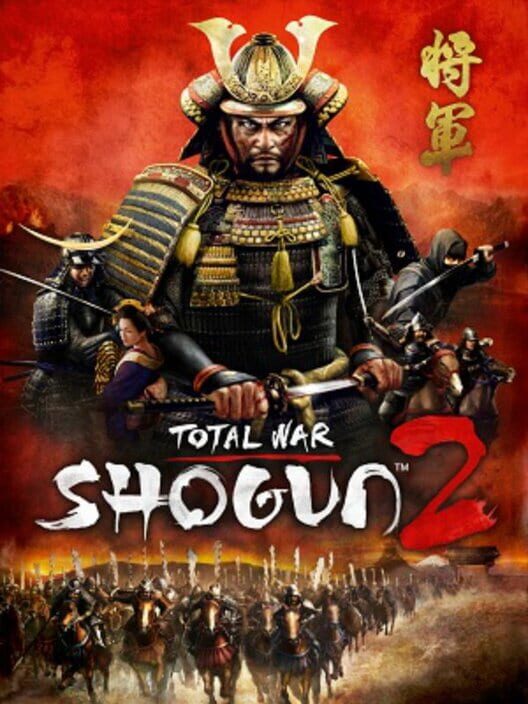
As with Total War: Shogun 2, the player is prompted with decisions throughout the game. The Creative Assembly has expanded on this mechanic, with each decision leading the player down a particular "decision path" based on previous decisions. These then affect the way the campaign plays out; for example, the Roman Republic may become the Roman Empire through civil war. Additionally, rather than solely assigning traits to generals and family members as with previous Total War games, the player can assign traits to entire legions as they gain combat experience.
Players can also customize legions by choosing their weapons. Players can still determine the composition of individual cohorts, even though they will be building entire legions at a time, unlike in previous Total War titles where all units had to be created separately.
As with Rome: Total War, special units known as agents play important roles in gameplay. There are three core types of agents in Rome II: the dignitary, the champion, and the spy, and each culture has its own variants. When spawned, each agent has a "profession" that is determined by its supposed background or ethnicity. A player can invest in an agent's profession as well as its skill tree.
Each agent can try to assassinate other characters or convert them to their faction. When an agent is asked to perform a certain task, there is a deeper set of choices on how to complete the task. For example, when getting rid of an enemy agent, one can bribe him, convert him, or murder him.
In addition to traditional sieges and field battles, a myriad of other battle types is available in Total War: Rome II. These include:
Combined naval/land battles: These occur when assaulting a coastal city, or when two armies are near the coastline.
Settlement outskirts battles: These are fought near regional capitals that are too small to have walls. The primary objective is to capture the city rather than destroy or rout the enemy army, although victory can still be achieved by routing your opponent.
Siege battles: These occur when an army assaults a provincial capital or a fortified settlement. In these battles, the cities include multiple capture points which the defender has to defend in order to win the fight.
Encampment battles: These are triggered when an army attacks another that is in a defensive stance. The defending army has time to build fortifications around its perimeter, including wooden palisades or small forts.
River battles: These are fought when an army tries to cross a major, navigable river and another tries to stop it. Navies can aid in this fight, although armies are able to build transport ships of their own to cross rivers.
Ambushes: These have been revamped in Rome II. The ambushing army can place traps, such as flaming boulders and spikes, and the defending army must find a way to escape the area, although it can also attempt to defeat the ambushing army. An ambush battle is also trigge
Reception
Total War: Rome II has an average score of 76/100 on Metacritic, indicating "generally favorable reviews". PC Gamer scored the game 85%, praising the cinematic scale of the battles and attention to detail, calling them "stunning" and "the most marvellous moments of the fifty plus hours I've played so far". In the same review, however, there was also criticism towards apparent glitches on its initial release, including issues with the AI, calling it "floppy". Edge similarly praised the visuals and battles while noting bugs on release, stating that "even as it topples, it's glorious to look at, and to live through."
Daniel Starkey of GameSpot enjoyed the variety of units and what it called "spectacular sound design and great attention to visual detail". However, in the same review, he also noted "problematic" camera angles and control, particularly during siege and larger field battles. Justin Clouse of The Escapist also enjoyed the unit and visual variety, stating "to its credit, Rome II does an excellent job of giving all the factions a unique feel", in what it called "impactful variations".
Outside of the battles, GameRevolution called the campaign map "a treat to look at" while also praising the new features and depth, yet took issue with the wait times between player and AI turns, a view echoed by Steve Butts of IGN who reported "a single turn can take as much as 10 minutes... those little inconveniences add up. Don't get me wrong; Rome II is a game worth savoring, but it also asks you to tolerate difficulties that don't need to exist". Paul Dean of Eurogamer enjoyed the new additions to the gameplay systems while also felt "stagnation" detracted from others, concluding that "for all that the game may have promised, it isn't such a big step forward for the series.
It's Total War done a bit bigger, a bit better and a bit different." Adam Biessener of Game Informer unfavorably compared the game to the previous title in the franchise, Total War: Shogun 2, calling it a "step backwards", in that "where Shogun 2 accelerated into the massive endgame war just as administrating your empire started to become tedious, Rome II slows down far in advance of a campaign’s finale", concluding by calling it a "disappointment coming off of the brilliance of Shogun 2". Mike Suskle of GamesRadar, however, called it "a worthy continuation of the franchise and an overdue update to one of the greatest strategy games of all time".
The Emperor Edition was released on 16 September 2014, as a standalone release and a free update to all current players. The update integrated all prior fixes while adding improvements to the AI battles, political system, building chains, and visuals. Softpedia, for example, gave Emperor Edition a 90, saying that it "shows how much the title from The Creative Assembly has evolved since it was originally delivered and the way the entire experience has been updated based on the needs of the community and the cool ideas of the development team."
Upon the game's initial release many users reported technical faults such as being unable to load the game following installation, crashes, texture optimization problems, and broken artificial intelligence; poor game performance was also constantly reported. In a negative review by Rich Stanton for The Guardian, he reports having to re-download the full game following problems with his own review copy, noting that his "PC runs Shogun II at ultra settings without any issues but Rome II on medium makes it "choke like a dog", and judging by the developer's own forum many others are having the same issues." On the official forums, an "anonymous developer" from another studio posted his own complaints, including numerous bugs and poorly implemented features such as "capture the flag" style battles, feeling that the game had "comprehensively failed" to be tested and blaming the publisher Sega for its state on release. A review by critic and comedian Joe Vargas (aka Angry Joe) also complained about AI problems and unit balancing with in-game video examples while also noting differences with the preview builds, while William Usher of Cinema Blend supported Vargas' review while questioning other reviews due to the number of reported problems on release prior to patching.
Following its release, developer The Creative Assembly announced regular patching in order to fix the reported issues, with the first update coming the Friday the same week of release. On the Total War official forums, admins on behalf of Creative Director Mike Simpson issued an apology along with a statement, promising to further patch the game, encouraging players to report all problems given the variety and difference of issues between players. Simpson would later go on to state, in a second public announcement about new and upcoming fixes, about asking for further player input while also "hoping we can fundamentally treat our releases differently in the future."
Total War: Rome II surpassed commercially all other games in the Total War series in both sales and number of concurrent players on its release day. By 23 August 2013, Total War: Rome II had achieved more than six times the number of pre-orders of Total War: Shogun 2, making Rome II the most pre-ordered game in the history of the Total War franchise. As of 31 March 2014, the game had sold 1.13 million copies in Europe and North America.