Ludography
60/100
Players50 ratings
20/100
Critics1 review
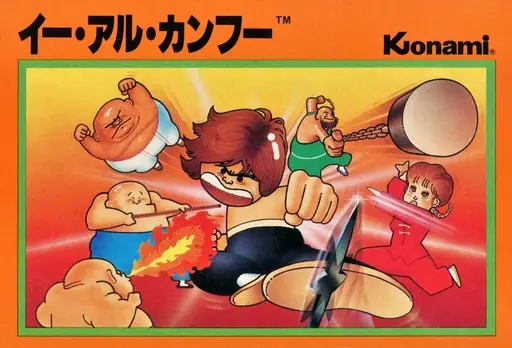
Yie Ar Kung Fu cover

1985 · Konami · Arcade · Fighting

Yie Ar Kung Fu

Timed Nintendo exclusive

Yie Ar Kung-Fu is a 1985 fighting game developed and published by Konami. Along with 1984's Karate Champ, which influenced Yie-Ar Kung Fu, it is one of the games that established the basis for modern fighting games.

Also known as
イー・アル・カンフー
Released
1985
Platforms
ArcadeNESZX SpectrumMSXAmstrad CPCBBC Microcomputer SystemCommodore 16Commodore C64/128/MAXXbox 360WiiWii UAcorn ElectronBBC MicroCommodore 64Commodore Plus/4Game BoyGame Boy ColorNintendo DSNintendo SwitchSG-1000
Genres
ArcadeFighting
Developers
KonamiAaronix
Publishers
Imagine SoftwareAaronixKonami
Modes
MultiplayerSingle-player
Perspective
Side view
Themes
Action
Country
Japan
Age ratings
CLASS_IND LCERO A
Languages
EnglishJapanese
Time to beat
1hwith extras
Composers
Miki Higashino

About

Yie Ar Kung-Fu (Japanese: イー・アル・カンフー, Hepburn: Ī Aru Kanfū) is a fighting game developed and published by Konami for arcades. It first had a limited Japanese release in October 1984, before having a wide release nationwide in January 1985 and then internationally in March. Along with Data East's Karate Champ (1984), which influenced Yie Ar Kung-Fu, it is one of the games that established the basis for modern fighting games.

The game was inspired by Bruce Lee's Hong Kong martial arts films, with the main player character Oolong modelled after Lee (like Bruceploitation films). In contrast to the grounded realism of Karate Champ, Yie Ar Kung-Fu moved the genre towards more fantastical, fast-paced action, with various different characters having a variety of special moves and high jumps, establishing the template for subsequent fighting games. It also introduced the health meter system to the genre, in contrast to the point-scoring system of Karate Champ.

The game was a commercial success in arcades, becoming the highest-grossing arcade conversion kit of 1985 in the United States while also being successful in Japan and Europe. It was ported to various home systems, including home computer conversions which were critically and commercially successful, becoming the best-selling home video game of 1986 in the United Kingdom.

Keywords

  • nintendo switch online
  • wii virtual console
  • wii u virtual console

Media

The articlegameplay, story, development, reception

Gameplay

Oolong (or Lee in the MSX and Famicom versions) must fight all the martial arts masters given by the game (eleven in the arcade version; five to thirteen in the home ports).

The player faces a variety of opponents, each with a unique appearance and fighting style. The player can perform up to 16 different moves, using a combination of buttons and joystick movements while standing, crouching or jumping. Moves are thrown at high, middle, and low levels. Regardless of the move that defeated them, male characters (save Feedle) always fall unconscious lying on their backs with their legs apart (Oolong flails his legs), and female characters always fall lying on their sides.

Feedle disappears. When a player gains an extra life, the word "xiè xiè" (Mandarin for "thank you") is heard.

Instead of a point-scoring system like Karate Champ (1984), Yie Ar Kung-Fu instead introduces a health meter system. Each fighter has a health meter, which depletes as they take hits. Once a fighter's health meter is fully depleted, it leads to a knockout.

On the arcade version, players can play on until all their lives are gone. No bonus lives are given thereafter once 9,999,900 is scored.

Reception

In Japan, Game Machine listed Yie Ar Kung-Fu on their March 1, 1985 issue as being the second most-successful table arcade unit of the month. In North America, it was number seven on the RePlay arcade chart for software conversion kits in December 1985. It ended the year as America's highest-grossing arcade conversion kit of 1985, and one of the year's top five highest-grossing games in route/street locations. The arcade game was also a commercial success in Europe.

The home computer conversions were also commercially successful. In Europe, it entered the UK software sales charts at number two, below Capcom's Commando. Yie Ar Kung-Fu then topped the charts in January 1986 and again in February, and was then number two in March. It went on to become the overall best-selling game of 1986 in the United Kingdom. Its budget re-release later topped the UK budget sales chart in August 1989.
Releases by platformdates and regions as published

Releases by platform
PlatformReleasedRegions
Arcade25 October 1984Japan · North America 1 March 1985 · Europe 1 March 1985
NES22 April 1985Japan
ZX Spectrum15 August 1985Europe
MSX31 December 1985Japan
Commodore C64/128/MAX31 December 1986Europe
Amstrad CPC31 December 1986Europe
BBC Microcomputer System31 December 1986Europe
Commodore 1631 December 1986Europe
Xbox 36018 July 2007Worldwide
Wii8 January 2008Japan
Wii U17 September 2014Japan

Title IDsone per regional release, with its latest update

Title ids and disc serials by release
PlatformTitle IDRegionLatest update
MSXGPM-108Japan—
NESRC802Japan—
Wii U000500001016BC00Japan—
0005000010194B00Japan—
Xbox 36058410816——

Box artone per regional release we hold art for

Decompilations and portscommunity projects that rebuild or port the game

Editions and related releases

Included in
Konami GB Collection Vol. 4Nintendo Classic Mini: Family ComputerKonami Collector's Series: Arcade AdvancedKonami Game Collection Vol. 1Konami Antiques: MSX Collection Vol. 1Konami Arcade ClassicsKonami Classics Series Arcade Hits
Followed by
Yie Ar Kung-Fu IIYie Ar Kung-Fu 2: The Emperor Yie-Gah
Ported as
Yie Ar Kung-FuArcade Archives: Yie Ar Kung-Fu

Games like this

Collections15 collections

Publishers

Years

Genres

Description adapted from its source, CC BY-SA 4.0.