
The articlegameplay, story, development, reception
Gameplay
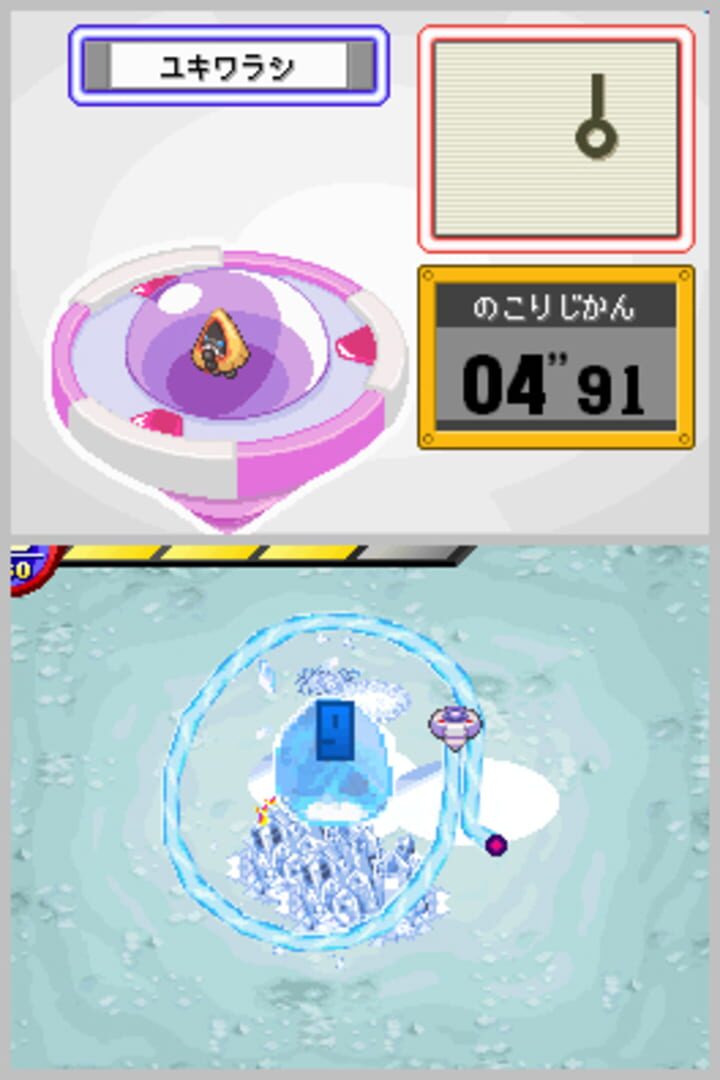
In Pokémon Ranger, rather than the traditional turn-based fighting mechanic and use of Pokéballs, the player's character can capture Pokémon by using a Capture Styler, controlled by the stylus of the Nintendo DS. To capture a Pokémon, the player must draw consecutive circles around the wild Pokémon on the Nintendo DS touchscreen. To fight back, opposing Pokémon may attempt to flee or attack the Capture Styler. When a Pokémon is captured, it temporarily joins the player's party.
The player can use party Pokémon to interact with obstacles outside of battle, using them to solve puzzles by removing boulders, blowing fire, tackling, and other moves. These are called Field Moves. Party Pokémon can also use short attacks in battle to help the player, called Poké Assists. When a party Pokémon successfully uses a Field Move or is hit by an opposing Pokémon's attack in battle, it will leave the party.
Story
The storyline follows the player as they start their journey as a Pokémon Ranger to the player becoming a top-ranked Ranger.
After saving and capturing a wild Pokémon, the player is taken to the ranger's base in Ringtown. There, they must complete a series of missions, such as saving Pokémon and completing favors for others. Once the player proves themselves, they are assigned a patrol mission to travel through the Krokka Tunnel. There, they meet the Go-Rock Squad, the villainous team in the Fiore region.
Development
Information regarding Pokémon Ranger was first published in the July 2005 issue of CoroCoro Comic magazine. Little details were shared, but it was hinted that it would be a game and a movie. An announcement on Pokémon Ranger came as a short teaser at the end of the 8th Pokémon film, Pokémon: Lucario and the Mystery of Mew.
Promotion
Reception
Pokémon Ranger sold 193,337 copies in Japan on its release week. In terms of game reviews, Pokémon Ranger received fairly positive reaction, with a 70% ratio from GameRankings. IGN gave the game an overall score of 7.1/10, noting the presentation, gameplay, and graphics as the game's strong points, but also saying that the game's use of sound is a major drawback, with issues such as using the 8-bit sounds from the previous Game Boy Pokémon games for Pokémon cries. A lack of a multi-player mode was also a negative point in IGN's review.
GameSpot gave a similar review to IGN, giving the game a 7.5/10. GameSpot commented that the game's "unique capturing system," "good-sized quest," and "attractive 2D graphics and animation" were the game's strong points, while also commenting that issues such as the possible scratching of the Nintendo DS touch screen during battle and "basic exploration sequences" were the game's notable weak points. While discussing the mixed quality of Pokémon spin-offs, Retronauts podcaster Jeremy Parish used Pokémon Ranger as an example, referring to it as "crappy." He critiques the dialogue and story, commenting that while Pokémon is a "kiddy game," the writing in Pokémon Ranger is worse than in the mainline games. Fellow Retronauts contributor Justin Haywald criticized HAL Laboratory, which he says is normally a good developer, for making Pokémon Ranger.


