The articlegameplay, story, development, reception
Gameplay
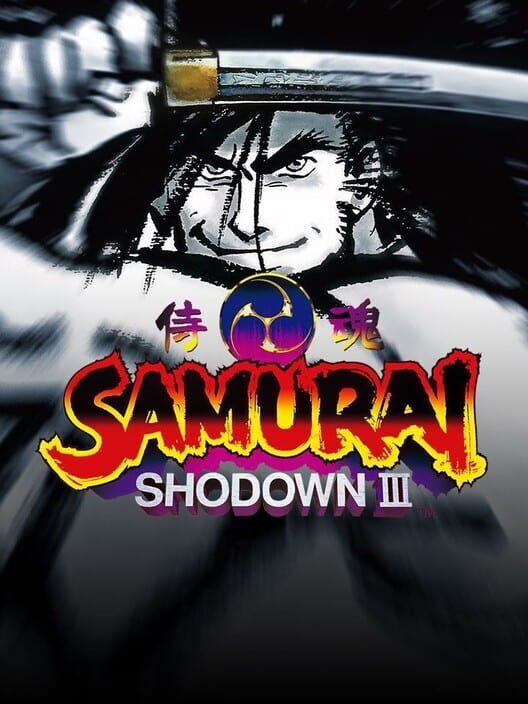
Compared to the others in the series, the game has a darker aesthetic. The more light-hearted characters (Earthquake, Cham Cham, and Gen-an) from the previous games have been excised, and the kabuki master, Kyoshiro Senryo, received a redesign, transforming him from a flamboyant stage performer into a grim-faced, muscular man. All of the characters have been completely redrawn.
Also, the button layout was changed, mapping the first three of the four available buttons to weak, medium and strong slash attacks, respectively. The fourth button is used for kick attacks.
The pace of the game shifted somewhat, as many basic attacks can be canceled into special moves, something which is extremely rare in the first two installments. Most of Samurai Shodown 2's movement options were removed, in favor of the ability to dodge attacks by pressing the A and B buttons simultaneously. When close, performing this command results in a quick switch-around to the opponent's back, which can then be followed up by other attacks. It is also possible to block attacks in mid-air. Items are also thrown onto the battlefield from off-screen as opposed from a delivery man running in the background.
Along with the aesthetic overhaul came significant changes in the gameplay, such as the addition of two selectable versions of each character.
Slash: Known to the Japanese as Shura (修羅), from the Sanskrit word asura. Originally, in Brahmanism and Hinduism, a devil who loves to fight by nature. It is occasionally mistranslated as "Chivalry", and implies a regular fighter (compare a face in professional wrestling). This version tends to be the closest in style and moves to the Samurai Shodown II version of the character.
Bust: Known to the Japanese as Rasetsu (羅刹), which is a derivation of the Sanskrit word, rakshasa, in reference to a type of demon of black body (hence, the darker skin of bust characters). It is occasionally mistranslated as "Treachery", implying a rulebreaking heel version of the character. This version typically differs considerably from its Slash counterpart in gameplay, though it visually does not look different beyond its color palette. The fighter Nakoruru is the only notable exception to this.
The "Slash" version of her character is accompanied by her pet hawk, Mamahaha, as in the two previous SS games. Her "Bust" version, however, is accompanied by her pet wolf, Shikuru. (Like with Mamahaha, she is able to hop onto Shikuruu's back and perform modified attacks.) Galford in his "Bust" version fights without his dog, Poppy for the first time in the series.
Story
The first part of a two-chapter story that is chronologically set between the events of Samurai Shodown and Samurai Shodown II, Samurai Shodown III follows the journey of a young semi-amnesic boy named Shizumaru Hisame as he and many other warriors seek out a powerful and dangerous swordsman named Zankuro Minazuki for their own personal reasons.
Reception
In Japan, Game Machine listed Samurai Shodown III as the most-popular arcade game of the year. According to Famitsu, the AES version sold over 48,757 copies in its first week on the market.
Samurai Shodown III received moderately positive reviews. Reviewing the Neo Geo AES version, Electronic Gaming Monthly remarked that the graphics are not as good as the first two games in the series and that the Neo Geo controller makes it difficult to pull off some moves, but they greatly praised the large number of characters and the two different personas for each character, and in general rated the gameplay as superior to the first two Samurai Shodowns. Major Mike of GamePro commented that impressive innovations such as the multiple personas and the sidestep ability are to an extent countered by the omission on some of the best characters from the previous games and the less impressive backgrounds. He concluded that "While Shodown III won't disappoint fans of the series, it isn't the jump that Shodown II was over I."
A brief review in Next Generation similarly said that "Fans of the first two won't be let down by III, but there should be a much larger jump in quality in the sequel." Maximum assessed the Neo Geo CD version as "an excellently detailed and extremely playable beat 'em up, maintaining SNK's usual high standards." They particularly praised the fact that character alignment affects the gameplay instead of just cosmetic differences, the much improved balance of the characters, the constantly moving backgrounds, and the highly experimental soundtrack. They remarked that the game's one major problem is that it is irritatingly difficult.
Scary Larry of GamePro described the PlayStation version as "a lousy port of an equally bad NeoGeo game", citing missing frames of animation, slowdown, and overly drawn-out fights. He scored it a 1.0 out of 5 in both control and funfactor, giving a 2.5 out of 5 to graphics and sound. GameSpot also commented on the missing frames of animation and slowdown in the PlayStation version, and additionally criticized the "excruciatingly long" loading times, but nonetheless concluded that "Those who loved the arcade game version of Samurai Shodown III will be happy with this conversion." A review in Next Generation assessed it as a faithful port (and in particular a superior effort to the PlayStation version of The King of Fighters '95) but, consistent with their review of the Neo Geo version, criticized the game itself as "nearly indistinguishable" from Samurai Shodown II.