Ludography
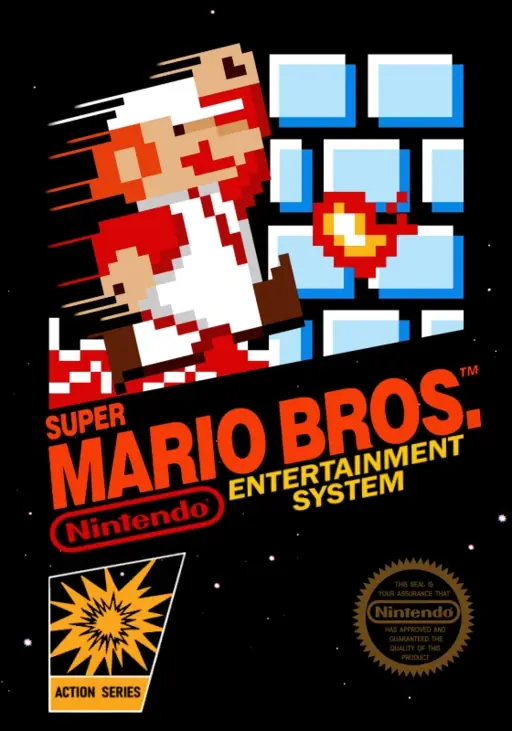
Super Mario Bros. cover

1985 · Nintendo Entertainment Analysis & Development · 2D platform · Adventure

Super Mario Bros.

Nintendo console exclusive

A side scrolling 2D platformer and first entry in the Super Mario franchise, Super Mario Bros. follows Italian plumber Mario as he treks across many levels of platforming challenges featuring hostile enemies to rescue Princess Peach from the evil king Bowser.

Also known as
Super Mario Brothers · Super Mario Bros. 1 · SMB · SMB1 · SMB 1 · Супер Братя Марио · Super Mario Bros. NES · Super Mario Bros. - 25th Anniversary · Super Mario Bros. 4 · Super Simpson IV · Super Kid
Released
1985
Platforms
NESFamily Computer Disk SystemArcadeWiiNintendo 3DSWii UApple IIGSFamicom Disk SystemGame & WatchGame & Watch seriesGame Boy AdvanceGame Boy ColorGameCubeNEC PC-8800 seriesPlayChoice-10SNES
Genres
2D platformAdventurePlatformer
Developers
Nintendo Entertainment Analysis & DevelopmentNintendo
Publishers
Nintendo
Series
Mario
Modes
MultiplayerSingle-player
Perspective
Side view
Themes
Action
Country
Japan
Age ratings
GRAC ALLESRB ECLASS_IND LUSK 0PEGI 3ACB GCERO A
Languages
English
Copies sold
40.2 million
Entry
#1 in Mario
Time to beat
2.5hmain story12hwith extras2hcompletionist
Directors
Shigeru Miyamoto
Composers
Koji Kondo

About

Super Mario Bros. is a 1985 platform game developed and published by Nintendo for the Nintendo Entertainment System (NES). Directed and produced by Shigeru Miyamoto, it is the successor to the 1983 arcade game Mario Bros. and the first game in the Super Mario series.

Players control Mario, or his brother Luigi in the multiplayer mode, to traverse the Mushroom Kingdom to rescue Princess Toadstool from King Koopa (later named Bowser). They traverse side-scrolling stages while avoiding hazards such as enemies and pits and collecting power-ups such as the Super Mushroom, Fire Flower, and Starman.

›Story

One day the kingdom of the peaceful mushroom people was invaded by the Koopa, a tribe of turtles famous for their black magic. The quiet, peace-loving Mushroom People were turned into mere stones, bricks and even field horsehair plants, and the Mushroom Kingdom fell into ruin.

The only one who can undo the magic spell on the Mushroom People and return them to their normal selves is the Princess Toadstool, the daughter of the Mushroom King. Unfortunately, she is presently in the hands of Bowser, the King of the Koopa.

Mario hears about the Mushroom People’s plight and sets out on a quest to free the Mushroom Princess from the evil Koopa and restore the fallen kingdom of the Mushroom People.

You are Mario! It’s up to you to save the Mushroom People from the black magic of the Koopa!

Keywords

  • ghosts
  • gravity
  • magic
  • mascot
  • death
  • side-scrolling
  • multiple protagonists
  • time limit
  • princess
  • pixel art
  • sequel
  • castle

Media

The articlegameplay, story, development, reception

Gameplay

Super Mario Bros. is a platform game in which the player controls the titular protagonist Mario, who is tasked with exploring the Mushroom Kingdom to defeat Bowser and rescue Princess Toadstool. His brother, Luigi, is controlled by the second player in multiplayer mode and assumes the same plot role and functionality as Mario. The game takes place through a side-scrolling perspective where the player moves to the right to reach the flagpole at the end of each level.

), which when hit from below by Mario may reveal more coins or a special item. Other "secret", often invisible, bricks may contain more coins or rare items. If the player gains a Super Mushroom, Mario grows to double his size and gains the ability to break bricks above him. The item protects Mario from a single instance of damage inflicted by an enemy or hazard, though falling off the map will always kill Mario.

Story

Following the events of Mario Bros., the game is set in the fantasy land of the Mushroom Kingdom after Mario and Luigi had arrived through a clay pipe from New York City.

In the Mushroom Kingdom, a tribe of turtle-like Koopa Troopas invade the kingdom and use the magic of their king Bowser to turn the Mushroom People into inanimate objects such as bricks, stones, and horsehair plants. Bowser and his army also kidnap Princess Toadstool of the Mushroom Kingdom, the only one with the ability to reverse Bowser's spell. After hearing the news, the brothers set out to save the princess and free the kingdom from Bowser. They fight Bowser's forces while traversing the Mushroom Kingdom.

Development

Super Mario Bros. was designed by Shigeru Miyamoto and Takashi Tezuka of the Nintendo Creative Department, and largely programmed by Toshihiko Nakago of SRD, which became a longtime Nintendo partner and later a wholly owned subsidiary. The original Mario Bros., released in 1983, is an arcade platformer that takes place on a single screen with a black background. Miyamoto used the term "athletic games" to refer to what would later be known as platform games. For Super Mario Bros., Miyamoto wanted to create a more colorful "athletic game" with a scrolling screen and larger characters.

Development was a culmination of the team's technical knowledge after working on the 1984 games Devil World, Excitebike, and Kung Fu, along with their desire to further advance the platforming "athletic game" genre they had created with their earlier games. The side-scrolling gameplay of the racing game Excitebike and the beat 'em up game Kung-Fu Master, the latter ported by Miyamoto's team to the NES as Kung Fu, were key steps towards Miyamoto's vision of an expansive side-scrolling platformer; in turn, Kung-Fu Master was an adaptation of the Jackie Chan film Wheels on Meals (1984). While working on Excitebike and Kung Fu, he came up with the concept of a platformer that would have the player "strategize while scrolling sideways" over long distances, have aboveground and underground levels, and have colorful backgrounds rather than black backgrounds. Super Mario Bros.

Reception

Super Mario Bros. was immensely successful, both commercially and critically. It helped popularize the side-scrolling platform game genre, and served as a killer app for the NES. 2 million copies were sold during its September 1985 release month.

2 billion, equivalent to $72 million at the time (which is inflation-adjusted to $216 million in 2025). The success of Super Mario Bros. 2 million units by January 1986. By 1987, 5 million copies of the game had been sold for the Famicom.

Legacy

The success of Super Mario Bros. led to the development of many successors in the Super Mario series of video games, which in turn form the core of the greater Mario franchise. Two of these sequels, Super Mario Bros. 2 and Super Mario Bros.

3, were direct sequels to the game and were released for the NES, experiencing similar levels of commercial success. A different sequel, also titled Super Mario Bros. : The Lost Levels. through Super Mario All-Stars on the Super Nintendo Entertainment System.
Speedruns

Releases by platformdates and regions as published

Releases by platform
PlatformReleasedRegions
NES13 September 1985Japan · North America 18 October 1985 · Europe 15 May 1987 · Australia 1 July 1987 · Brazil 31 December 1993 · Brazil 31 December 1994
Family Computer Disk System21 February 1986Japan
Arcade31 December 1986North America
Wii2 December 2006Japan · North America 25 December 2006 · Australia 5 January 2007 · Europe 5 January 2007 · Korea 26 April 2008
Nintendo 3DS5 January 2012Japan · North America 15 February 2012 · Europe 1 March 2012 · Australia 1 March 2012 · Korea 3 February 2016
Wii U5 June 2013Japan · Australia 12 September 2013 · Europe 12 September 2013 · North America 19 September 2013

Title IDsone per regional release, with its latest update

Title ids and disc serials by release
PlatformTitle IDRegionLatest update
Family Computer Disk SystemFMC-SMAJapan—
NESNES-SMEurope—
Nintendo 3DS000400000006E600Europe—
000400000017E600Europe—
000400000006E500North America—
Wii U0005000010106E00Europe—
0005000010106D00North America—

Box artone per regional release we hold art for

Decompilations and portscommunity projects that rebuild or port the game

Editions and related releases

Included in
Super Mario Bros. + Duck Hunt + World Class Track MeetSuper Mario Bros. + Tetris + Nintendo World CupNintendo World Championships 1990Super Mario Bros. / Tetris / Nintendo World CupSuper Mario Bros. / Duck HuntSuper Mario Bros. / Duck Hunt / World Class Track MeetGame & Watch: Super Mario Bros.NES Classic EditionNintendo Classic Mini: Family Computer
Derivative works
Super Mario Bros.VS. Super Mario Bros.
Expanded editions
Super Mario Bros. DeluxeVs. Super Mario Bros.
Ported as
Nintendo Mini Classics: Super Mario Bros.25th Anniversary Super Mario Bros.Super Mario Bros. Game WatchAll Night Nippon Super Mario Bros.Classic NES Series: Super Mario Bros.Super Mario Bros.
Remastered as
Super Mario Bros.
Basis for
Super Mario Bros. 35The Super Mario Bros. Super Show!
Built on it
Vs. Super Mario Bros.All Night Nippon Super Mario Bros.Tonkachi MarioSuper Mario Bros. Game WatchSuper Mario Bros.Nintendo Mini Classics: Super Mario Bros.Super Mario Bros. DeluxeClassic NES Series: Super Mario Bros.25th Anniversary Super Mario Bros.Super Lava Bros.
Editions
Super Mario Bros.

In the same series

Games like this

Collections24 collections

Platform libraries

Years

Licensing

Reception and records

Publishers

Description adapted from its source, CC BY-SA 4.0.