
The articlegameplay, story, development, reception
Gameplay
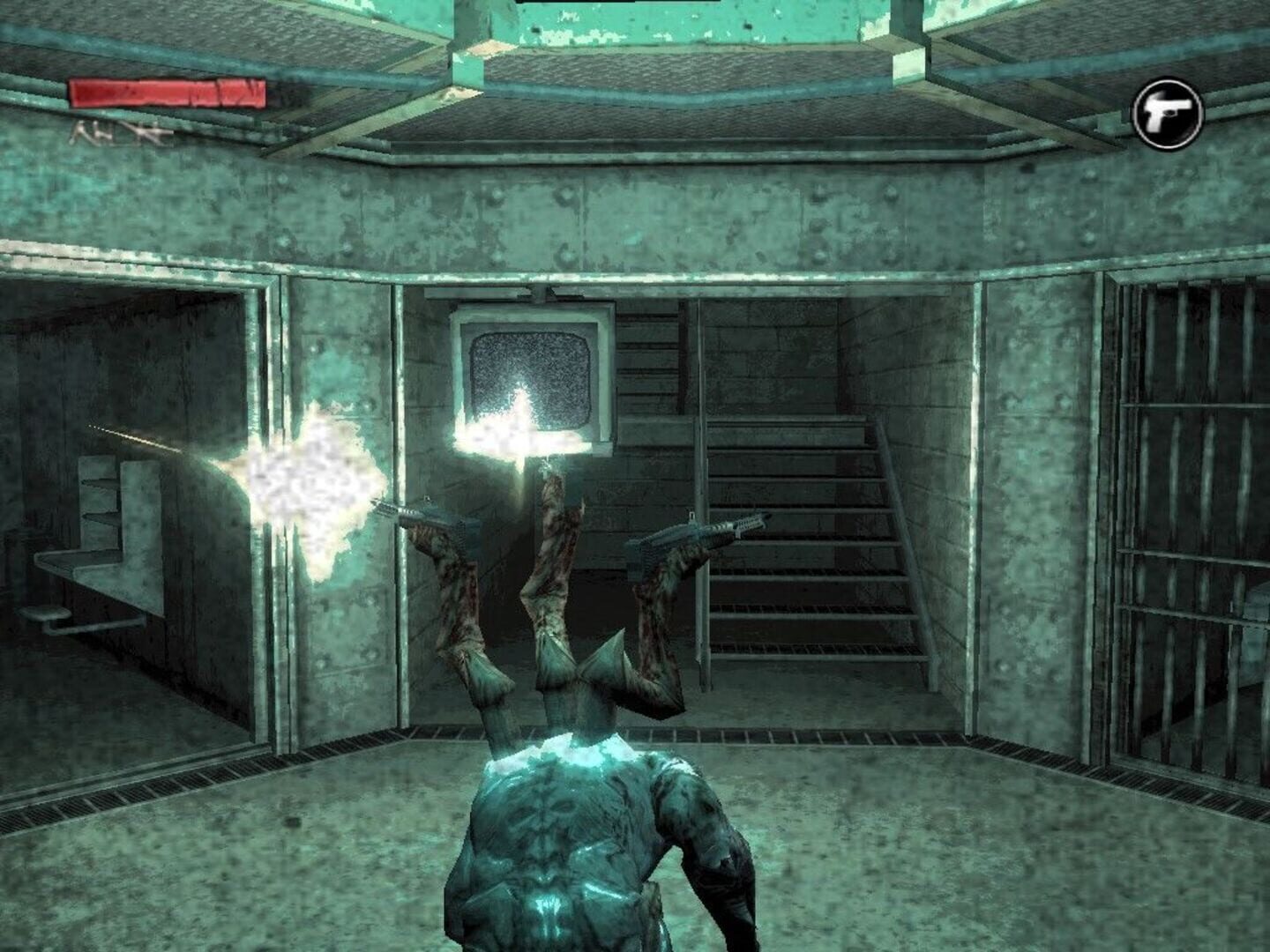
Ties That Bind is a first and third-person shooter psychological horror game in which the player controls Torque, the player character, from either a first-person or third-person perspective, depending on their preference. The game is fully playable in both first and third-person views, with all actions available in both modes. Torque can run, shoot, jump, crouch, roll, interact with the environment, interact with NPCs, and use items, such as flashlights, flash grenades, shrapnel grenades, and molotov cocktails. Weaponry includes knives, axes, baseball bats, steel pipes, Colt 1911s, .357 revolvers, 12 gauge pumps, sawed-off shotguns, Škorpions, M3A1s, tommy guns, M60s, grenade launchers, and RPG-7s. Other items which can be found during the game are Xombium tablets (which restore the player's health), paperwork with story content, maps, ammo, and flashlight batteries.
Two major gameplay alterations in Ties That Bind concern pickups. Firstly, Torque can no longer stockpile Xombium bottles, allowing the player to refill their health whenever they wish. Instead, Torque must rely on stationary Xombium located at set points throughout the game. Secondly, the player is limited to carrying only two weapons at any given time, although is free to choose which two; the play may carry two melee weapons, two guns, or one of each.
Story
Note: This plot synopsis details the "good ending"
The game begins five years prior to the original, with Torque serving time in Eastern Baltimore Correctional. Having been served divorce papers by Carmen (Rafeedah Keys), he is playing chess with his friend Miles (Arif S. Kinchen), who believes their incarceration was orchestrated by a criminal named Blackmore. As they talk, they are confronted by Blackmore (Michael Clarke Duncan) and his gang, who are unhappy that Blackmore's rules are not being followed.
Development
The origins of Ties That Bind date back to the late development stages of the original Suffering game, when Surreal Software first discussed the possibility of a sequel. However, although Ties That Bind writer and director Richard Rouse III, who also wrote and designed the original game, was open to the possibility for The Suffering to develop into a multi-game series, he emphasized that each game should be a stand-alone experience, albeit with unanswered questions to leave the door open for the next game. As such, the concept of the sequel had no impact on the development of the first game;
the idea to do a sequel was definitely something that emerged toward the end of development of the first game, but we didn't make any changes to the first game's story to create a cliffhanger or anything like that. When doing games that are part of a series, I always want to make sure each game will really stand on its own. At the same time, the world of The Suffering was built from the start to leave a lot of questions unanswered [...] So after the first game was complete, we had a fertile ground in which to expand the world for a new story.
Reception
Ties That Bind received favourable reviews, but was generally seen as inferior to the original game. The PC version holds an aggregate score of 73 out of 100 on Metacritic, based on twenty reviews; the PlayStation 2 version 75 out of 100, based on thirty-seven reviews; the Xbox version 76 out of 100, based on thirty-six reviews.
5 out of 5. Of the graphics, he wrote "there haven't been a lot of improvements over the original game. Placed side-by-side, players would be somewhat hard pressed to guess which game was the newer release." He was critical of the lack of differentiation between the game and its predecessor, arguing "it feels more like an expansion than a true sequel.


