
The articlegameplay, story, development, reception
Gameplay
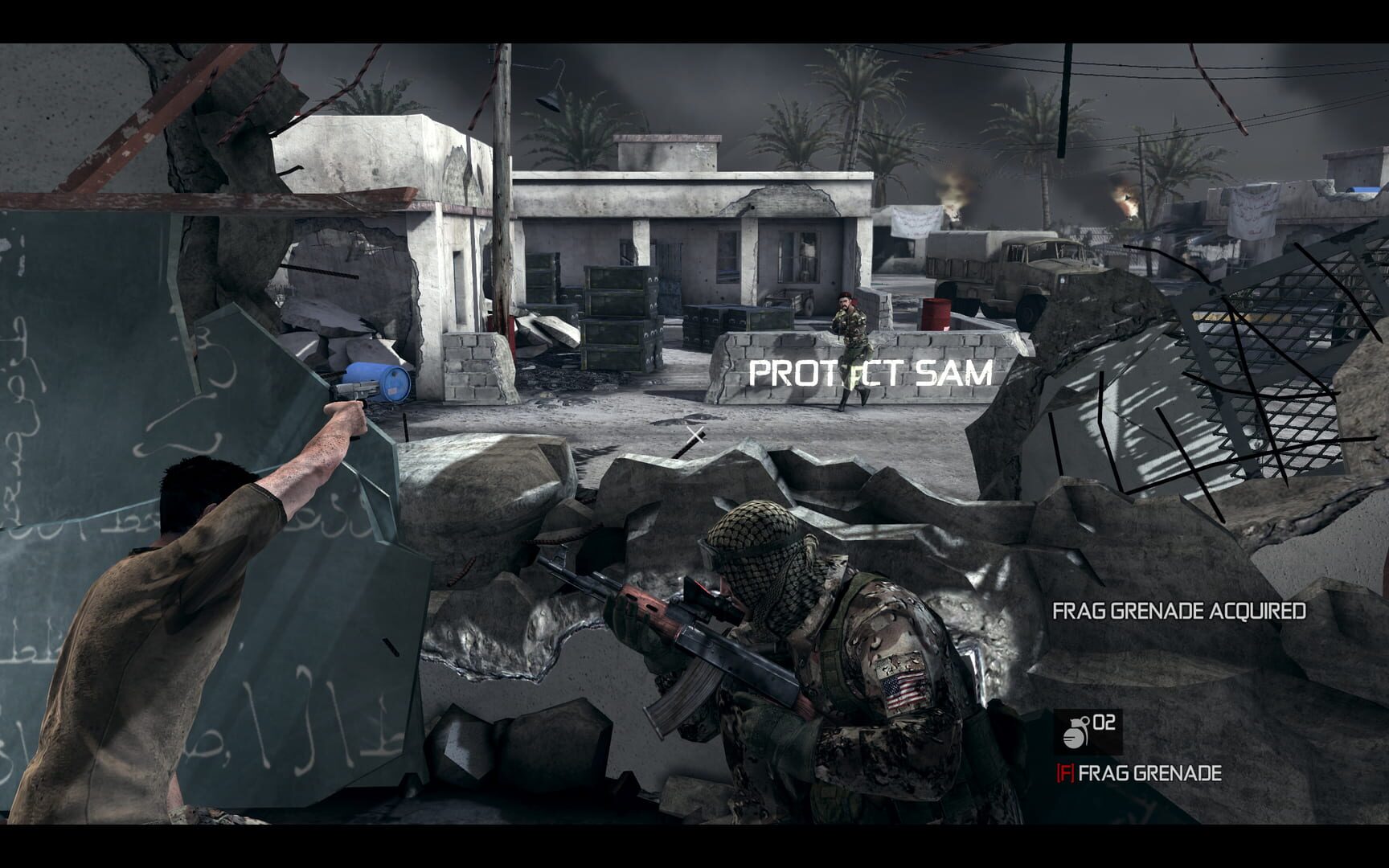
Splinter Cell: Conviction introduces a number of new gameplay features to the Splinter Cell series, one of which is the "Mark & Execute" feature, which allows the player to mark specific targets, such as enemies or objects, and shoot them in rapid succession without manually targeting each one. The player can choose to prioritize these targets, so that, for example, he can distract one guard by shooting out a light in his vicinity and then take out another guard. Another new feature is the "Last Known Position", which occurs when the player breaks the line of sight of an alerted guard. This creates a visual silhouette where the guard thinks Sam is, allowing the player to flank his enemies.
Other new features include the ability to interrogate characters in real-time, and use objects in the surrounding environment against them. Mission objectives and key plot points are projected onto walls within the in-game world, in order to keep the player immersed in the gameplay. Several other features, such as blending into crowds, improvising gadgets, and interaction with the environment, were announced, and according to creative director Maxime Béland would have given the game "a lot of Bourne Identity influence," but were scrapped after the development team decided that going in this direction would be taking too much of a risk.
Story
The game's story is divided into two portions. The main portion is the game's single-player campaign, which puts the player in control of Sam Fisher three years after the events of Splinter Cell: Double Agent. The "Prologue" portion of the game, meanwhile, is accessed through the multiplayer co-op mode, which puts two players in control of agents Archer and Kestrel 10 days before the campaign starts.
Third Echelon agent "Archer" and his Russian partner, Voron agent "Kestrel" are deployed to Nevsky Prospekt in Saint Petersburg, Russia to halt rogue elements of the Russian military from selling advanced warheads on the black market. Intelligence from criminal Andriy Kobin points to drug and human trafficker Valentin Lesovsky as the broker for the sale, and Archer and Kestrel are tasked with terminating Lesovsky and his associate, Boris Sychev, as well as gaining Lesovsky's contact list.
Development
The existence of a sequel to Double Agent was leaked to the internet on September 21, 2006, through a 2GB rar file containing, among other media, 75 concept art images of as-yet unannounced next-generation games uploaded to Ubisoft's public FTP site. The leaked images showed gloomy images of the Washington Monument under military occupation, as well as roadside views of Washington, D.C.
Conviction was officially announced on May 23, 2007, when Ubisoft released a trailer for the game. It depicted a more rugged-looking Sam with long hair and a fully-grown beard. He had the ability to blend in with the environment, interact with tables and chairs and utilize hand-to-hand combat against enemies, making the game appear less stealth-based than previous games. The lighting and shadow effects also showed a vast improvement over Double Agent.
Reception
Splinter Cell: Conviction received "generally favorable" reviews from critics, according to review aggregator website Metacritic.
3 out of 10 and gave it an "Editor's Choice Award." Edge magazine's Tim Ingham awarded Conviction 8/10 in a lead review, claiming that the title is "in reach of greatness." He was particularly impressed with Sam Fisher's ability to turn any environment into "torture chambers" at the press of a button. The main points of criticism were its short length and that too much of the title is played in monochrome.


